


About Manuscript Heritage Library
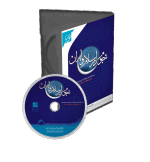
Properly honoring the heritage of thinkers and the precious works of scholars of a nation signifies the consolidation of its scientific foundation and its continuous progress. In view of the importance of this matter, the "Manuscript Heritage Research Center," aiming to preserve the written heritage of the great scholars and intellectuals of this land, has developed the esteemed software "Manuscript Heritage Library" and presented it for the study of those interested in scientific and gnoseological topics, as well as for researchers in Islamic sciences and knowledge.
Below is an introduction to the content and features of this software.
A. Content of the Program:
In this software, access to the works of the Manuscript Heritage Research Center has been provided across the following themes: "Conferences and Tributes," "Translations," "Transoxiana Heritage," "Textual Research and Codicology," "Textual Studies," "Bibliography," "Manuscript Catalogs," "Islamic Sciences and Knowledge," "Sciences and Arts," "Persian Language and Literature," "Arabic Language and Literature," "Treatises," "Festschriften," "History and Geography," and "Honorary Volumes." Distinguished researchers can accelerate their studies by utilizing the software's selective index to search within chapter titles and book headings, thereby organizing their research in a most fitting manner.
B. Features of the Program:
* Text Display
- Access to the text and index of all works available in the program.
- Ability to select tree and selective indexes and link them to the text, with bidirectional synchronization between text and index.
- Capability to select book title, volume, and page, along with the ability to expand the text and index pages.
- Simultaneous comparison of two texts from one or two different books.
- Restricting the scope of text and book indexes to desired items.
- Ability to save any selected texts or indexes independently for easy access.
* Search
- Simple and advanced search within the text and indexes of the program's books.
- Ability to save each performed search independently for easy access.
- Limiting the search scope to specific text(s) with special capabilities.
- Index generation using wildcards to create dynamic and diverse word lists.
* Dictionary
- Full text of several historical dictionaries with access to word roots and derivatives.
- Linking text vocabulary to the program's dictionaries for easy comprehension of meanings.
* Active Research
- Linking text and book indexes to other sections of the program, such as: Display, Search, Quran, Dictionary, or Bibliography.
- Ability to transfer selected text to external memory or to the Ms-Word environment.
* Bibliography
- Access to useful information regarding the codicology of each book.
* Note-taking
- Ability to transfer desired text or index to the program's note section.
- Capability to save and edit transferred text in the note page.
- Transfer of text from the note section to the Ms-Word environment.
- Printing the desired text or index with multiple options.
* Help Guide
- Access to useful explanations for better familiarity with various parts of the program.
* Research Tools
- Indexing, annotating, highlighting, and marking text for faster information retrieval and recording additional data related to the program's texts.
- User management of the program's research capabilities.
* Additional Features
- Access to several common keyboard layouts and display fonts for easy use of the software.
- Ability to specify a path for saving research projects with diverse options.
- Option to show or hide diacritics (vowel marks) and headers in the program's texts.
About the Manuscript Heritage Research Center:
"Excellence is forbidden except to him who builds upon the foundation of his predecessors." (Qabus Nama); meaning, "Progress and elevation [in any nation or society] are impossible unless one establishes [one's structure] upon the foundation [of the thoughts and scientific achievements] of the ancestors."
A sea of rich Islamic and Iranian culture waves within manuscripts; these manuscripts are, in truth, the "record of achievements of great scholars and geniuses" and our "identity card" as Iranians. It is the duty of every generation to preserve this precious heritage and strive to revive and reconstruct it to understand its own history, culture, literature, and scientific background. Despite all efforts made in recent years to identify these written treasures, research them, and publish hundreds of valuable books and treatises, much remains undone. Thousands of manuscripts and treatises existing in domestic and foreign libraries remain unidentified and unpublished. Furthermore, many texts, although printed multiple times, do not conform to scientific methods and require new verification and critical editing.
With the assistance of the "Ministry of Culture and Islamic Guidance," the "Manuscript Heritage Research Center" was established in 1993 (1372 SH) under the name "Office for Publishing Manuscript Heritage," aiming to support the efforts of researchers and editors, and to revive and publish the most important written works of Islamic and Iranian civilization. After a decade of activity, the institution was first renamed the "Center for Publishing Manuscript Heritage," and then, in 2005 (1384 SH), upon receiving authorization from the "Ministry of Science, Research and Technology" to form four research groups, it was renamed the "Manuscript Heritage Research Center," expanding its scope to include research activities alongside publishing.
* Research Groups of the Center:
1. Textual Studies and Critical Editing Group;
2. Codicology and Cataloging Group;
3. Cultural Iran Group;
4. History of Science Group.
* Achievements:
Part of the achievements of this center's 20 years of effort to introduce Islamic-Iranian culture and civilization includes:
1. Critical editing, printing, and publishing of 258 titles in 290 volumes;
2. Publication of 51 issues of "Ayeneh Miras" (Mirror of Heritage), comprising: 19 monthly issues (1998–2002); 24 quarterly scientific-popular issues (2003–2008); 6 biannual scientific-popular issues (2009–2011). Notably, since issue 50, "Ayeneh Miras" has become a biannual scholarly-research journal;
3. Publication of 29 issues of "Ayeneh Miras Supplement";
4. Publication of 53 issues of "Heritage Report Bimonthly" and 3 issues of "Heritage Report Supplement";
5. Publication of the "Biannual Journal of Scientific Heritage of Islam and Iran";
6. Publication of 111 titles in the "Heritage Guardian Works" series;
7. Holding 90 scientific sessions and gatherings for "Book Critique and Review";
8. Organizing and participating in over 30 "National and International" conferences;
9. Winning over 80 "Selected and Commendable" awards in "Domestic and International Festivals".

Share your thoughts with other customers