

 Buy Now with
About Urwat al-Nur (The Firm Handle of Light)
Allah the Almighty says: "And it is not for the believers to go forth [to battle] all at once. For there should separate from every division of them a group [remaining] to obtain understanding in the religion and warn their people when they return to them that they might be cautious." (Surah At-Tawbah, 122).
Imam Al-Sadiq (peace be upon him) said: "Acquire deep understanding (Tafaqquh) in the religion of Allah, for indeed, Fiqh (understanding of religion) is the key to insight, the completion of worship, and the means to lofty stations and noble ranks in both religion and the world." (Bihar al-Anwar, Vol. 10, p. 247).
The heavenly verses of the Holy Quran and the illuminating words of the Pure Imams (peace be upon them) are light upon light. Through benefiting from the guiding radiance of these sources, one can distinguish truth from falsehood, tread the straight divine path, navigate the winding alleys of life, and reach the destination of salvation. Therefore, seeking assistance from the verses of the Holy Quran and the hadiths and narrations of the Prophet's Household (peace be upon them) is the best methodology for initiating any action, speech, or writing.
Among Islamic sciences, the science of Jurisprudence (Fiqh) and Ijtihad holds a sublime status. Religious scholars and researchers of Islamic sciences have, since ancient times, strived through contemplation and utilization of this grand knowledge to devise new approaches in the field of practice, enabling seekers of happiness to traverse the path of servitude to the Almighty Lord with a pure intention and clear certainty. In truth, Fiqh is a vast and precious treasure through which one can witness the majesty and power of the One God. This heavenly science owes its continuity and vibrant life to the thought and intellect of wise scholars who, through valuable compositions and the collection of significant works in Fiqh, have fostered its growth and dynamism.
Today, on one hand, due to the vastness of Islamic science sources and the massive volume of remaining works and compositions, and on the other hand, due to the tremendous transformation in science and technology, a need has arisen for Islamic knowledge to advance in parallel and harmony with modern science, particularly computer science. This is because such advancement facilitates access to this endless treasure. With the proliferation of computers and the production of software programs, researchers and specialists have introduced ancient texts and Islamic sources onto optical discs, providing diverse capabilities for information retrieval. This has created a suitable environment for conducting new research and studies in the field of religious studies, allowing researchers to achieve their research objectives in the shortest possible time. Among these programs are topical dictionaries (Mu'jams) which possess diverse features.
Those who have worked with lexical dictionary software, benefiting from their useful and valuable features while being aware of their shortcomings, are well aware of the advantages of topical dictionaries. With the production of topical dictionaries, these shortcomings have been addressed, and the path has been smoothed for researchers and students of religion. Summarizing texts, indexing them, and creating numerous and varied entries and keywords for these indices and summaries constitute one of the best and most appropriate methods for retrieving a concept or topic in research.
Stages of Producing Topical Dictionaries
The stages of producing topical dictionaries can be summarized in several axes:
1. Summarizing Texts: This task is undertaken by researchers according to specific regulations. For the purpose of summarization, they write summaries of the practical content of the desired texts on designed cards. These summaries are terminologically referred to as "Topics" (Mawdu').
2. Indexing the Summaries: This work is done manually by researchers. It is worth noting that indices are smaller compositions than summaries and are sub-headings that act as intermediaries between entries (keywords) and summaries (topics).
3. Creating Keywords and Entries for Indices: By separating indices and removing unnecessary words both automatically and manually, a list of single-word and key titles is obtained. After editing, this list is made available to the researcher with search capabilities. In this stage, synonyms are added to the list, homonyms are distinguished, and related titles are identified to minimize user difficulties using these features.
The method of using the program is the reverse of its preparation method. It is best to start with keywords, then proceed to the indices of that word, and finally move to the book text via the topics and summaries that fall under these indices. At each of these stages, one can select the desired subject by viewing and choosing indices and topics.
One of the most prominent and major challenges in producing topical dictionaries is that card filing, indexing, and coordinating them consume a great deal of time. For this reason, sources produced in this manner are limited.
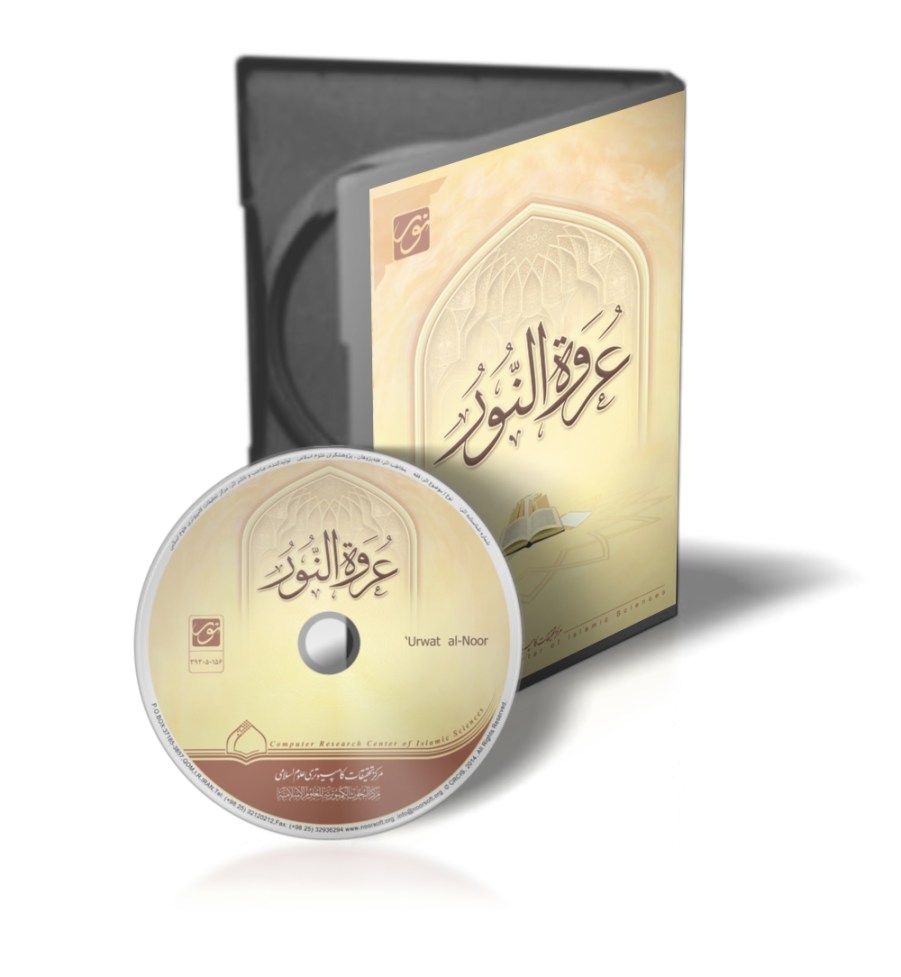
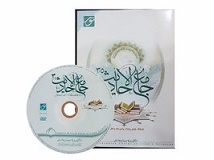
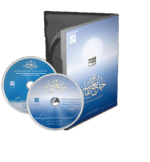
The Topical Dictionary of "Urwat al-Nur"
The software "Urwat al-Nur" is one of the jurisprudential topical dictionaries centered around the topical dictionary of "Al-Urwat al-Wuthqa." A previous version of this was presented to the scientific and cultural community by the Computer Research Center for Islamic Sciences under the name "Nur al-Sharia" software.
The precious book "Al-Urwat al-Wuthqa," which serves as a reference for both jurists and non-jurists in common jurisprudential issues (Amm al-Balwa), is one of the most important and famous works of the late Sayyid Muhammad Kazim Yazdi (may Allah sanctify his noble secret). This book has received the attention of great scholars and jurists and is unparalleled in its subject. Regarding this, the late "Sayyid Muhsin al-Hakim" stated: "The valuable book 'Al-Urwat al-Wuthqa,' in terms of precision and research, has become the core curriculum for many jurists in the seminaries. Although before its emergence, the core of jurisprudential lessons for scholars was the books 'Shara'i al-Islam' and 'Tabsirat al-Muta'allimin,' with the appearance of 'Al-Urwat al-Wuthqa,' this valuable book became the core of seminary curricula, and numerous commentaries and marginal notes have been written on it."
Special Advantage of This Software
Among the features offered in this compact disc, similar to the "Nur al-Sharia" software, is the ability to access commentaries and marginal notes on the topical text through keywords, indices, and extracted summaries for the desired text. For example, by selecting the keyword "Al-Taqlid" (Imitation), after viewing the indices and summaries in "Al-Urwat al-Wuthqa," one can view parts of "Misbah al-Huda," which is a commentary on the desired text, and retrieve this concept in other commentaries. Therefore, the significant advantage of the topical dictionary "Urwat al-Nur" is the ability to access commentaries and marginal notes of the text through 13,600 topics (summaries). This software, by providing topics, indices, and keywords, places suitable entries at the users' disposal to retrieve their desired content through these entries, access the text of "Al-Urwat al-Wuthqa," and then proceed to its commentaries.
Given that producing topical dictionaries for books authored with a focus on "Al-Urwat al-Wuthqa" requires a great deal of time, users can meet a significant portion of their research needs by using programs like "Urwat al-Nur."
The Computer Research Center for Islamic Sciences, by presenting the topical dictionary software "Urwat al-Nur" to the scientific community and seminaries, especially seekers of the science of Fiqh and Ijtihad, awaits the critiques and suggestions of all enthusiasts of Ahlulbayt's knowledge (peace be upon them), particularly researchers of the Shia jurisprudential school.
Urwat al-Nur at a Glance
1. Topical Dictionary (Mu'jam Mawdu'i)
- Ability to access the full text of 74 titles of commentaries and marginal notes on "Al-Urwat al-Wuthqa" via keyword, index, and summary (topic).
- Access to commentaries and marginal notes via the text's topics.
- Providing over 30,950 repeated indices, 7,850 non-repeated indices, 63,000 repeated single words, and 3,000 non-repeated single words, aimed at retrieving 13,600 topics and accessing the text and commentaries of "Al-Urwat al-Wuthqa."
- Ability to combine keyword and index along with selecting the type of combination (disjunctive, conjunctive, and exclusive disjunctive).
- Arranging the list of indices based on topic and index.
- Access to options for keyword, index, topic, address, and text in various sections of the program.
- Ability to select types of proper nouns (A'lam) from keywords.
- Displaying the list of book topics in Arabic alphabetical order and the number of cards for each topic.
- Ability to view the complete address of the content of each card.
- Ability to transfer to the research section in various parts of the program to organize the research process.
- Ability to select the next and previous answer and view the full text of the book.
2. Lexical Dictionary (Mu'jam Lafzi)
- Display of the full text of "Al-Urwat al-Wuthqa" in two volumes in two versions, along with its supplement (Tatimmah) and 68 titles of commentaries, marginal notes, and annotations, such as: Sharh al-Urwat al-Wuthqa (Mawsu'at al-Sayyid al-Khu'i), Ta'liqah Istidlaliyyah 'ala al-Urwat al-Wuthqa (by Agha Diya' al-Din al-Iraqi), Dalil al-Urwat al-Wuthqa (by Sheikh Hussein al-Hilli), Mustamsak al-Urwat al-Wuthqa (by Sayyid Muhsin al-Hakim), and Misbah al-Huda fi Sharh al-Urwat al-Wuthqa (by Sheikh Muhammad Taqi al-Amuli), etc.
- Full text of 6 book titles regarding jurisprudential and usuli terminology, including: Al-Hudud wa al-Haqa'iq, Mustalahat al-Fiqh, Al-Qamus al-Fiqhi Lughatan wa Istilahan, Al-Istilalahat al-Fiqhiyyah fi al-Rasa'il al-'Amaliyyah, Mu'jam al-Mustalahat wa al-Alfaz al-Fiqhiyyah, and Istilalahat al-Usul, with the ability to access terms via refined entries.
- Full text of three linguistic dictionaries in 29 volumes, including: Lisan al-Arab (15 volumes), Majma' al-Bahrain (6 volumes), and Kitab al-Ayn (8 volumes).
Capabilities
- Independent option for Quranic research.
- Independent option for accessing verses within books.
- Display of a tree-view index of the aforementioned books with active linkage to their full text.
- Ability to select the desired volume and page through various methods.
- Providing the text of Al-Urwat al-Wuthqa along with linkage to commentaries and annotations.
- Providing brief information about the program's books and biographies of authors.
- Ability to access word meanings based on the dictionaries: "Lisan al-Arab," "Kitab al-Ayn," and "Majma' al-Bahrain" via the root and derivative words index.
Other Features
- Limiting the research scope based on volume and topic.
- Simple and advanced search in text and index.
- Ability to compare different texts from one or two volumes with each other.
- Using the active research feature to transfer to desired sections within the program.
- Diverse research capabilities, note-taking, and printing.
- Direct transfer of selected text or index from the program to the MS-Word environment.
Share your thoughts with other customers