

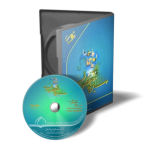

About Library of Shi'a Rijal
In every field of knowledge, sources serve as essential tools without which achieving the objectives of that science is impossible; therefore, recognizing these sources holds special importance in deriving scientific insights within that discipline.
Among the four primary proofs (the Quran, the Sunnah, reason, and consensus), the vast majority of our jurisprudential and non-jurisprudential knowledge is embedded in the Sunnah. Consequently, to extract legal rulings and present a correct methodology for individual and social life, we are compelled to refer to the Sunnah (the sayings, actions, and tacit approvals of the Infallibles).
Given the temporal distance between our era and the time of the Infallibles (peace be upon them), we do not encounter the Sunnah directly but rather deal with a collection of words and phrases expressing their sayings, actions, and approvals under the title of "Hadith." Thus, in the era of the Occultation, Hadith is the sole accepted source and reference for accessing the Sunnah of the Infallibles (peace be upon them).
Every Hadith consists of two parts: the chain of narrators (Isnad) and the text (Matn). The Isnad, which is a collection of the names of the narrators, effectively serves as the bridge connecting us to the Sunnah. Since the reliability of all narrators is not equal, scholars of the science of Rijal (narrator criticism) have made the investigation of the conditions of the narrators found in the chains of transmission a priority.
The science of Rijal, or the knowledge of narrator evaluation, which is responsible for identifying and assessing narrators based on the conditions required for transmitting Hadith, does not possess fixed and universal rules for evaluation across all eras. Therefore, knowledge about them can only be attained based on scientific chains of transmission remaining from their own era or from periods close to it.
On this basis, identifying the informational sources that introduce us to the narrators is, in reality, identifying scientific chains and documents. By analyzing these (with an impartial perspective, free from bias, personal preferences, and prejudices), we achieve a precise and scientific understanding of a narrator's identity and the degree of trustworthiness attributed to them.
The Necessity of Using Rijal Sources
The infiltration of incorrect and fabricated Hadiths into the repositories of Hadith literature compelled scholars of Hadith (Muhaddithin) to adopt various methods to access authentic narrations.
In this context, the most common method for verifying the authenticity of a Hadith was demanding the chain of transmission and inquiring about the narrators, to the extent that they considered the chain of narration as an integral part of the Hadith and deemed the individual identification of each narrator essential.
During the era of the Imams' companions (peace be upon them), the authentication (Tawtheeq) or weakening (Tad'eef) of a narrator was based on actual and direct knowledge of the individual, either through direct acquaintance or indirect reports. Later, in a period where direct acquaintance with many narrators became impossible, testimony and evidence became the basis for apparent knowledge of them. Eventually, by the fourth and fifth centuries, the only means of knowing the narrators was restricted to referring to the written sources compiled during that era and utilizing the biographical information contained within them.
Consequently, by compiling scientific chains, various narrations, gathering diverse information, and analyzing them, a form of scientific knowledge regarding the narrators became possible.
Since the most common method for identifying Hadith narrators in the present era remains studying them through books and written sources, understanding Rijal sources, their composition styles, and the information contained in each plays a crucial instrumental role in distinguishing narrators. A scholar of Hadith has no choice but to be familiar with these books and refer to them in order to judge the status of any given Hadith.
Rijal books, written based on the oral and written statements of narrator-critics and other books that utilized biographical data, provide the documentation for theories and useful information employed in discussions of Rijal, such as a narrator's reliability or unreliability, their teachers, and their Hadith instructors. Generally, Rijal scholars base their theories, debates, and discussions on the content found in these books.
Types of Rijal Works
From the beginning of authorship in this field, Rijal scholars have employed various methods to compile their works for the purpose of identifying narrators and stating the level of reliability for each. The most famous of these methods are:
1. **Compilation Based on Narrators' Names:** In this method, names in a Rijal book are arranged alphabetically by the first, second, and third letters, and sometimes up to the last letter of each name, similar to dictionaries. Sometimes this order is also applied to the names of fathers, grandfathers, and lineage. After the section on names, separate chapters are dedicated to Kunyas (agnomens) starting with "Abu," followed by "Ibn," then titles (Laqabs), and finally female narrators. This arrangement is predominant in comprehensive Rijal compilations.
However, some authors have applied their own specific styles and slightly altered the aforementioned order; for example, they placed the name "Ahmad" before other names starting with "Alif" out of respect for the Prophet's name (peace be upon him), followed by "Ibrahim" and other names. Others included titles and women's names within the general alphabetical list without separating them.
Clear examples of this type of compilation include "Manhaj al-Maqal fi Tahqiq Ahwal al-Rijal" by Mirza Muhammad al-Astarabadi and "Naqd al-Rijal" by Sayyid Mustafa al-Tafrishi.
Authors using other writing styles generally still utilized alphabetical ordering for the arrangement of narrators' names. For instance, the late Al-Najashi in his Rijal book and Sheikh Al-Tusi in his "Al-Fihrist" followed this method, though they occasionally differed in the exact sequence and did not always maintain a complete alphabetical order for all letters of the names.
2. **Compilation Based on Generations (Tabaqat):** The term "Tabaqah" refers to individuals who are close in age and share common teachers. Shia Rijal scholars initially used this method when organizing their books. In this style, narrators for each Imam are introduced in a separate chapter, and sometimes within each chapter, names are ordered alphabetically. Books such as "Rijal al-Barqi," "Rijal al-Shaykh al-Tusi," and the original "Rijal al-Kashshi" appear to have been compiled on this basis. In this method, narrators from the Messenger of God (peace be upon him) are placed in one chapter, narrators from the Commander of the Faithful (Ali, peace be upon him) in the next, and so on for the other Imams, with each group in a chapter dedicated to the companions of that specific Imam. Finally, those who did not narrate from any of the Imams are placed in a specific chapter.
In books compiled based on generations in later centuries, the classification of generations continued beyond the era of the Imams up to the time of the authors of those books.
3. **Compilation Based on Jarh wa Ta'dil (Criticism and Praise):** According to this method, the names of those whose Hadiths are deemed reliable are listed in one index, while the names of those whose Hadiths are considered unreliable by the author are listed in another.
This method was employed by Allamah Al-Hilli in his book "Khulasat al-Aqwal fi Ma'rifat al-Rijal" and by Ibn Dawud Al-Hilli in his book "Al-Rijal."
This type of compilation is considered the most difficult method of Rijal authorship, as the author must record their own Rijal opinions after thorough research, investigation, and resolving conflicting views regarding criticism and praise. In this method as well, the names in each section are arranged alphabetically.
4. **Compilation Based on Bibliography (Fihrist):** In this method, the names of authors form the basis of the book, and the author aims to list the owners of books. This approach was followed in Sheikh Al-Tusi's "Al-Fihrist" and Al-Najashi's "Rijal," with alphabetical order observed in the subsequent arrangement of narrators' names.
The four methods mentioned above are the most famous, but other methods exist in Rijal literature, including: Mashyakha (lists of teachers), Tajrid al-Asanid (abridgment of chains), Fawa'id (benefits/notes), Tarajim Buyutat (biographies of families), and Dabt Asma' Mushtabaha (recording similar names).
In later periods, other Rijal works appeared which are counted among Rijal books but follow their own unique methodologies.
**Note:** Some Rijal works do not focus on listing every single narrator and determining their status, but rather discuss specific Rijal points and issues resulting from research and investigation. We refer to these as "Investigative Rijal Books." These books are compiled in the following ways:
a) **Compilation of Benefits (Fawa'id):** Sometimes, Rijal scholars, while examining narrators, discover specific points which they record in books, resulting in works containing lists of Rijal benefits; examples include "Fawa'id al-Wahid al-Behbahani" and "Jami' al-Maqal."
b) **Rijal Rules (Qawa'id):** Another category of investigative Rijal books written in the last century compiles Rijal rules. These rules are essentially general Rijal benefits or points that have acquired the status of laws or principles. Examples include "Tawdih al-Maqal" by Mulla Ali Kuni and "Kulliyat fi Ilm al-Rijal" by Ayatollah Subhani.
c) **Monographs:** The third category of investigative Rijal books consists of monographs on specific Rijal topics; examples include "Hidayat al-Muhaddithin ila Tariqat al-Muhammadin" by Mulla Muhammad Amin al-Kazimi (which addresses distinguishing narrators with identical names, known as the study of "Mushtarakat"), and "Al-Rasa'il al-Rijaliyya" by Abu al-Ma'ali al-Kalbasī (which comprises independent treatises on certain Rijal terminologies and specific disputed narrators).
History of Shia Rijal Works
Sheikh Aqa Buzurg Tehrani considered the first Shia Rijal work to be the book "Tasmiyat man Shahida ma'a Amir al-Mu'minin (AS) al-Jamal wa Siffin wa al-Nahrawan min al-Sahaba" [1]. This book is merely a list of the names of the companions of the Commander of the Faithful (peace be upon him) who participated in his major battles, authored by Ubaydullah ibn Abi Rafi', the scribe and treasurer of the Imam.
It is important to note that researcher Tehrani and some other bibliographers have conflated the science of Rijal with biography writing (Tarajim) [2]. Consequently, they classified the aforementioned book, which is technically a work of biography and life stories, as a Rijal book, indeed the first one. Of course, this book cannot be directly considered a complete Rijal work, but since it can assist Rijal scholars in determining the generation of narrators, it is not unrelated to the science of Rijal.
Apart from the history mentioned above, it should be stated that within the first five centuries, Rijal books authored in the fourth century constitute the largest number. Of the total books compiled up to the sixth century, only a few have reached us verbatim or have been reconstructed through various methods. The titles of these books are:
1. Rijal al-Barqi, by Ahmad ibn Muhammad ibn Khalid al-Barqi (d. 274 or 280 AH).
2. Kitab al-Rijal, by Ibn Uqda (249–333 AH), the entirety of which appears in the section on the companions of Imam al-Sadiq (AS) in Sheikh Al-Tusi's "Rijal."
3. Takmilat Risalat Abi Ghalib al-Zurari, by Husayn ibn Ubaydullah al-Ghada'iri (d. 411 AH).
4. Kitab al-Rijal, by Ahmad ibn Husayn ibn Ubaydullah al-Ghada'iri (first half of the 5th century), whose narrations have been collected in various sources.
5. Ikhtiyar Ma'rifat al-Rijal, by Sheikh Al-Tusi (d. 460 AH).
General Classification of Rijal Books
Rijal books can be categorized into four main groups as follows:
1. Primary Principles (Usul Awaliyya):
This refers to writings that have reached us from the era of the Hadith narrators and the periods close to them in the 3rd, 4th, and 5th centuries AH. Due to their temporal proximity to the narrators and the comprehensive and accurate information they contain, these writings are considered the foundation and source of Rijal discussion. Because of their antiquity and authenticity, they are termed "Primary Principles." There are four Primary Principles agreed upon and relied upon by scholars:
a) Rijal al-Kashshi.
b) Kitab al-Rijal, by Sheikh Al-Tusi.
c) Al-Fihrist, by Sheikh Al-Tusi.
d) Rijal al-Najashi.
**Note:** Some scholars also include "Rijal al-Barqi" and "Rijal Ibn al-Ghada'iri" in this category.
2. Secondary Principles (Usul Thaniyya):
This refers to books written based on the Primary Principles; examples include "Rijal Ibn Dawud" and "Khulasat al-Aqwal" by Allamah Al-Hilli.
3. Comprehensive Rijal Compilations (Jami'):
This refers to books in which Rijal information has been aggregated; an example is "Mu'jam Rijal al-Hadith" by Ayatollah Al-Khoei.
4. Investigative Rijal Books:
This refers to books containing precise and profound Rijal insights; an example is "Al-Rasa'il al-Rijaliyya" by Al-Kalbasī [3].
Shia Rijal Library (Software)
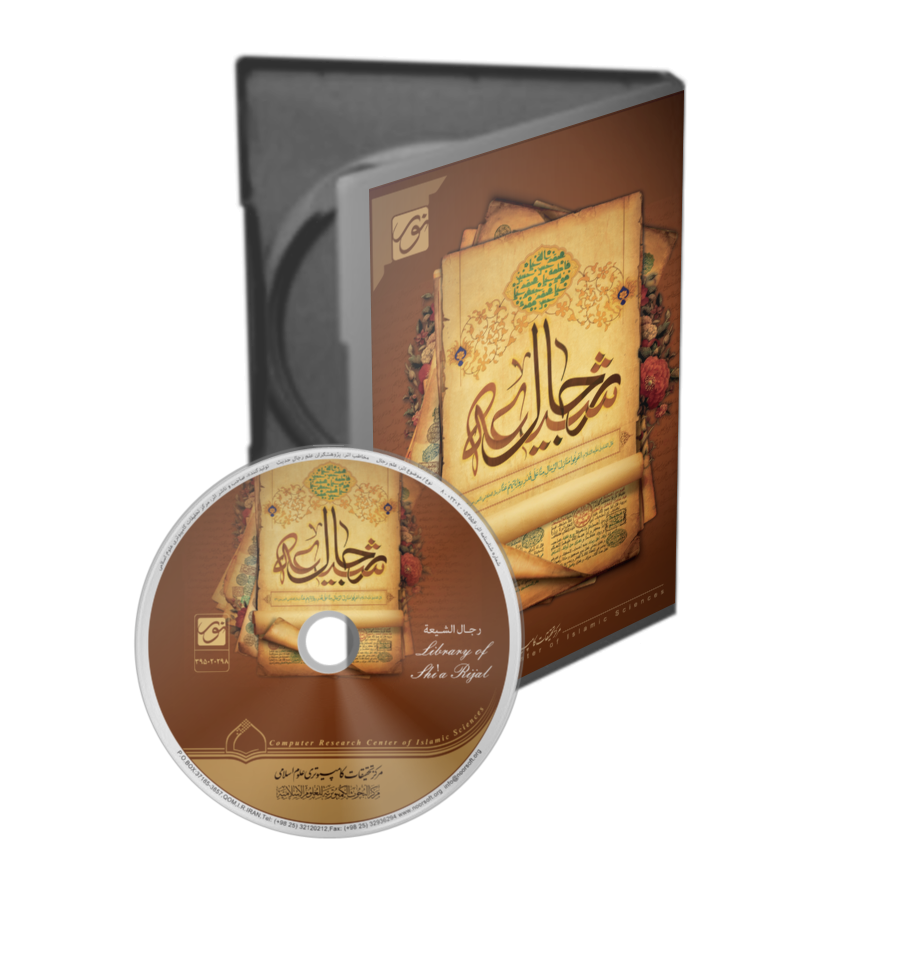
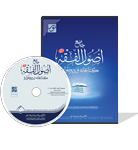
The "Shia Rijal Library" is a software program developed with the aim of facilitating and accelerating researchers' access to the Rijal works of Shia authors. This program provides the texts of the most important books of the Imami school of thought in the field of Rijal, equipped with diverse capabilities for searching and conducting various studies.
The Necessity of Producing the Software:
The limitation of Shia Rijal sources in the "Dirayat al-Nur" software to the "Eight Principles" and "Mu'jam Rijal al-Hadith," coupled with the need of researchers in Rijal discussions for more investigative sources and the utilization of scientific and expert opinions from a significant portion of Shia Hadith Rijal scholars, led to the production of the "Shia Rijal Library" software.
Program Content
This library includes approximately one hundred titles of important sources and works in the science of Rijal authored by Shia scholars. The various types of Rijal writings compiled in this collection—ranging from generational lists, bibliographies, monographs, criticism and praise, etc., written between the 3rd century AH and the recent century—provide a relatively complete and comprehensive library of over five hundred volumes. This serves students of advanced Hawza levels, students of Hadith sciences, and Rijal researchers. This library can also provide a foundation for further research and acquisition of Rijal information and documentation for users of two other software programs: "Dirayat al-Nur" and "The Index of Sheikh Al-Saduq's Chains," previously released by the Computer Research Center for Islamic Sciences.
Familiarization with the Program
This software includes sections for Display, Search, Encyclopedia of Figures, and more.
1. Display
In the Display section, the full text of the books available in the program is accessible to the user with the following features:
- Selection of font type and size.
- Synchronization between the displayed text and the book's table of contents (Locating), and vice versa.
- Bookmarking text for future reference.
- Indexing the text.
- Recording personal user notes regarding the book contents.
- Highlighting selected texts and assigning titles to them.
- Comparison between two texts.
2. Search
In the Search section, in addition to various search options, users can view a list of words and the frequency of each. Using the indexing feature, users can generate diverse word lists.
Furthermore, a dynamic link can be established between the text and the search function. A user can select a desired phrase in the text, copy it to the clipboard, and then transfer it to the search input line.
3. Encyclopedia of Figures (Farhang A'lam)
In this section, the names of Hadith narrators, authors of Hadith and non-Hadith books, and other personalities mentioned in the Rijal and biographical books of the "Shia Rijal Library" are arranged in a sorted list. This allows researchers to access required information about each of these figures more easily and quickly.
4. Tools
Dictionary
To facilitate researchers' access to word meanings, the valuable book "Lisan al-Arab" is made available in two sections: Roots and Derivatives.
Notes
While studying and selecting parts of the text to transfer to the Notes section, users can also add their own explanations and details alongside the quoted phrases.
On the Notes page, there is an option to save files in desired formats. This feature is particularly beneficial for those who work with specific text editors.
In various sections of the program, users have the option to print the current page, all pages, or selected answers. Upon selecting the print option, the responses are printed on the default printer defined for Windows.
Help Guide
Necessary guidance is provided throughout the program for each of its sections.
**Sources and References:**
[1] See: Al-Dhari'a ila Tasanif al-Shi'a, Vol. 10, p. 83; Musaffa al-Maqal fi Musannifi Ilm al-Rijal, p. 358.
[2] One of the meanings of "Tarjama" is biography, and the science of biography writing is called "Tarajim." In biography writing, any personality is introduced, not limited to the attribute of being a narrator. Moreover, the information in biographies is often more extensive than what Rijal scholars intend. Therefore, while Rijal and biographical sources interact with each other, they should not be conflated.
[3] See: Rahman Setayesh Mohammad Kazem, "Ashnayi ba Kutub Rijali Shi'a" (Introduction to Shia Rijal Books), Tehran, SAMT, 2006 (1385 SH).
"All material and moral rights of this software belong to the Computer Research Center for Islamic Sciences."

Share your thoughts with other customers