

 Buy Now with
About Encyclopedia of Hajj
"And proclaim to the people the Hajj [pilgrimage]; they will come to you on foot and on every lean camel; they will come from every distant pass." [1]
And when Abraham issued the call for Hajj,
The worlds, East and West,
Even those who were in the loins of fathers and wombs of mothers,
Heard his call with the ears of their souls.
So whoever recited the Talbiyah with the language of the heart,
Will attain the honor of visiting the Ancient House.
LABBAYK
O Allah, Labbayk
Labbayk, no partner do You have, Labbayk.
Hajj is a covenant between the servant and the Lord, and one of the greatest divine obligations, in which both individual and social aspects are manifestly embedded.
Hajj is the manifestation and repetition of all the love-inspiring scenes of the life of a complete human being and society in this world. Hajj is the center of divine knowledge, from which the content of Islamic politics in all corners of life must be sought.
In its individual aspect, the goal of Hajj is purification, attaining clarity and luminosity, abstaining from worthless material adornments, finding solitude with one's spiritual self, intimacy with God Almighty, remembrance, supplication, and seeking means to the Truth, so that man may find the path to servitude—which is the straight divine path to perfection—and walk upon it.
In this section, the diversity of opportunities and tests is such that if one passes through them with attention to the etiquette and obligations of Hajj, they will undoubtedly gain a precious reward:
The opportunity of Ihram and Talbiyah, the opportunity of Tawaf and prayer, the opportunity of Sa'y and Harwala (brisk walking), the opportunity of standing in Arafat, Muzdalifah, and Mina, the opportunity of Rami (stoning) and sacrifice, and the opportunity of Dhikr (remembrance of God), which spreads an atmosphere full of spirit and life throughout all these stages.
This collection of opportunities can constitute a short period of legitimate asceticism and self-construction for every individual, becoming the starting point of a profound transformation in the ethics and individual conduct of the visitor to the House of God.
This aspect of the philosophy of Hajj has always been, and remains, the focus of attention for all Muslims, especially those who practice self-vigilance. However, an important issue that is often overlooked is that individual goals are only part of the philosophy of Hajj. Benefiting from the vast treasures of this divine obligation goes beyond the individual aspect, and the effects and blessings that this great gathering can have for all Muslims, and indeed for all people of the world, are far more important and valuable than its individual blessings.
A point worthy of reflection is that the Holy Quran, in explaining the philosophy of Hajj, primarily emphasizes the social goals of Hajj and the effects and blessings it has for all people.
From the perspective of the Holy Quran, the wisdom behind building the Kaaba and the philosophy of Hajj is to establish a standing for the benefit of the people: "Allah has made the Kaaba, the Sacred House, a standing for the people" [2], meaning: Hajj is a collective movement to solve problems, meet needs, and foster the growth and development of human society.
According to the Quran, Muslims in the great gathering of Hajj must witness their benefits: "That they may witness benefits for themselves" [3], which, according to Imam Sadiq (Peace Be Upon Him), includes both worldly and otherworldly benefits.
The benefits for the Islamic Ummah are of various types and levels: cultural benefits, political benefits, and economic benefits, and the verse "That they may witness benefits for themselves" encompasses all types and levels of benefits.
The words of the Supreme Leader of the Islamic Revolution, Ayatollah Khamenei (may God protect him), regarding the social benefits of Hajj are as follows:
In its social aspect, Hajj is unique among all Islamic obligations; for it is a manifestation of the power, dignity, and unity of the Islamic Ummah. No other obligation teaches lessons and provides examples to individual Muslims regarding the issues of the Islamic Ummah and the Islamic world, nor brings them closer in spirit and reality to power, dignity, and unity, in this manner.
Neglecting this aspect of Hajj is closing a source of goodness upon the Muslims that they cannot reach through any other means. [4]
Indeed! As the reviver of Abrahamic-Muhammadan Hajj, Imam Khomeini (may God be pleased with him) said:
Hajj is like the Quran; everyone benefits from it. But if the thinkers, divers, and those who feel the pain of the Islamic Ummah dive into its ocean of knowledge and do not fear approaching and delving into its rulings and social policies, they will catch more pearls of guidance, growth, wisdom, and freedom from the shell of this sea, and will be eternally quenched by its pure water of wisdom and gnosis.
But what is to be done, and where should this great sorrow be taken? Hajj, like the Quran, has become neglected (Mahjur). Just as that Book of life, perfection, and beauty is hidden behind our self-made veils, and this treasure of creative secrets is buried in the heaps of our skewed thinking, and its language of intimacy, guidance, life, and life-building has degraded into a language of terror, death, and the grave, so too has Hajj fallen victim to the same fate. A fate where millions of Muslims go to Mecca every year and walk in the footsteps of the "Prophet," "Abraham," "Ishmael," and "Hagar," yet no one asks themselves:
Who were Abraham and Muhammad (Peace Be Upon Them), and what did they do? What was their goal? What did they want from us?
In short, all Muslims must strive to revive Hajj and the Holy Quran and return these two to the scenes of their lives.... [5]
The day Hajj finds its true place in the Islamic world, and Muslims worldwide can perform this great divine obligation consciously and as it deserves, on that day, undoubtedly, Islam will conquer all key strongholds of the world and rule over it. We hope for that day!
[1]. Al-Hajj: 27.
[2]. Al-Ma'idah: 97.
[3]. Al-Hajj: 28.
[4]. Mohammadi Reyshahri, Muhammad, "Hajj and Umrah in the Quran and Hadith," in cooperation with Abdulhadi Masoudi, translated by Javad Muhaddithi, Qom, Dar al-Hadith, 3rd Edition (2nd Revision), 2007, p. 11.
[5]. Ibid., pp. 11-12.
Definition (Software Topic):
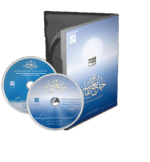
The multimedia software "Encyclopedia of Hajj (Labbayk 1)" is the most comprehensive software in the field of Hajj and Pilgrimage (Ziyarat). Designed with a novel approach, it contains a complete collection of information related to Hajj, tailored to the needs of its audience.
Given its needs-based design, this software provides comprehensive information on topics such as the Quran, the Infallibles (Peace Be Upon Them), secrets and knowledge of Hajj, the sites of the Two Noble Sanctuaries (Haramayn Sharifayn), Hajj rituals, common questions and responses to doubts, supplications and visitation prayers (Ziyarat), poetry, images, lectures and "Youth Letters" (Najvanameh), educational programs, and daily conversations.
Target Audience of the Software
The primary audience for this software is the vast multitude of pilgrims and lovers of the spiritual journey of Hajj and Umrah, both domestically and internationally, including visitors to the Sacred House of God (Kaaba) and the clerics of Hajj and Umrah caravans.
Considering the approach of Hajj organizers to guide and organize Umrah trips for seminary students, university students, and school students, and given the high demands of these groups, the content had to be presented in a way that is useful and applicable for these categories of pilgrims, as well as for those with higher education.
The software's target audience is generally divided into three categories:
1. Ordinary pilgrims;
2. Pilgrims who are seminary students, university students, and school students (including Umrah caravans for students and ordinary caravans);
3. Pilgrims with higher education (including researchers from seminaries, clerics of Hajj and Umrah caravans, and university professors).
It is hoped that all these individuals can benefit from the information in this software.
Objective of Producing This Software
The most basic expectation from such programs is information dissemination; that is, users seeking specific information should be able to obtain a correct and complete answer in the shortest time and easiest way with the help of the program. Naturally, using various methods of information dissemination and modern technology techniques is essential for such a request.
Since the topic of Hajj is new and an unexperienced matter for many users, relying solely on informing them of data existing in texts will not meet their needs. Therefore, by recognizing the audience and accurately assessing what they need and require for this spiritual journey in various fields, it must be made available to them using audio-visual methods.
Hajj is the best opportunity for pilgrims to disconnect from daily life concerns and visit the holiest places at the best time, establishing a remarkable transformation in their evolutionary path. Thus, alongside scientific goals related to the users' rational aspect, the Hajj program must, with an educational orientation, prepare pilgrims before the trip for this important event. However, maintaining steadfastness and preserving the states achieved in this blessed season is a desire that, unfortunately, is rarely realized; often, the duration of the spiritual gain and luminosity of Hajj does not even last a year. Repeatedly returning to the sweet and spiritual memories of the journey can increase the permanence of spirituality. The prerequisite for this is providing the ground for remembrance.
Another objective of producing this software is to provide educational methods, such as storytelling and familiarity with the sites of the Two Noble Sanctuaries, and methods for responding to common doubts, specifically for the clerics of the caravans.
Additionally, making necessary information easily accessible and providing categorized and relevant books on Hajj and Pilgrimage to pilgrims and caravan clerics are other goals of this program.
Features of This Software
By employing the latest programming techniques and unique features, this software has ushered in a new generation of software production. Its graphic designs blend Islamic-Iranian and Metro styles, and it is programmed using the Qt development environment.
Being needs-based, user-friendly (considering the audience), resizable, comprehensive, multimedia, and trilingual (Persian, Arabic, and English) are among the other features of this software.
Various Sections of the Program
This software, containing a complete collection of information related to Hajj based on audience needs, is designed and executed within 8 independent folders as follows:
1. Quran
Content provided in this section:
Quran
• Full text of the Holy Quran in both text and image formats;
• Display and linkage with 3 selected translations (translations by Makarem, Elahi Ghomshei, and Ansarian);
• Display and linkage with 6 selected exegeses or translated exegeses (Tafsir Majma' al-Bayan, Tafsir al-Burhan, Tafsir al-Mizan, Translation of Tafsir al-Mizan, Tafsir Nemouneh, and Tafsir Noor);
• Recitation of one complete Tartil session by Mr. Karim Mansouri in 114 clips totaling 30 hours and 30 minutes;
• Recitation of one complete Tahqiq session by Mr. Mustafa Ismail in 114 clips totaling 64 hours.
Meccan and Medinan Verses
• Listing verses related to Mecca and Medina using the book "With the Quran in Mecca and Medina";
• Linking verses, translations, and exegeses with the book "With the Quran in Mecca and Medina".
Search
• Search within Quranic verses with results displayed in color;
• Providing an alphabetical list of roots and their derivatives;
• Ability to search within Quranic verses by selecting one of the roots or one of its derivatives.
2. The Infallibles (Peace Be Upon Them)
Content provided in this section:
Biographies
• Providing detailed information on the life of the Prophet of God (Peace Be Upon Him) and the Infallible Imams (Peace Be Upon Them);
• Linking titles with books related to the Infallibles (Peace Be Upon Them).
Historical Events of the Prophet's Life (Peace Be Upon Him)
• Presenting a series of discussions on the historical events of the life of the great Prophet of Islam (Peace Be Upon Him) by Hojjat al-Islam wal-Muslimin Nawwab;
• Presenting topics in a categorized and thematic manner with the ability to search titles;
• Presenting all topics in audio format for over 6 hours, accompanied by the display of 6 video clips, 364 images, and related maps.
3. Knowledge of Hajj (Etiquette of Visitation, Secrets and Knowledge of Hajj)
Content provided in this section:
Knowledge of Hajj
• Providing a comprehensive and categorized tree-view list for the secrets and knowledge of Hajj with the ability to search titles;
• Providing comprehensive content regarding the etiquette of visitation, secrets, and knowledge of Hajj from books and Sunnah;
• Linking titles with books related to the secrets and knowledge of Hajj.
Audio: Knowledge of Hajj
• Providing lectures and audio clips regarding the importance and status of Hajj, its secrets and knowledge, in 45 clips totaling 6 hours and 35 minutes.
4. Places
Content provided in this section:
• Providing a comprehensive and categorized tree-view list for the sites of the Two Noble Sanctuaries with the ability to search titles;
• Providing comprehensive information about the monuments and places existing in the Two Noble Sanctuaries;
• Linking titles with books related to the monuments and places of the Two Noble Sanctuaries;
• Displaying approximately 2,500 images and playing 17 video clips related to the places of the Two Noble Sanctuaries;
• By selecting the "Storytelling of Places" option (displaying items with storytelling), out of 750 places listed in the Places folder, 90 of the most important sites of the Two Noble Sanctuaries are filtered and made available to users with audio narration by expert storytellers such as Hojjat al-Islams Sayyid Javad Tabatabai and Shihab al-Din Mashayekhi, in 90 clips totaling 9 hours.
5. Hajj Rituals
Content provided in this section:
• Providing all practical topics of Hajj rituals along with annotations from Great Marjas (sources of emulation);
• Providing a comprehensive and categorized tree-view list for Hajj rituals with the ability to search titles;
• Linking titles with the text of the book "Hajj Rituals," according to the fatwas of the late Grand Ayatollah Imam Khomeini, with annotations from Great Marjas and new inquiries, incorporating corrections from the year 2015 (1394 SH).
6. Library
Content and capabilities provided in this section:
Library
• Providing a list of the program's books within thematic domains such as: "Mirror of Revelation and Hajj in the Quran," "The Great Prophet and Infallible Imams," "Jurisprudence and Hajj Rituals," "Secrets and Knowledge of Hajj," "History, Islamic Places and Monuments," "Beliefs and Responses to Doubts," "Supplication and Visitation," "Hajj and Visitation in Persian Literature," "Political-Social Issues of Hajj," "Travelogues and Memoirs," "Encyclopedia," "Arabic Conversation," and "Miqat Magazine";
• Providing the full text of 439 book titles in Arabic and Persian across 988 volumes;
• Providing Quranic and narrative sources with full diacritics (I'rab);
• Providing the complete collection of articles from the Persian and Arabic "Miqat Hajj" magazine;
• Providing articles from "Miqat Hajj" magazine thematically;
• Ability to display all books in both shelf and list views;
• Ability to display full texts accompanied by footnotes and internal images;
• Access to text information based on a tree diagram of chapters and sections;
• Linking all texts with the program's dictionaries;
• Ability to search within titles;
• Ability to search within the selected book text;
• Ability to change text settings such as page color, footnote display, and diacritics;
• Ability to display the library in full-screen mode;
• Ability to zoom in and out of texts;
• Capability to print and export to PDF files;
• Ability to take notes from all text information, transfer them to the Noor Edit page, and save them;
• Ability to transfer texts to the MS Word environment for editing or use in writing articles and authoring books;
• Providing bibliography, manuscript verification, and biographies of authors along with book cover images.
Related Books
• Ability to view the connection between texts and their commentaries and translations; such that if any phrase from the selected book text has a commentary or translation in other books within the program, it is marked with a special symbol, and upon selection, the relevant commentaries and translations are displayed.
• Display of related books within the thematic domain.
Search
• Ability to search multiple books simultaneously and display texts;
• Ability to perform simple and detailed searches for desired words, along with selecting different scopes.
7. Common Questions
Content provided in this section:
Common Questions
• Providing topics on the genealogy of Wahhabism;
• Responding to a number of common questions and doubts raised by Wahhabism;
• Providing summary and detailed answers to common questions;
• Ability to play audio from scholars and professors regarding the critique of Wahhabi theological and jurisprudential beliefs, and the critique of Wahhabi monotheistic thought, in 77 clips totaling 28 hours and 41 minutes.
8. Gallery
Content provided in this section:
Supplications and Visitations
• Display and recitation of supplications and visitations needed by pilgrims in the Two Noble Sanctuaries, based on the book "Supplications and Visitations of Medina and Mecca" (specifically for Tamattu' Hajj), in 145 clips totaling 26 hours.
Poems
• Providing poems related to the topic of supplication, the Holy Infallibles (Peace Be Upon Them), and poems related to the Two Noble Sanctuaries.
Video and Audio
• Playing audio of 30 lectures totaling 15 hours and 3 video clips related to the Hajj journey;
• Playing audio of 53 clips of supplications, praises, and elegies by reciters of the Ahl al-Bayt (Peace Be Upon Them) totaling 9 hours and 27 minutes, and 28 video clips related to the Hajj journey, Mecca, Medina, praises, and elegies.
Images
• Displaying all images and maps related to the topic of Hajj and associated with the sites of the Two Noble Sanctuaries, as well as atlases of Mecca and Medina and the Masjid al-Haram throughout history.
Educational Programs
• Providing 45 educational slides on Tamattu' Hajj rituals, Umrah Mufradah rituals, and sacred sites of Mecca and Medina in PowerPoint format, derived from the "Musafir-e Qiblah" software;
• Displaying 3D images produced by the Office of the Representative of the Supreme Leader in Hajj and Pilgrimage Affairs in Panorama format (360-degree photos) on the topics of Medina studies, Jannat al-Baqi', and the Sacred Mashair.
Daily Conversations
• Providing daily conversations related to the Hajj journey and language learning;
• Providing three books on Arabic conversation:
- The book "Al-Hiwarat" (Conversations), Arabic conversation;
- The book "Al-Arabiyyah al-Mu'asirah fi al-Tahadduth wa al-Muhadathah" (Contemporary Arabic in Speaking and Conversation), accompanied by its audio;
- The book "Rihlah ma'a al-Arabiyyah" (A Journey with Arabic): Arabic language learning specifically for pilgrims, Umrah performers, and visitors from Arab countries, accompanied by its audio;
- Providing audio of daily conversations in 51 clips totaling 27 hours and 23 minutes.
Share your thoughts with other customers