

 Buy Now with
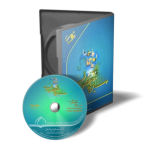

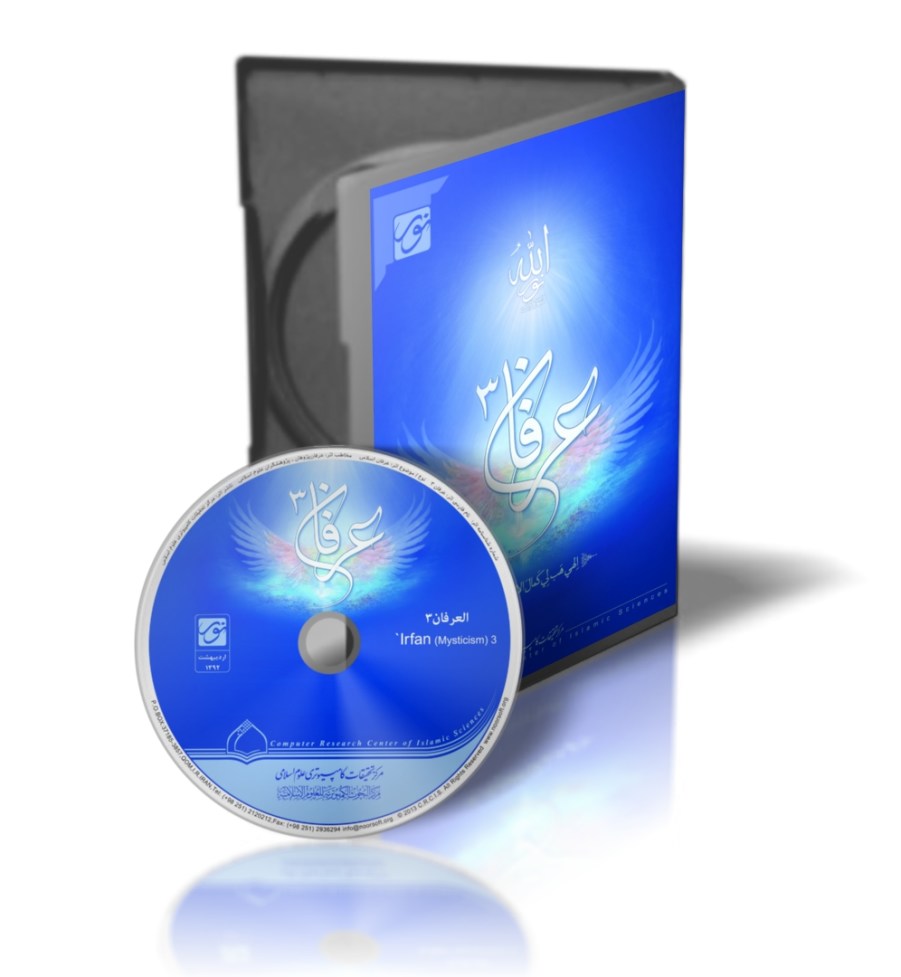
About Islamic Mysticism 3
One of the sciences that was born, grew, and perfected within the embrace of Islamic culture is the science of Mysticism (Irfan). Terminologically, Irfan is defined as: heart-based knowledge acquired through unveiling and direct witnessing (Kashf and Shuhud), not through debate and reasoning; it is also called "Intuitive Knowledge" (Ilm-e Wijdani). Like religion, Irfan stems from human nature, has roots deep in the human soul, and is a universal and all-encompassing phenomenon. Therefore, wherever human society has formed, spiritual and mystical tendencies can be found; indeed, its history can be considered concurrent with the existence of humanity on Earth.
Islamic Mysticism, as a practical movement, began at the time of the Holy Prophet (peace be upon him and his progeny) and the Pure Imams (peace be upon them). Initially, mystics were primarily known as "Ascetics" (Zuhhad). More than anything, the educational aspects of the Prophet and Ahlulbayt in the realm of spiritual conduct, as well as their own behavioral conduct, were instrumental in the growth of this movement. This movement accelerated and reached scientific maturity in the 2nd and 3rd centuries AH, achieved its full growth and perfection from the 3rd century onwards, and has since presented great personalities to the Islamic world.
In the 1st and 2nd centuries AH, figures such as Hasan al-Basri, Ibrahim al-Adham, Rabia al-Adawiyya, Abu Hashim al-Sufi al-Kufi, Shaqiq al-Balkhi, Ma'ruf al-Karkhi, and Fudayl ibn Iyad emerged. In the 3rd century: Bayazid al-Bastami, Bishr al-Hafi, al-Sari al-Saqati, al-Harith al-Muhasibi, al-Junayd al-Baghdadi, Dhul-Nun al-Misri, Sahl ibn Abdullah al-Tustari, and Husayn ibn Mansur al-Hallaj. In the 4th century: Abu Bakr al-Shibli, Abu Ali al-Rudbari, Abu Nasr al-Sarraj al-Tusi, Abu al-Fadl al-Sarakhsi, Abu Abdullah al-Rudbari, and Abu Talib al-Makki. In the 5th century: Abu al-Hasan al-Kharaqani, Abu Sa'id Abu al-Khayr, Abu Ali al-Daqqaq al-Nishaburi, Abu al-Hasan Ali ibn Uthman al-Hujwiri, Khwaja Abdullah al-Ansari, Abu Hamid al-Ghazali, Abu al-Qasim al-Qushayri, and Ahmad al-Ghazali. In the 6th century: Ayn al-Qudat al-Hamadhani, Sanai al-Ghaznavi, Ahmad Jam (known as Zhanda-Pil), Abdul Qadir al-Gilani, and Ruzbihan Baqli Shirazi. In the 7th century: Najm al-Din al-Kubra, Farid al-Din Attar Nishaburi, Shihab al-Din al-Suhrawardi Zanjan (author of Awarif al-Ma'arif), Ibn al-Farid al-Misri, Muhyiddin Ibn Arabi, Sadr al-Din al-Qunawi, Jalal al-Din Rumi (Molavi), and Fakhr al-Din Iraqi. In the 8th century: Ala' al-Dawla al-Simnani, Abdul Razzaq al-Kashani, Khwaja Hafiz Shirazi, Sheikh Mahmud Shabistari, Sayyid Haydar Amuli, and Abdul Karim al-Jili. In the 9th century: Shah Ni'matullah Wali, Sa'in al-Din Ali Turka Isfahani, Muhammad ibn Hamza al-Fanari, Shams al-Din Muhammad Lahiji, and Nur al-Din Abdul Rahman Jami. In the 10th century: Shams al-Din Tabadkani, Ni'matullah Nakhjavani, Muhammad Lahiji Gilani, Abdul Wahhab al-Sha'rani, and Abu al-Futuh Muhammad Makki. In the 11th century: Dehdar Shirazi, Sheikh Bahai, Sadr al-Muta'allihin Shirazi (Mulla Sadra), Mulla Muhsin Fayd, Khwaja Hurra al-Maghribi, Mustafa Bali-zadeh, and Ahmad Sirhindi. In the 12th century: Abdul Ghani al-Nabulsi, Qadi Sa'id Qummi, Abdul Rahman Khatmi Lahori, and Haqqi Bursevi. In the 13th century: Mulla Hadi Sabzawari, Mulla Mehdi Naraqi, Sayyid Bahr al-Ulum, Abdul Samad al-Hamadani, Abu al-Abbas ibn Ajiba, Zayn al-Abidin Shirvani, Abu al-Qasim Raz, and Aqa Muhammad Reza Qomshei. From the 14th century onwards: Sultan Muhammad Gunabadi, Aqa Hashim Ashkouri, Mehdi Elahi Qomshei, Allamah Tabatabai, Imam Khomeini, Allamah Sayyid Muhammad Husayn Tehrani, and Allamah Hassanzadeh Amoli appeared.
The famous mystics mentioned above, from the 2nd century AH to the present, have left behind valuable works that collectively form a significant part of the vast scientific and cultural treasure in Islamic history. These include works such as "Misbah al-Sharia," "Qut al-Qulub," "Khatm al-Awliya," "Kashf al-Mahjub," "Al-Luma," "Risalat al-Harith al-Muhasibi," "Risalat al-Qushayri," "Al-Tamhidat," "Awarif al-Ma'arif," "Ihya Ulum al-Din," "Al-Futuhat al-Makkiyya," "Fusus al-Hikam," "Al-Insan al-Kamil," etc., along with commentaries on these works and the poetry diwans of mystic poets like Attar Nishaburi, Ibn al-Farid, Rumi, Hafiz, and Shabistari, as well as commentaries written on these diwans.
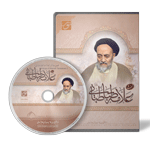
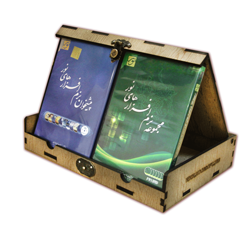
Accordingly, the Computer Research Center for Islamic Sciences, based on its mission and in line with reviving authentic Islamic culture, has sought to present a portion of these works to the scientific and cultural community under the title "Irfan Library 3."
Program Background:
For the first time, in 1377 SH (1998 CE), the Center introduced the "Irfan" software, containing major mystical works such as "Al-Futuhat al-Makkiyya," "Fusus al-Hikam," "Misbah al-Uns," "Miftah al-Ghayb," "Sharh Fusus al-Qaysari," and "Tamhid al-Qawa'id," offering it to seekers of spirituality and gnosis. The focus of this software was on textbooks in the field of Mysticism.
In 1385 SH (2006 CE), the Center produced "Irfan 2," focusing on Theoretical Mysticism. By selecting "Fusus al-Hikam" as the most research-oriented mystical text, efforts were made to gather important commentaries on this work and link them to the original text to facilitate research for scholars in Theoretical Mysticism, especially those exploring Ibn Arabi's works. However, the incompleteness of Theoretical Mysticism sources in that software, coupled with the recognition of the elevated status of Practical Mysticism books in Islamic knowledge, prompted mystics to resolve to produce "Irfan 3."
Advantages of "Irfan 3" Software:
A) Increase in sources of Practical Mysticism, Literary Mysticism, Terminology, and Classes (Tabaqat), as well as an increase in Theoretical Mysticism sources.
B) Thematic classification of books.
C) Presentation of mystical terminology and classes of mystics in a separate card and in a coordinated manner.
D) Resolution of research and technical issues present in "Irfan 2."
E) Presence of new technical capabilities, such as: displaying titles of individual treatises within collections in the list, defining a scope for a part of a book, ability to add scope, transfer to Word environment, and multi-document display for books and search results.
Definition and Content Scope of the Program:
The goal of producing "Irfan 3" is to offer a complete collection of Islamic Mysticism sources with an approach covering Theoretical, Practical, and Literary Mysticism, as well as Mystical Exegesis, to provide researchers with the groundwork for fundamental research in Islamic Mysticism.
Efforts have been made in this software to gather the most important books authored in Islamic Mysticism. It is hoped that some works not ready for this version will be presented to enthusiasts of Islamic Mysticism soon in the fourth version.
The works presented in this collection can be generally categorized into the following topics:
A) Practical Mysticism:
Practical Mysticism explains the method of spiritual journeying (Sayr wa Suluk), including the stages, stations, and maqamat that a seeker must traverse under the guidance of a Perfect Human to reach the ultimate goal, from beginning to end. It also discusses the states that may occur for the seeker on this difficult and arduous path.
B) Theoretical Mysticism:
Theoretical Mysticism is the gnostic's intuitive knowledge regarding the world, humanity, and their status and position within the world. It is, in fact, the outcome of Practical Mysticism. The central subject in Theoretical Mysticism is the "Absolute Existence" unrestricted by any condition, which the gnostic seeks to know its determinations through the intuitive method.
C) Literary Mysticism:
Literary Mysticism is responsible for explaining spiritual, metaphysical, and monotheistic issues using literary metaphors and subtleties. Mystical literature, besides expressing the gnostic's spiritual states, also evokes these emotions in the listener; thus, it has a profound impact on purifying the soul, refining the spirit, and elevating the inner secret (Sirr).
D) Mystical Exegesis:
Both Theoretical and Practical Mysticism are rooted in the Quran and Sunnah. The existence of numerous verses and narrations with mystical content, and the frequent reliance of great mystics upon them, indicates that the Quran and Sunnah, especially the Quran, were the primary source and foundation of their mystical views and thoughts. Verses such as: "And this worldly life is not but diversion and amusement. And indeed, the home of the Hereafter - that is the [eternal] life." (29:64), "Everything will be destroyed except His Face." (28:88), "Everyone upon the earth will perish, And there will remain the Face of your Lord, Owner of Majesty and Honor." (55:26-27), "So wherever you [might] turn, there is the Face of Allah." (2:115), "And when My servants ask you concerning Me - indeed I am near." (2:186), "And We are closer to him than [his] jugular vein." (50:16), "He is the First and the Last, the Ascendant and the Intimate." (57:3), "Allah is the Light of the heavens and the earth..." (24:35), and others, were sufficient to guide capable Muslims to the valley of Mysticism and compel them to uncover the meanings of these verses. This led mystics throughout history to author many books to understand the inner dimensions (Batin) of the Quran through intuitive and esoteric interpretation, known as "Allusions" (Isharat) and "Mystical Interpretation" (Ta'wil Irfani), just as they also engaged in the esoteric explanation of some narrations from the Infallibles.
Mystics also examined the inner dimensions of religious duties such as prayer, fasting, and Hajj, authoring books on the secrets of these acts and other religious commandments, thereby clarifying the secrets and truths of the Shariah for everyone.
E) Explanation of Terminology:
A significant portion of mystical content is written in specific terminology and phrases. Without knowledge of these terms, one can never grasp the intent and meaning of the mystics. Therefore, from the beginning, mystics recognized the necessity of writing explanations for these terms, and figures like Ibn Arabi, Abdul Razzaq al-Kashani, and others authored works in this field. Mystical terminology consists of terms from Theoretical, Practical, and Literary Mysticism.
F) Classes (Tabaqat) and Biographies of Mystics:
The "Classes of Mystics" differ from conventional historical classifications; although biographical details are sometimes discussed in these collections, the "Tabaqat" in Mysticism have more of a Practical Mystical color than a historical one, as they discuss the practical conduct and mystical characteristics of each mystic.
Reminder:
Most of the mystical texts presented in this software are books where both clear (Muhkamat) and ambiguous (Mutashabihat) mystical discussions are presented together. Therefore, understanding the content of these books or acting upon them will not be beneficial merely by reading them without the approval and guidance of a master proficient in these subjects.
* New Program Capabilities:
As mentioned, one of the goals of designing and implementing this new program was to upgrade the "Irfan 2" software. Among the capabilities added to "Irfan 3" compared to the previous version are:
- Separating treatises contained within collections and displaying them by their own title in the list.
- Searching via word roots.
- Simplifying the search environment.
- Ability to define a scope for a part of a book.
- Multi-document capability in display and search.
- Ability to categorize existing books based on user needs.
- Ability to categorize search results by book.
- Using a selective index for quick searching within book index titles.
- Addition of online search (Find) capability in various sections.
- Adjusting display page size on different monitors.

Share your thoughts with other customers