
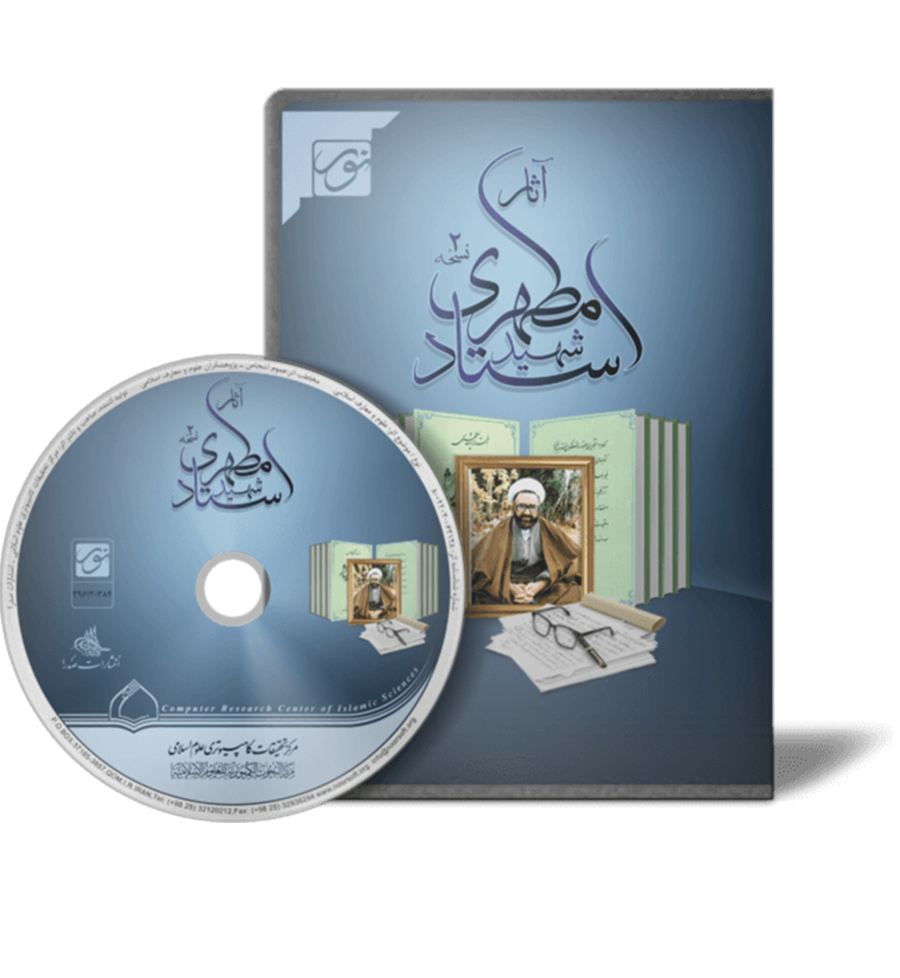




About Complete Works of Martyr Motahhari 2.0.4
A Brief Biography of Martyr Ayatollah Mutahhari
Professor Martyr Ayatollah Mutahhari was born on 13 Bahman 1298 SH (corresponding to 12 Jumada al-Awwal 1338 AH) in the village of Fariman, located 75 km from the holy city of Mashhad (now a county), into a noble religious family. After spending his childhood, he attended a traditional school (Maktabkhaneh) to study elementary lessons. At the age of twelve, he moved to the Seminary of Mashhad and began studying the preliminaries of Islamic sciences. In 1315 SH, despite the severe campaign by Reza Khan against the clergy and the opposition of friends and relatives, he traveled to the Seminary of Qom to complete his studies; at a time when its great founder, Ayatollah Hajj Sheikh Abdul Karim Haeri Yazdi, had just passed away, and the leadership of the seminary had been taken up by three great teachers: Ayatollahs Sayyid Mohammad Hojjat, Sayyid Sadr al-Din Sadr, and Sayyid Mohammad Taqi Khansari.
During his fifteen-year stay in Qom, the Professor benefited from the classes of: the late Ayatollah Borujerdi (in Fiqh and Usul), Imam Khomeini (may God sanctify his secret) (for twelve years in the philosophy of Mulla Sadra, Irfan, ethics, and Usul), and the late Allamah Sayyid Mohammad Hossein Tabataba'i (in philosophy: Ilahiyyat of Ibn Sina's Al-Shifa and other lessons). Before Ayatollah Borujerdi's migration to Qom, the Martyr Professor would sometimes go to Borujerd to benefit from his presence. Professor Mutahhari also benefited greatly for a period from the late Ayatollah Hajj Mirza Ali Aqa Shirazi in ethics and Irfan. Among his other teachers were: the late Ayatollah Sayyid Mohammad Hojjat (in Usul) and the late Ayatollah Sayyid Mohammad Mohaghegh Damad (in Fiqh). During his stay in Qom, in addition to acquiring knowledge, the Professor participated in social and political affairs and was connected with the "Feda'ian Islam" group.
In 1331 SH, while considered one of the famous teachers and a future hope of the seminary, he migrated to Tehran. In Tehran, he engaged in teaching at Marvi School, authoring books, and delivering research-based lectures. In 1334 SH, the first Quranic exegesis session of the "Islamic Students' Association" was held under Professor Mutahhari's supervision. In the same year, he began teaching at the Faculty of Theology and Islamic Studies of the University of Tehran. In 1337 and 1338 SH, when the "Islamic Physicians' Association" was formed, Professor Mutahhari was one of its main speakers, and from 1340 to 1350 SH, he was its sole speaker, leaving behind important discussions.
From 1341 SH, when Imam Khomeini's (may God sanctify his secret) movement began, Professor Mutahhari was actively by the Imam's side; so much so that the organization of the June 15th uprising in Tehran and its coordination with the Imam's leadership can be attributed to his efforts and those of his companions. At 1:00 AM on Wednesday, 15 Khordad 1342 SH, following an impassioned speech against the Shah, he was arrested by the police and transferred to the temporary police prison, where he was imprisoned along with several Tehran clerics. After 43 days, following the migration of clerics from other cities to Tehran and public pressure, he was released along with the other clerics.
After the formation of the "Motalefeh Islamic Associations," Professor Mutahhari, along with several other religious figures, was appointed by Imam Khomeini (may God sanctify his secret) to lead these associations. Following the assassination of Hassan Ali Mansur (the then Prime Minister) by Martyr Mohammad Bokharaei, who actively attended the Professor's classes, the leadership cadre of the Motalefeh Associations was identified and arrested; however, since the judge of this case had studied in Qom under the Professor for a period, he sent him a message saying, "I have fulfilled the duty of a student to his teacher," and thus the Martyr Professor survived the peril.
After Imam Khomeini's (may God sanctify his secret) exile abroad, the responsibility of Professor Mutahhari and his companions became heavier. During this time, he continued writing books on topics needed by society and delivering lectures at universities, the Islamic Physicians' Association, Hedayat Mosque, Jameh Narmak Mosque, etc. Generally, the Martyr Professor, who believed in a specific Islamic movement and not just any movement, made significant ideological efforts to Islamicize the content of the movement and fought stubbornly against deviations and distortions. In 1346 SH, with the help of several friends, he took steps to establish "Hosseiniyeh Irshad," so much so that he can be considered its founder; but after a while, due to the unilateral and unconsulted actions of a board member (Naser Minachi) and his prevention of implementing the Professor's plans, such as creating a clerical council to supervise the scientific and propagational activities of the Hosseiniyeh, he finally resigned from the board membership in 1349 SH and left the institution, despite the tremendous efforts he had made and the high hopes he had pinned on its future.
In 1348 SH, the Professor was arrested for issuing a statement signed by himself, Allamah Tabataba'i (may God sanctify his secret), and Ayatollah Hajj Sayyid Abul Fadl Mujtahid Zanjan, calling for donations to help Palestinian refugees, and announcing it in a speech at Hosseiniyeh Irshad; he spent a short time in solitary confinement. From 1349 to 1351 SH, he supervised the propagational programs of Al-Jawad Mosque and was mostly the main speaker, until that mosque and then Hosseiniyeh Irshad were closed, and Professor Mutahhari was arrested again and detained for a period. Afterwards, the Martyr Professor delivered his lectures at Javid Mosque, Ark Mosque, etc. After a while, Javid Mosque was also closed. In 1354 SH, he was banned from preaching, and this ban continued until the victory of the Islamic Revolution.
One of the most important services of Professor Mutahhari during his blessed life was presenting the authentic Islamic ideology through teaching, lecturing, and writing books. This reached its peak especially in the years 1351 to 1357 SH, due to increased propaganda by leftist groups, the emergence of Muslim groups influenced by the left, and the rise of syncretism (Elteqat). Apart from Imam Khomeini (may God sanctify his secret), Professor Mutahhari was the first figure to realize the danger posed by the leaders of the so-called "Mojahedin-e Khalq Organization," warned others against collaborating with them, and even predicted their ideological shift. During these years, upon the Imam's (may God sanctify his secret) recommendation to teach in the Qom Seminary, he traveled to Qom two days a week and delivered important lessons there, while simultaneously teaching in Tehran at his home, etc. In 1355 SH, following a confrontation with a communist professor at the Faculty of Theology (!), he was retired earlier than scheduled. Also in these years, Professor Mutahhari, in cooperation with several religious figures, founded the "Combatant Clergy Association of Tehran," hoping that seminaries in other cities would gradually establish similar organizations.
Although Professor Mutahhari's connection with Imam Khomeini (may God sanctify his secret) continued via letters, etc., after the Imam's exile from Iran, in 1355 SH, the Professor managed to travel to Najaf Ashraf and consult with the Imam (may God sanctify his secret) on important issues regarding the movement and the seminaries. After the martyrdom of Ayatollah Sayyid Mustafa Khomeini and the beginning of a new phase of the Islamic movement, Professor Mutahhari dedicated himself full-time to the service of the movement and played a fundamental role in all its stages.
During Imam Khomeini's (may God sanctify his secret) stay in Paris, the Professor traveled there and discussed important revolutionary issues with him; on this trip, the Imam (may God sanctify his secret) entrusted him with the responsibility of forming the "Islamic Revolution Council." Upon Imam Khomeini's return to Iran, Professor Mutahhari personally took charge of the "Imam Reception Committee," and until after the victory of the Islamic Revolution, he was always by the side of the great leader of the Islamic Revolution, serving as a compassionate and trusted advisor; until at 10:20 PM on Tuesday, 11 Ordibehesht 1358 SH, in the darkness of night, while leaving a political-intellectual session, he was martyred by a bullet fired by the ignorant and criminal Furqan group, which struck his brain. The Imam and the Islamic Ummah were plunged into immense grief, as hopes were pinned on this great man. Peace and blessings of God be upon his pure and sanctified soul.
Sadra Publications and the Works of Martyr Professor Mutahhari
Sadra Publications, the publisher of the works of Martyr Professor Ayatollah Murtaza Mutahhari (may God have mercy on him), was established in 1357 SH upon the suggestion of the Martyr thinker himself, aiming to centralize the publication of his valuable Islamic intellectual works. After the victory of the Islamic Revolution and the Professor's martyrdom, it dedicated all its efforts to meeting the vast demands of the truth-seeking Iranian nation for the works of this great man. To preserve the works of Martyr Professor Mutahhari as much as possible, especially given the repeated emphases by Imam Khomeini (may God sanctify his secret) and to facilitate researchers' use of these works, the publishing house embarked on implementing the "Collection of Works" project for this esteemed thinker based on themes, 29 volumes of which have been published so far. It is worth noting that the number of the Professor's works at the time of his martyrdom was 29 volumes; since his martyrdom until now, more than 60 new volumes including lectures, lessons, Quranic exegeses, and notes have been published, bringing his total works to nearly 100 volumes.
The "Notes of Professor Mutahhari" project is one of the initiatives that introduces researchers to diverse topics in the fields of Theology (Kalam), Philosophy, Mysticism (Irfan), the Biography of the Infallibles (peace be upon them), and dozens of other subjects. These notes have been published in two sections: alphabetical in 7 volumes and thematic in 5 volumes, with several more volumes underway. Additionally, a portion of the Professor's lectures comprising 306 hours has been presented in the "Nedaye Mutahhari" (Call of Mutahhari) project.
A final point is that the works of the Martyr Professor are published under the supervision of the "Supervisory Council on the Publication of Professor Mutahhari's Works," managed by Dr. Ali Mutahhari, and thus utmost care and trustworthiness are exercised in publishing these works.
The list of books published so far by Sadra Publications is as follows:
1. Spiritual Freedom;
2. Introduction to the Quran (14-1);
3. The Future of the Islamic Revolution in Iran;
4. Revival of Islamic Thought;
5. Sexual Ethics;
6. Islam and the Needs of the Time (1 & 2);
7. Principles of Philosophy and the Method of Realism (5-1);
8. Imamate and Leadership;
9. Divine Supports in Human Life;
10. The Perfect Man;
11. Man and Destiny;
12. Twenty Discourses;
13. The Professor's Answers;
14. Fifteen Discourses;
15. Five Essays;
16. The Ummi Prophet;
17. Education and Training in Islam;
18. Monotheism (Tawhid);
19. The Attraction and Repulsion of Ali (AS);
20. Jihad;
21. Pilgrimage (Hajj);
22. Wisdoms and Admonitions (1 & 2);
23. The Husayni Epic (1 & 2);
24. Finality of Prophethood (Khatamiyyat);
25. The Seal of Prophethood;
26. Mutual Services of Islam and Iran;
27. True Stories (Dastan-e Rastan) (1 & 2);
28. Lessons on Asfar (6-1);
29. Ten Discourses;
30. A Look at the Biography of the Infallible Imams (AS);
31. A Look at the Prophetic Biography;
32. A Look at Nahj al-Balagha;
33. Commentary on the Manzumah;
34. Six Essays;
35. Divine Justice;
36. Hafez's Mysticism;
37. Causes of Inclination towards Materialism;
38. Innate Nature (Fitrah);
39. Philosophy of Ethics;
40. Philosophy of History (4-1);
41. The Uprising and Revolution of Mahdi (AS);
42. Fundamentals of Islamic Sciences (3-1);
43. Four-Way Dialogue;
44. The Issue of Hijab;
45. The Issue of Usury and Banking (plus Insurance);
46. The Issue of Knowledge;
47. Resurrection (Ma'ad);
48. Philosophical Essays;
49. An Introduction to the Islamic Worldview, including:
— Man and Faith;
— The Monotheistic Worldview;
— Revelation and Prophethood;
— Man in the Quran;
— Society and History;
— Eternal Life or the Hereafter;
50. The Historical Letter from Professor Mutahhari (RA) to Imam Khomeini (RA);
51. The Struggle between Truth and Falsehood (plus Social Evolution of Man in History);
52. Prophethood;
53. The System of Women's Rights in Islam;
54. A View on the Islamic Economic System;
55. A Critique of Marxism;
56. Islamic Movements in the Last Hundred Years;
57. Loyalties and Guardianships;
58. Notes of Professor Mutahhari (12-1).
Books Published About Professor Mutahhari (RA)
1. Freedom from the Perspective of Martyr Professor Ayatollah Mutahhari;
2. Mirror of the Jam (Hafez's Diwan, accompanied by Professor Mutahhari's notes);
3. Islamic Unity in the Works of Martyr Professor Ayatollah Mutahhari;
4. The Professor in the Words of the Leader;
5. Professor Mutahhari from the Family's Perspective;
6. Professor Mutahhari and the Intellectuals;
7. Enjoining Good and Forbidding Evil in the Works of Martyr Professor Ayatollah Mutahhari;
8. My Memories of Martyr Professor Mutahhari (by Ali Davani);
9. In Elegy of the Professor (Collection of Poems);
10. A Look at the Life of Professor Mutahhari;
11. The Professor's Image in the Mirror of Companions' Views;
12. The Martyred Sheikh;
13. The Awakened Reformer (1 & 2);
14. A Brief Introduction to the Works of Professor Mutahhari;
15. Letters and Unspoken Words;
16. Hypocrisy and Hypocrites from the Perspective of Martyr Ayatollah Mutahhari;
17. Who Was Mutahhari?.
List of Volumes of the "Collection of Works"
Dear users, please note that since Volumes 2, 4, and 9 of Martyr Mutahhari's "Collection of Works" have been re-edited and typeset, this software presents the new versions of them as follows:
— Collection of Works Volume 2, 13th edition onwards;
— Collection of Works Volume 4, 10th edition onwards;
— Collection of Works Volume 9, 9th edition onwards.
Below, the Professor's "Collection of Works" is listed based on theme:
A. Fundamentals of Creed (Usul al-Aqaid)
— Collection of Works Vol. 1: Divine Justice, Man and Destiny, Causes of Inclination towards Materialism;
— Collection of Works Vol. 2: An Introduction to the Islamic Worldview (Man and Faith, The Monotheistic Worldview, Revelation and Prophethood, Man in the Quran, Society and History, Eternal Life or the Hereafter);
— Collection of Works Vol. 3: The Divine and Materialistic Worldviews, Theology (Kalam), Quranic Argumentation on Life and Monotheism, The Human Perceptive Apparatus, Faith in the Unseen, Finality of Prophethood, The Ummi Prophet, Loyalties and Guardianships, Management and Leadership in Islam, Divine Supports in Human Life, The Lesson to be Learned from Spring, The Sun of Religion Never Sets, The Struggle between Truth and Falsehood, Fitrah, Monotheism;
— Collection of Works Vol. 4: Continuation of The Struggle between Truth and Falsehood, Fitrah, Monotheism; Prophethood, Resurrection, Imamate and Leadership, The Principle of Justice in Islam.
B. Philosophy
— Collection of Works Vol. 5: History of Philosophy in Islam, Fundamentals of Islamic Sciences (Logic, Philosophy), Commentary on the Manzumah;
— Collection of Works Vol. 6: Principles of Philosophy and the Method of Realism (5-1);
— Collection of Works Vol. 7: Philosophy of Ibn Sina (1): Lessons on "Al-Isharat", "Al-Najat", "Ilahiyyat — Al-Shifa";
— Collection of Works Vol. 8: Philosophy of Ibn Sina (2): Continuation of lessons on "Al-Isharat", "Al-Najat", "Ilahiyyat — Al-Shifa";
— Collection of Works Vol. 9: Detailed Commentary on the Manzumah (1);
— Collection of Works Vol. 10: Detailed Commentary on the Manzumah (2);
— Collection of Works Vol. 11: Lessons on Asfar, "3-1" (Topic of Motion);
— Collection of Works Vol. 12: Lessons on Asfar, "6-4" (Topic of Time);
— Collection of Works Vol. 13: Philosophical Essays, The Issue of Knowledge, A Critique of Marxism.
C. History
— Collection of Works Vol. 14: Mutual Services of Islam and Iran;
— Collection of Works Vol. 15: Philosophy of History (4-1).
D. Biography of the Infallibles (AS)
— Collection of Works Vol. 16: A Look at the Prophetic Biography, The Attraction and Repulsion of Ali (AS), A Look at Nahj al-Balagha, Problems of Ali (AS), The Peace Treaty of Imam Hasan (AS);
— Collection of Works Vol. 17: The Husayni Epic;
— Collection of Works Vol. 18: A Look at the Biography of the Infallible Imams (AS), True Stories (Dastan-e Rastan) (1 & 2).
E. Jurisprudence and Law
— Collection of Works Vol. 19: The System of Women's Rights in Islam, The Issue of Hijab, The Professor's Answers to Critiques on the Book "The Issue of Hijab", Sexual Ethics;
— Collection of Works Vol. 20: Principles of Jurisprudence, Inspiration from Shaykh al-Ta'ifah, Merits and Services of the late Ayatollah Borujerdi, The Principle of Ijtihad in Islam, Enjoining Good and Forbidding Evil, Jihad, The Issue of Usury and Banking plus Insurance, A View on the Islamic Economic System;
— Collection of Works Vol. 21: Islam and the Needs of the Time (1 & 2), Islam and the Needs of the Modern World, Islamic Laws in Comparison with the Development and Transformation of the New World.
F. Ethics and Mysticism
— Collection of Works Vol. 22: Practical Wisdom, Wisdoms and Admonitions, Philosophy of Ethics, Education and Training in Islam;
— Collection of Works Vol. 23: Mysticism (Irfan), The Perfect Man, Hafez's Mysticism, Spiritual Freedom, Piety (Taqwa), Respecting Rights and Despising the World, Hardships and Tribulations, Benefits and Effects of Faith, Intellect and Heart, Supplication (Dua).
G. Socio-Political
— Collection of Works Vol. 24: Islamic Movements in the Last Hundred Years, The Future of the Islamic Revolution in Iran, The Uprising and Revolution of Mahdi (AS), The Martyr, The Fundamental Problem in the Clerical Organization, Leadership of the Young Generation, Islamic International Relations;
— Collection of Works Vol. 25: "Al-Ghadir" and Islamic Unity, Pilgrimage (Hajj), The Islamic Liberation Movement, Salvation and Freedom of Mankind, Ghadir and the Danger Threatening Muslims from Within, The Issue of Hypocrisy, Justice from the Perspective of Ali (AS), Just and Unjust Distinctions, The Role of Religion in Historical Transformations, The Role of the Karbala Incident in the Transformation of Islamic History, Oratory and Pulpit, The Necessity of Honoring Islamic Rituals, Defense of the 13th, Revival of Islamic Thought, Revival of Religious Thought, Social Evolution of Man in History.
H. Exegesis (Tafsir)
— Collection of Works Vol. 26: Introduction to the Quran (5 - 1);
— Collection of Works Vol. 27: Introduction to the Quran (9 - 6);
— Collection of Works Vol. 28: Introduction to the Quran (14-10).
I. Miscellaneous (Multi-topic)
- Collection of Works Vol. 29: First Part of Miscellaneous
1. Discourses on Islamic Ethics;
2. Quranic Anthropology;
3. The Goal of Life;
4. Women and Judicial and Political Issues;
5. Finality of Prophethood.
- Collection of Works, Vol. 30: Second Part of Miscellaneous
1. Islamic Growth;
2. Around the Muhallil;
3. Religion's View on the World;
4. The Quran and the Issue of Thinking;
5. The Obligation of Knowledge;
6. The Search for Truth;
7. Five Essays;
8. Four-Way Dialogue;
9. The Historical Letter from Professor Mutahhari to Imam Khomeini;
10. God in Human Life;
11. God in Human Thought;
12. Slavery in Islam;
13. Islamic Jihad and Freedom of Belief.
Notes of Professor Mutahhari (13-1)
This collection up to Volume 7 includes the Martyr Professor's notes in the alphabetical section, containing various topics that differ in brevity and length; sometimes they are at the level of flashcards briefly referring to a point, and other times they are in the form of an essay. The subsequent volumes of this collection are the Professor's thematic notes, five volumes of which (Volumes 8 to 12) have been published so far. In the thematic notes, various topics such as: Monotheism, Islam, Quran, Prophetic Biography, Women's Rights, Philosophy, Theology (Kalam), etc., are discussed.
The list of volumes in this collection is as follows:
A. Alphabetical Section
— Volume 1: Letter Alif;
— Volume 2: Letters Ba, Pe, Te, Jim;
— Volume 3: Letters Ha, Kha;
— Volume 4: Letters Dal, Zal, Ra;
— Volume 5: Letters Za, Sin;
— Volume 6: Letters Shin, Sad, Ta, Za, Ain, Ghain, Fa, Qaf, Kaf, Gaf;
— Volume 7: Letters Lam, Mim, Nun, Vav, He, Ye.
B. Thematic Section
— Volume 8: Characteristics of Islam, Monotheism, Quran, Prophethood;
— Volume 9: Prophetic Biography, Imamate, Imam Ali (AS), Lady Fatimah (AS), Imam Hasan (AS), Imam Sajjad (AS), Imam Sadiq (AS), Imam Kazim (AS), Imam Reza (AS), The Promised Mahdi (AS);
— Volume 10: Islamic Republic, Governance Issues, Islam and Revolution, Iran and Islam, Greatness and Decline of Muslims, Islam and Requirements of the Time, Ijtihad, Enjoining Good and Forbidding Evil, Slavery, Evolution, Social Evolution of Man in History, Society and History;
— Volume 11: True Revolution, Fitrah, Philosophy of Ethics, Mysticism, Love, Woman;
— Volume 12: Philosophy, Theology (Kalam), Materialism, Matter and Form, Praxis, Dialectics — Contradiction, Historical Materialism, About Schopenhauer, Spirit and Psyche, Manuscripts of Theological, Philosophical, and Mystical Books, Usury and Banking, Prayer, Miscellaneous.
— Volume 13: Moral Education, Time and Timing, Lessons of Spring, Pleasure and Joy, General Guidance and Prophethood, Clergy and People, The Truth of Life, Religion and Life, Spiritual Food of Society, Enjoining Good and Forbidding Evil.





Share your thoughts with other customers