

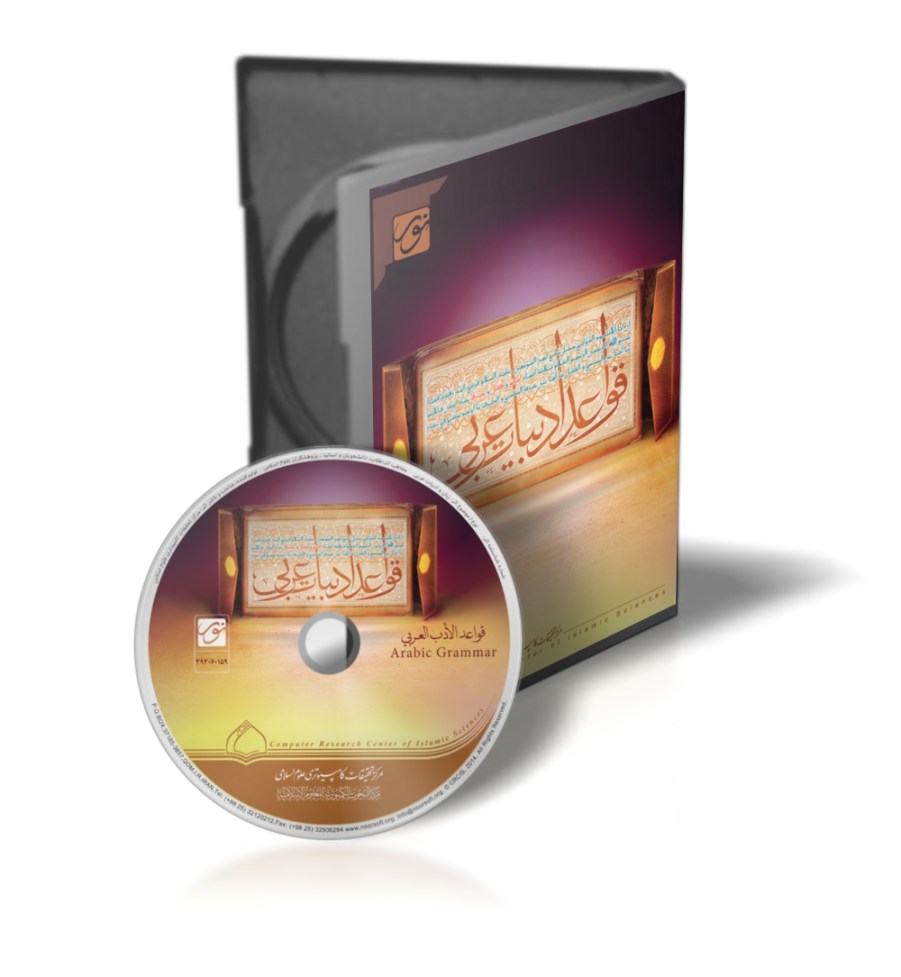
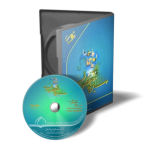

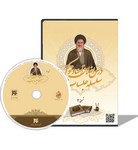
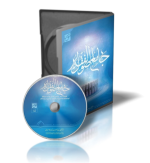
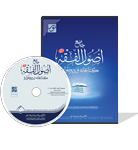
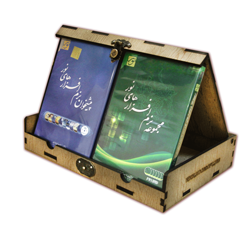
About Library of Arabic Grammar and Rhetoric
We know that the Arabic language, with its immense capacity and subtlety to encompass great and delicate meanings within itself, and its amazing power of fertility, has rendered invaluable services to Islam and the Quran. This very fact has caused numerous literary sciences to take shape in the lap of this language over time: Lexicon (Lughat), Morphology (Sarf), Syntax (Nahw), Semantics (Ma'ani), Rhetoric (Bayan), and Eloquence (Badi'). The upcoming program (Library of Arabic Literature Grammar) encompasses an important part of the sources related to these sciences.
Undoubtedly, language, meaning organized words that, with a specific arrangement side by side, hand in hand, unveil the concepts hidden in the human mind and reveal his inner self, is one of the great blessings of God, the Most Gracious. It stands in the rank of the creation of man, the teaching of the Quran, and the prostration of the phenomena of earth and heaven, as a manifestation of His infinite mercy before the eyes of humans and jinn.[2] From this perspective, the diversity of human languages, like the difference in their colors and the wondrous creation of earth and heaven and the thousand and one indescribable phenomena, is a sign of the wisdom of God Almighty, inscribed by the fingers of that Powerful Sage on a page from the countless pages of the Book of Creation[3] for the worlds to read, ponder, recognize its Able Author, and praise Him. From this viewpoint, unkindness towards any language is ingratitude to that Gentle and Merciful One and trampling upon His blessing with the boot of denial and ingratitude, inviting His reproachful question: "Then which of the favors of your Lord will you deny?"[4]
Nevertheless, sometimes due to certain external factors, a language assumes a higher status than others; just as today, since modern science, especially basic sciences, speaks mostly in English in various fields of industry, technology, medicine, pharmacology, and most widely in the booming computer market, the resonance of this language echoes in the ears of the world.
The Importance of Learning Arabic Literature Grammar
We claim that the Arabic language holds a status for Muslims higher than that of the English language for the people of the world, and we have several true witnesses to this claim; listen to the testimony of our truthful witnesses:
1. The only remaining miracle from the Men of Revelation, and the only window opened to the Unseen world through which one can clearly hear the voice of God and see the highway of guidance, is the Quran, and the language of the Quran is Arabic.
2. The Great Teacher of the Quran, the Master and Leader and Seal of all Prophets, and a Mercy to the worlds;[5] He who: "Attained the heights by his perfection, dispelled the darkness by his beauty, all his attributes were beautiful, prayers be upon him and his family"[6], and his first nurtured ones, especially the rider of "Duldul" in the field of courage, eloquence, rhetoric, and justice, Ali al-Murtada, and also the pure progeny of the Chosen Prophet, who are the Leaders of Guidance, bearers of the heavy burden of Guardianship, and heirs of his knowledge without intermediary, with whom no Sheikh or King can be compared,[7] all spoke in the Arabic language and placed the pearls of meanings in the shell of this language.
3. History bears witness that the diverse sciences of the Greeks and other nations that possessed knowledge and civilization in the past were preserved from the vicissitudes of time thanks to the Arabic language. Had those sciences not been translated from Greek, Syriac, etc., into Arabic in the early centuries of Islam, when Muslims, encouraged by the Holy Quran and the Noble Prophet (PBUH), had their heads filled with the passion for learning and their hearts with the desire for wisdom (even if that knowledge was in the farthest point from them, like China and wisdom, this great good, in the hands of the unworthy and hypocrites)[8], Genghis Khan of ignorance and fanaticism in the dark Middle Ages would have consumed everything in the fire of neglect and turned the library of those sciences into a stable for wild horses of oblivion.
4. All sciences born and raised in the lap of Islam, such as Exegesis, Hadith, Dirayah, Rijal, Jurisprudence, Syntax, Morphology, etc., without exception, have worn the garment of Arabism since day one, and even now it rarely happens that they wear another garment; moreover, over time, Arabic-tailoring tailors have gained such experience that they tailor the garment of Arabism so perfectly to the graceful stature of those sciences that it seems as if that garment has become part of their existence, and any garment other than Arabism is ill-fitting for them.
5. The language of the majority of the world's Muslims is Arabic. If one day a physician knowledgeable about the disease and wise, not out of politics but out of sincerity, wishes to write a healing prescription for the chronic disease of division that has gnawed at the body of this Ummah, which was supposed to be a single body as recommended by the Messenger of Tawhid[9] for centuries, gradually dismembering its limbs, undoubtedly the best language that will make his pen eloquent and clear is the Arabic language.
6. The sweet Persian language, which connects millions of Muslims and non-Muslims and informs them of each other's intentions, and furthermore, holds a precious treasure of jewels of literature, art, mysticism, and philosophy in its bosom, is so intertwined with the Arabic language that the idea of separating the two is baseless. Those who, out of blind fanaticism, strive to open locked and clogged doors to speak pure Persian are casting bricks into the sea and carrying water in a sieve, making themselves a laughingstock to the people. Of course, this never means leaving the borders of the Persian language open and issuing entry permits for unfamiliar and foreign Arabic words, and absolving Arab-stricken smugglers who day and night scatter rough and breath-taking Arabic word-stones on the smooth highway of the Persian language, making it difficult for travelers, and calling this disgrace eloquence and that scandal knowledge; for this is negligence (Tafrit) and that is excess (Ifrat), and "the ignorant is either negligent or excessive." Our point is that for centuries, a significant number of Arabic words have mixed with Persian words like milk and sugar, even reproducing, and have settled so firmly in the house of the mind, tongue, and ear of Persian speakers, becoming natives of that land and water, that often we are forced to rely on them to understand pure Persian words. Undoubtedly, expelling this huge multitude from their familiar homeland on the grounds that they once sprang from Arab soil, and gathering rotten bones of a bunch of so-called "pure" words from the corners of abandoned cemeteries of nameless books, assembling them, and breathing a false life into them with a thousand tricks and artificial respiration, then seating them in place of the expelled group, claiming that in the distant past they were familiar and intimate with our ancestors, is an act that if done knowingly is a crime, and if done unknowingly is foolishness.
Scope and Subject of the Arabic Literature Library
The boundless expanse and powerful dominance of the Arabic language (Lisan al-Dad), its capacity and subtlety to encompass great and delicate meanings within itself, and its amazing power of fertility, have caused numerous literary sciences to be born in its lap, nurtured by its lifeblood, and reach maturity over time; sciences such as: "Writing", "Recitation", "Tajweed", "Derivation", "Composition", "Proverbs", "Poetry", "History of Literature", "Lexicon", "Morphology", "Syntax", "Semantics", "Rhetoric", and "Eloquence". It is not our intention in this program to mention all these righteous children; for although they are all worthy, six of them are more deserving, more fruitful, kinder to their mother, and more powerful in serving her: "Lexicon", "Morphology", "Syntax", "Semantics", "Rhetoric", and "Eloquence".
The science of "Lexicon" carried all its books on its back years ago, entered the ranks of the predecessors, stepped to the threshold of "Qamus", inscribed its name on the "Tablet of Noorians", and became one of the intimates; there is no need to invite it to this feast; for we have spread it for the other five and inscribed this "Tablet" in their names; hoping that one day the means to invite those other brothers and sisters to the threshold of "Noorians" will be provided, and we can gather them all.
Now nothing remains but to open the tongue to introduce these five brothers and sisters, and show the field of work and the value of the burden of each, but before entering this threshold, listen to this prelude which can be called "Permission to Enter":
Just as every human individual has two types of characteristics: one individual characteristics that are always with him, whether he sits in a gathering or isolates himself in a corner, such as being male, female, old, young, etc.; and another collective characteristics that are born only in interaction with society, such as being an emir, vizier, scribe, etc.; and just as the arrangement of individuals in a gathering may sometimes be appropriate, fruitful, and stable, and sometimes inappropriate, unfruitful, and unstable; so too every word has two types of characteristics: one, individual characteristics that always accompany it, whether it enters a sentence or leaves it, such as being a noun, verb, trilateral, sound, defective, etc.; and another, sentence characteristics that a word possesses only within a sentence, such as being a subject, object, genitive, conditional, etc.; the arrangement of words side by side also may sometimes be diverse, charming, and compatible, and sometimes hideous, improper, and heart-wrenching.
You may observe the details of what we summarized about words in the framework of the five aforementioned sciences:
1. The Science of Morphology (Sarf)
This science speaks of the individual characteristics of words and the quantity and quality of the elements constituting each word, and teaches us how to transform a word into various forms to obtain multiple and appropriate meanings. In reality, in this science, we deal with the dough of words and various molds; whatever mold we pour this dough into, it takes a specific shape and a special meaning is engraved on its forehead.
It should be said that the intended meaning of "word" in this science is only "noun" and "verb", and we do not speak of "particle"; because the particle is so rigid, unreactive, and incompatible that it does not take any form other than the one it has, nor does it fit into any other mold.
Thus, in this science, we recognize words in terms of the number and nature of their constituent elements, whether they are nouns or verbs, and in what mold they are cast; we comprehend their meanings and can choose appropriate molds for desired meanings and pour the word's dough into them.
Stating the individual characteristics of a word is termed "Tajzi'ah" (Analysis); therefore, in the laboratory of this science, words are analyzed.
2. The Science of Syntax (Nahw)
This science speaks of the sentence characteristics of words and specifies the role of each word in the sentence; therefore, in this science, we deal with words and their interaction with one another; in other words, we learn that when a word steps into the arena of a sentence, what role it chooses, and accordingly, what type of grammatical case (I'rab) it accepts, branding it on the forehead or in the heart, or neither on the forehead nor the heart but sitting in the place of the branded ones.[10]
In this science, we also have talks with the "particle"; because some particles are operative, and when mixed with other words, they make them fruitful with grammatical cases, while some are sterile and lack the ability to make other words fruitful[11].
Stating the sentence characteristics of a word is termed "Tarkib" (Composition); therefore, in the laboratory of this science, words are composed with one another.
A short story: In the sciences of Sarf and Nahw, we learn the "Analysis and Composition" of words, and we remain safe from errors in speech.
3. The Science of Semantics (Ma'ani)
Undoubtedly, by virtue of our humanity, we are constantly exposed to various "states" (Ahwal), and the gale of "states" always pulls us like a straw here and there, and we know that every "state" has a "demand" that must necessarily be met. If we observe this change of "states" and colorful "demands" in the realm of dialogue, we find that every speech and hearing will only settle in the heart if it can fulfill the "demand" of that "state" that has seized us or our listener; for example, if the "state of denial" has dug its sharp claws into the soul of our addressee, tormenting him and demanding a prey soaked in the fat of "emphasis" and mixed with the juice of "argumentation", then only speech that is "emphatic" and "argumentative" can loosen the claws of "denial" and release our listener. Such speech is termed "MuTabiq li-Muqtada al-Hal" (Conforming to the exigencies of the situation).
In the science of Ma'ani, we learn how to arrange words side by side so that speech, while being "correct" and "eloquent", conforms to "Muqtada al-Hal". To achieve this purpose, this science discusses "Fasahah" (Eloquence of expression) and "Balagha" (Rhetoric) in detail.
"Fasahah and Balagha, which we call in Persian 'Goshadeh-Zabani' (Open-speaking) and 'Sokhandani' (Eloquent), mean that speech is correct, eloquent, and suitable to the state and station; as it is said: 'Every speech has its place, and every point has its station'."[12]
Therefore, "The benefit of the science of Ma'ani is multiple; its main benefit is that it acquaints us with the numerous possibilities of language so that we can use them according to different states, speak effectively, notice the subtleties and the artist's intent when studying artistic works, and understand [as Nizami Aruzi said]: how their entry and exit from the intricacies and delicacies of speech occurred."[13]
4. The Science of Rhetoric (Bayan)
One of the wonders of human creation is that he reveals the meanings hidden within himself through the mouth and the turning of the tongue in the form of words; in other words, he finds various and colorful meanings within himself, but since he cannot take others by the hand and lead them into the sanctuary of his inner self to behold the bride-like meanings, he resorts to an amazing innovation; he creates those bride-like meanings with the tools of the larynx, tongue, and mouth in the form of words and displays them to others; without a single scratch marring their beautiful faces. Even more amazingly, sometimes he adorns one bride of meaning in various forms, giving it several diverse and imaginative shapes. The science of Bayan speaks of this more amazing human act.
Therefore, the science of Bayan is: The art of "Expressing a single meaning through various methods, provided that the difference in those methods (various styles of speech) is based on imagination; meaning that words and phrases differ from each other in terms of imaginativeness (having clarity and obscurity)".[14]
To view this wondrous scene from the height of the science of Bayan, one must climb the ladder of "Simile" (Tashbih), "Metaphor" (Majaz), and "Metonymy" (Kinayah).
5. The Science of Eloquence (Badi')
Man is enamored with beauty and desires beauty for all his belongings, including his speech. He is not satisfied merely with his speech being correct, eloquent, clear, and diverse; in addition, he loves to adorn the "outer" and "inner" aspects of words arranged side by side, thereby making his speech even more beautiful, magnificent, and delightful. This kind of adornment can be learned in the beauty salon of "Badi'".
It should be noted that sometimes the latter three sciences are referred to as "Arts of Rhetoric" or "Sciences of Rhetoric". Keep this point in mind, and listen to this fruitful speech of the late Master Jalal al-Din Humayi:
"The main purpose of speech is to convey different meanings and express different states, and it is only called speech and literary discourse, and its speaker a literary connoisseur and speaker, if he conveys his purpose in the best way and affects the soul of the listener; so much so that it causes his contraction or expansion and stirs his mind to create the intended state in him, whether grief, joy, love, hatred, mercy, compassion, revenge, spite, anger, rebuke, forgiveness, overlooking, and similar meanings. This property can only be expected from speech adorned with the ornaments of Fasahah, Balagha, and other verbal and semantic embellishments, and its discernment is not possible except by knowing the art of Badi' and other literary arts, the sum of which is called the Arts of Rhetoric or Sciences of Rhetoric and Literary Industries."[15]
In completion of the Master's statement, and in accordance with this article which has invited not only the latter three sciences but also the sciences of Sarf and Nahw to the council of acquaintance, it must be said: The five aforementioned sciences join hands and place before us the straight path of speaking beautifully, eloquently, clearly, heart-gladdeningly, and error-free.
Necessity and Objective of the Program
Although we have previously spoken in detail about the necessity of learning the Arabic language and the importance and role of the five aforementioned sciences in reaching this goal, nevertheless, adding this point and paying special attention to it is very worthy and necessary: One of the aspects of the miracle of the Holy Quran is its unparalleled Fasahah and Balagha and its very beautiful and heart-gladdening compositions; in reality, whenever the Quran speaks of any concept, scene, personality, or nation, it paints it with words and delineates its subtleties and delicacies so vividly that it is as if the body of that concept, without wearing any garment of words, stands naked and bare before human eyes, or as if man is currently sitting in the midst of that scene, among that nation, and beside that personality, never feeling any temporal, spatial, linguistic, or racial distance; Amazing! Even the grief, joy, excitement, and anxiety hidden within personalities, which always remain hidden from the eyes of human speakers or they are unable to express them, it has depicted with colorful compositions such that nothing remains but to surrender and express incapacity and wonder. Knowing all this is not possible except in the light of deep and precise familiarity with the arts of Rhetoric and their foundations, which are the sciences of Sarf, Nahw, and Lughat.
The Noble Prophet of Islam (PBUH) and his pure Household (AS) also, in their speech, especially in the sections of supplications, sermons, and short sayings, have reflected the beauties and wonders of their souls in the mirror of their words, and seeing all this beauty and wonder is impossible without the light of the aforementioned sciences shining upon man.
Target Audience of the Program
Since in this collection, books related to the five aforementioned sciences have been gathered at three levels: "Beginner", "Intermediate", and "Advanced", all users who fit into this triangle can benefit from this collection.
General Capabilities of the Program
• The complete text of 143 book titles in 252 volumes in Arabic and Persian, covering topics: Morphology (Sarf), Syntax (Nahw), Semantics (Ma'ani), Rhetoric (Bayan), and Eloquence (Badi').
• Categorization of books based on topics.
• Page-by-page linking of the text with the image of the book.
• Linking translation, commentary, and marginal notes with the text.
• Access to verses contained in the program's texts along with related content.
• Connection of text vocabulary to the program's dictionaries.
• Search in various ways within words and phrases of the text and book indexes.
• Thematic search in titles and headings via a selective index.
• The complete text of the Holy Quran with Persian translation and search capability within verses.
• Linking the text and index of books with other program sections, such as: Display, Search, Quran, or Bibliography. Research capabilities accompanied by the ability to take notes, save, edit, and print text.
References
[1]. Saadi, Bustan, Introduction.
[2]. Quran, Surah Al-Rahman, Verses 1-6.
[3]. Quran, Surah Al-Rum, Verse 22.
[4]. Quran, Surah Al-Rahman, Verse 13.
[5]. Quran, Surah Al-Ahzab, Verse 40; Surah Al-Anbiya, Verse 107.
[6]. Saadi, Golestan, Preface.
[7]. Nahj al-Balagha (by Subhi Salih), Sermon 2.
[8]. Quran, Surah Al-Baqarah, Verse 269; Majlisi, Muhammad Baqir, Bihar al-Anwar (Beirut Ed.), Publisher: Dar Ihya al-Turath al-Arabi, Year: 1403 AH, Vol. 1, p. 171, Hadith 55 and Vol. 2, p. 99, Hadith 57.
[9]. Majlisi, Muhammad Baqir, Bihar al-Anwar (Beirut Ed.), Publisher: Dar Ihya al-Turath al-Arabi, Year: 1403 AH, Vol. 58, p. 150, Hadith 29.
[10]. Reference to apparent, estimated, and local grammatical cases (I'rab).
[11]. Reference to operative and non-operative particles.
[12]. Humayi, Jalal al-Din, Funun al-Balagha wa Sana'at al-Adabiya, Tus Publications, Mazaheri Edition, Tehran, 1984 AD, p. 10.
[13]. Shemisa, Sirus, Bayan wa Ma'ani, Tabesh Printing House, Tehran, Autumn 2007 AD, p. 108.
[14]. Shemisa, Sirus, Bayan wa Ma'ani, Tabesh Printing House, Tehran, Autumn 2007 AD, p. 17.
[15]. Humayi, Jalal al-Din, Funun al-Balagha wa Sana'at al-Adabiya, Tus Publications, Mazaheri Edition, Tehran, 1984 AD, p. 4.


Share your thoughts with other customers