

 Buy Now with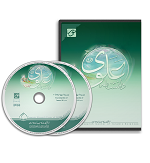
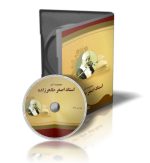
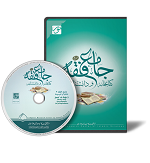
About In the School of the Ahl al-Bayt (Peace Be Upon Them)
Introduction:
Life is like a sea full of turbulence, and like a desert, full of ups and downs;
Sometimes its boat reaches the destination, and sometimes it sinks into the depths of a dusty whirlwind;
It needs a captain to bring it to the shore of tranquility; a guide to seat the sorrowful on the meadows of peace;
Do not be sad, O human, for your Lord has sent down mercy; an angel not of the angels, but higher; one of the fourteen masters;
Whoever seeks knowledge and tranquility, whoever seeks truth and peace, let them answer the call! The School of Ahl al-Bayt (Peace Be Upon Them) is here.
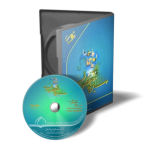
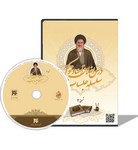
The Islamic Sciences Computer Research Center, continuing its efforts to present valuable Islamic books and works in digital formats, and in collaboration with the Ahl al-Bayt World Assembly, this time offers a precious work titled "In the School of Ahl al-Bayt (Peace Be Upon Them)" to enthusiasts of such works and researchers of theological topics. We hope that this electronic library will be useful and effective in understanding and expanding the beliefs of its users. Below, the "Content" and "Features" of this software are introduced.
A. Program Content:
This program provides access to the valuable book "In the School of Ahl al-Bayt (Peace Be Upon Them)," covering various theological topics such as: The Immunity of the Quran from Distortion, *Bada'* (Divine Alteration of Decree) in the Holy Quran, *Raj'ah* (Return), *Taqiyyah* (Dissimulation) in Islam, Intercession (*Shafa'ah*), Seeking Means (*Tawassul*), Visiting Graves, Mahdawiyyah (Belief in the Mahdi) from the perspective of Ahl al-Bayt, the Identity of Shi'ism, and the Event of Ghadir. Researchers and esteemed users can access the list of topics, chapters, and headings of the books through tree-view and selective indices.
B. Program Features:
* Text Display:
– Access to the full text and indices of all works available in the program.
– Option to select tree-view and selective indices, linked to the text, featuring bi-directional synchronization between text and index.
– Ability to select book title, volume, and page, along with the option to expand the text and index views.
– Simultaneous comparison of two texts from one or two different books.
– Restricting the scope of text and book indices to desired selections.
– Capability to save any selected text or index independently for easy access.
* Search:
– Simple and advanced search within the text and indices of the program's books.
– Ability to save each performed search independently for easy retrieval.
– Limiting the search scope to specific desired texts, accompanied by special features.
– Index generation using general symbols to create dynamic and diverse word lists.
* Dictionary:
– Full text of several lexical dictionary editions, with access to word roots and derivatives.
– Linking vocabulary in the texts to the program's dictionaries for easier understanding of meanings.
* Active Research:
– Integration of text and book indices with other program sections, such as Display, Search, Quran, Dictionary, or Bibliography.
– Capability to transfer selected text to external storage or the MS Word environment.
* Bibliography:
– Access to useful information regarding the edition history (manuscript verification) of each book.
* Note-taking:
– Ability to transfer desired text or indices to the program's note section.
– Capability to save and edit transferred text within the note page.
– Transfer of text from the note section to the MS Word environment.
* Printing:
– Printing of desired text or indices, accompanied by multiple features.
* Help:
– Access to useful explanations for better familiarity with various parts of the program.
* Research Tools:
– Indexing, marginalia (footnoting), highlighting, and marking within the text to facilitate faster information retrieval and record additional data related to the program's texts.
– User management capabilities for the program's research tools.
* Additional Features:
– Access to several common keyboard types and multiple display fonts for easier software usage.
– Ability to specify a path for saving research projects, accompanied by diverse capabilities.
– Option to display or hide diacritics (vowel marks) and headers in the program's texts.
About the Ahl al-Bayt World Assembly:
The Ahl al-Bayt World Assembly was established in 1990 (1369 SH) as a non-governmental and global organization by a group of elites following the Ahl al-Bayt, under the supervision of the Supreme Leader of the Islamic Revolution. Based on the guidance of Imam Ali ibn Musa al-Rida (Peace Be Upon Him): "If people knew the virtues of our words, they would surely follow us" (Shaykh Saduq, *Uyun Akhbar al-Rida*, Vol. 2, p. 275), the Assembly's mission is to introduce, expand, and deepen the teachings of pure Muhammadan Islam, disseminate the knowledge of the Ahl al-Bayt, strengthen Islamic unity, and identify, organize, educate, and support the enthusiasts and lovers of the Ahl al-Bayt. Praise be to God, the Assembly has taken significant steps in fulfilling its mission over these two decades of activity.
* Organs of the Assembly
The organs of the Assembly are:
_ General Assembly
The General Assembly consists of scholars and religious and cultural figures from the Islamic world.
Sessions of the General Assembly
In May 1990, the first World Congress of Followers of the Ahl al-Bayt was held in Tehran, attended by over 300 intellectuals and thinkers from the Islamic world, particularly followers of the Ahl al-Bayt.
Since then, in accordance with the Assembly's statutes, an international session is held every four years with the participation of General Assembly members. In these sessions, decisions are made to improve the cultural, social, economic, and legal status of the followers of the Ahl al-Bayt, and plans and proposals are presented to achieve the Assembly's goals.
The first session of the General Assembly was held in January 1994 in Tehran, attended by over 330 members from 61 countries, as well as groups of scientists, researchers, and experts on various issues from different countries.
The second session was held in January 1998, with the participation of over 350 thinkers from the Islamic world representing 56 countries.
The third session was held in October 2003, with the presence of 500 participants from 80 countries. In addition to discussing the main topics, committees were formed to organize the economic affairs of the followers of the Ahl al-Bayt and to defend their rights based on human rights principles.
The fourth session was held in August 2007, coinciding with the Shia holidays of Sha'ban 1428 AH, attended by over 460 members from 110 countries.
The fifth session was held from September 11 to 14, 2011, with the participation of approximately 600 foreign dignitaries from over 110 countries.
_ Supreme Council
The Supreme Council consists of elites who are or have been members of the General Assembly.
Current Members:
- Ayatollah Sheikh Mohsen Mojtahed Shabestari;
- Ayatollah Sheikh Mohammad-Ali Taskhiri;
- Ayatollah Sheikh Abbas Va'ez Tabasi;
- Ayatollah Sheikh Ghorbanali Dorri Najafabadi;
- Ayatollah Sheikh Mohsen Araki;
- Ayatollah Sheikh Mehdi Hadavi Tehrani;
- Hojjat al-Islam wal-Muslimin Sheikh Mohammad-Hasan Akhtari;
- Hojjat al-Islam wal-Muslimin Sayyid Ahmad Khatami;
- Hojjat al-Islam wal-Muslimin Sheikh Mahmoud Mohammadi Iraqi;
- Hojjat al-Islam wal-Muslimin Sheikh Mohsen Qomi;
- Hojjat al-Islam wal-Muslimin Sayyid Abul-Hasan Nawwab;
- Hojjat al-Islam wal-Muslimin Sheikh Ali-Reza A'rafi (Legal Member);
- Dr. Ali Akbar Velayati;
- Head of the Organization for Islamic Culture and Relations (Legal Member).
Additionally, several foreign Shia elites are or have been members of the Supreme Council, including:
- Ayatollah Sheikh Muhammad-Mahdi Asafi from Iraq;
- Ayatollah Muhammad Asif Muhsini from Afghanistan;
- Ayatollah Sheikh Isa Ahmed Qassim from Bahrain;
- Hojjat al-Islam wal-Muslimin Sayyid Murtada Murtada from Africa;
- Hojjat al-Islam wal-Muslimin Sheikh Hussein Al-Ma'tooq from Kuwait;
- Hojjat al-Islam wal-Muslimin Sayyid Hassan Nasrallah from Lebanon;
- Hojjat al-Islam wal-Muslimin Sayyid Ammar Al-Hakim from Iraq;
- Ayatollah Sayyid Sajid Ali Naqvi from Pakistan;
- Hojjat al-Islam wal-Muslimin Sheikh Nabil Taleb Al-Halbawi from Syria;
- Hojjat al-Islam wal-Muslimin Sayyid Muhammad-Ali Mohsen Taghavi from India;
- Dr. Muli Dina, representative of the Khoja Shias.
Former Members:
- Ayatollah Sheikh Abdullah Javadi Amoli;
- Ayatollah Sheikh Ebrahim Amini;
- Ayatollah Sayyid Mahmoud Hashemi Shahroudi;
- Ayatollah Sheikh Abol-Ghasem Khazali;
- Ayatollah Sheikh Mohammad-Taqi Mesbah Yazdi;
- Ayatollah Sheikh Mohammad Emami Kashani;
- The late Ayatollah Mohammad-Hussein Fadlallah from Lebanon;
- The late Allameh Sayyid Murtada Askari from Iran;
- The late Ayatollah Dr. Sayyid Abdul-Hadi Al-Fadli from Saudi Arabia;
- Dr. Sayyid Mehdi Mostafavi.
_ Executive Affairs of the Supreme Council
In the September 2012 session, Ayatollah Mohsen Mojtahed Shabestari was elected as the President of the Supreme Council, Ayatollah Ghorbanali Dorri Najafabadi as Vice-President, and Hojjat al-Islam wal-Muslimin Sayyid Abul-Hasan Nawwab as Secretary.
_ Secretary-General
According to the Assembly's statutes, the Secretary-General is elected by the Supreme Council and appointed by the decree of the Supreme Leader. The Secretary-General and its executive offices—which include deputies for International Affairs, Cultural Affairs, Executive Affairs, and Economic Affairs, as well as the President's Office—manage the current affairs of the Assembly.
Currently, the Secretary-General of the Assembly is Hojjat al-Islam wal-Muslimin Mohammad-Hasan Akhtari (former Iranian Ambassador to Syria and former Deputy for International Affairs at the Office of the Supreme Leader).
Secretaries-General:
To date, four Secretaries-General have been elected to manage the executive affairs of the Ahl al-Bayt World Assembly, all of whom are distinguished and well-known figures in the Islamic world:
- Ayatollah Mohammad-Ali Taskhiri: From May 1990 to August 1999;
- Dr. Ali Akbar Velayati: From August 1999 to October 2002;
- Ayatollah Muhammad-Mahdi Asafi: From October 2002 to April 2004;
- Hojjat al-Islam wal-Muslimin Mohammad-Hasan Akhtari: From April 2004 to present.
_ Executive Arms of the Assembly
All centers affiliated with or cooperating with the Ahl al-Bayt World Assembly are managed or guided by one of the executive arms of the Assembly.
Deputy for Cultural Affairs:
Sections of this deputy include: The Book Council, Research Department, Ahl al-Bayt Research Institute, Department of Cultural Cooperation, Department of Shias, Magazines Department, and Department for Answering Questions and Doubts. Activities include authoring, research, translation, organizing book exhibitions, and holding scientific and specialized conferences on the knowledge of the Ahl al-Bayt.
The Deputy for Cultural Affairs of the Ahl al-Bayt World Assembly is Hojjat al-Islam wal-Muslimin Dr. Najaf Lakzaei.
Deputy for International Affairs:
Sections include: Department of Europe and America, Department of Asia and Oceania, Department of Africa and Arab Countries, Department of Social Affairs (Women and Children), Department of Shia Sects, Missionaries Affairs, and the Permanent Secretariat of the General Assembly.
The Deputy for International Affairs is Hojjat al-Islam wal-Muslimin Mr. Mohammad Salar.
Deputy for Executive Affairs:
The Deputy for Executive Affairs is Mr. Mohammad-Reza Nezamdoust.
Deputy for Economic Affairs:
The Deputy for Economic Affairs is Mr. Amir-Mahmoud Dehlavi.
President's Office (Secretary-General):
Ahl al-Bayt News Agency (ABNA), Information Department, Public Relations, and the Ahl al-Bayt University are sections affiliated with the Office of the Secretary-General.
Note: The above information was updated on January 31, 2015 (1393/11/11 SH).

Share your thoughts with other customers