

 Buy Now with

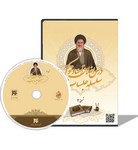

About Love and Thirst (The Narrative of the History of Karbala based on "Al-Luhuf" by Sayyid Ibn Tawus)
A. Book Specifications and Author's Introduction:
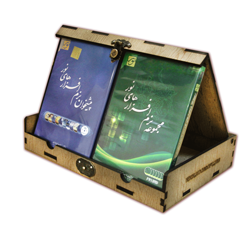
On this compact disc, the full texts of the following works are accessible:
* Book Title: Love and Thirst; The Narrative of the History of Karbala based on "Al-Luhuf" by Sayyid Ibn Tawus.
* Author: Mr. Omid Aram.
* Author's Introduction: Karbala is the symbol of the revival of the Islamic religion and the pinnacle of the highest degrees of self-sacrifice and devotion. The bloody history of Ninawa is a boundless ocean of great lessons and enduring human and Islamic values. This is why keeping its memory and name alive is intertwined with the very being of the loyal Shi'a. In the radiant history of Karbala, Hussein ibn Ali (peace be upon him), along with his companions and noble family, with the most patient conduct and the most sacrificial method, dedicated their lives and worlds to the sacred religion of Muhammad (peace be upon him and his progeny). They stood firm against the relentless assault of injustice, tyranny, immorality, and atheism, laying down their heads on this path.
In the history of Shi'ism, "Maqtal writing" (martyrology)—that is, the preservation and recording of the history, events, and bloody tragedy of Karbala concerning Imam Hussein (peace be upon him)—holds undeniable importance. Many scholars, historians, biographers, and researchers of the Shia school have undertaken the task of writing the history of Karbala, narrating it based on their knowledge. Among them, Sayyid Ibn Tawus (may Allah have mercy on him), the distinguished Shia jurist, mystic, and scholar, is one of the most prominent figures who strove in the field of Maqtal writing, authoring the precious book titled "Al-Luhuf 'ala Qatla al-Tufuf" (The Anguish for the Slain of Tufuf).
The book now before the esteemed readers is not a "Maqtal" in the traditional sense; rather, relying on and referencing the beautiful and eloquent work of Sayyid Ibn Tawus (may Allah have mercy on him), it has endeavored to narrate the history of Karbala in a different language. In this text, selected but prominent and radiant corners of the history of Ashura have been recounted. If minor or major differences appear here and there in the narration of events, they are mostly due to the conscious preservation of the narrative style of "Al-Luhuf."
Karbala is immortal; no matter how it is spoken or written, in any expression or language, the recounting of its epics never ends. The author hopes that the breath of this book has caught a scent of the passion and grandeur of Ibn Tawus the Great's weeping, and that it may increase the zeal and longing in the hearts of esteemed readers, especially the youth; and if it does not bring tears to the eyes, may it at least draw a sigh from the chest.
Omid Aram – Winter 1384 SH (2005 CE).
B. About the Software:
* Definition (Software Subject):
"Love and Thirst" is an audiobook software that presents the book "Love and Thirst; The Narrative of the History of Karbala" in audio format to the audience. This book, relying on and referencing the beautiful and eloquent work of Sayyid Ibn Tawus (may Allah have mercy on him), has endeavored to narrate the history of Karbala in a different language and rewrite selected but prominent and radiant corners of the history of Ashura.
* Features of This Software:
This software has been prepared and produced in three chapters consisting of 32 audio clips:
Chapter 1: The Secret of the Path
This chapter, comprising 13 titles in 13 audio clips, narrates the reasons for the Imam's journey to Karbala, his movement from Medina to Mecca, the story of "Payk-e Noor" (Messenger of Light) and Imam Muslim's journey to Kufa and the events of Kufa, the Imam's migration from Mecca towards Iraq, and the entry of Imam Hussein ibn Ali's (peace be upon him) caravan into Karbala.
Titles of Chapter 1:
- The Prelude.
- The Secret of Knowledge.
- The Departure of Love.
- In the Alleys of Kufa.
- Messenger of Light.
- That Man Among Men.
- The Cypress of God's Garden.
- Journey of Blood.
- Spiritual Meeting.
- Elegy of the Man.
- This Qais the Madman.
- There Is No Road to Kufa.
- This Last Station.
Chapter 2: The Red Death
This chapter, also comprising 13 titles in 13 audio clips, narrates the martyrdom of Abi Abdullah al-Hussein (peace be upon him), his sons, and his loyal companions.
Titles of Chapter 2:
- From the Sixth Day.
- The Last Night.
- Drowned in the River of the Kingdom.
- Morning of the Tenth Day.
- Return of the Lost.
- These Worshipping Lovers.
- In Longing for Karbala.
- Until the World Becomes Colorless.
- The Most Beautiful Prayer.
- These Dancing Gazelles.
- The Honor of Water.
- He is the Only One Alone.
- The Lady of Trials.
Chapter 3: The Color of Suffering
This chapter, comprising 6 titles in 6 audio clips, narrates the period of captivity starting with the Lady of Trials, Zaynab al-Kubra (peace be upon her), the women and children of Imam Hussein ibn Ali (peace be upon him), the arrival of the captives' caravan in the treacherous city of Kufa, the journey of the captives of Ninawa from Kufa to Damascus and the court of Yazid, followed by the narration of the caravan's return to the City of the Messenger (peace be upon him and his progeny), the story of Lady Zaynab's return, and Imam Sajjad's (peace be upon them) return to the city of Medina.
Titles of Chapter 3:
- From the Damascus of Strangers.
- O Treacherous City.
- Interpretation of Beauty.
- From Love to Damascus.
- In the Court of Iblis.
- Narrative of the Return.


Share your thoughts with other customers