


About Qamous al-Noor 2
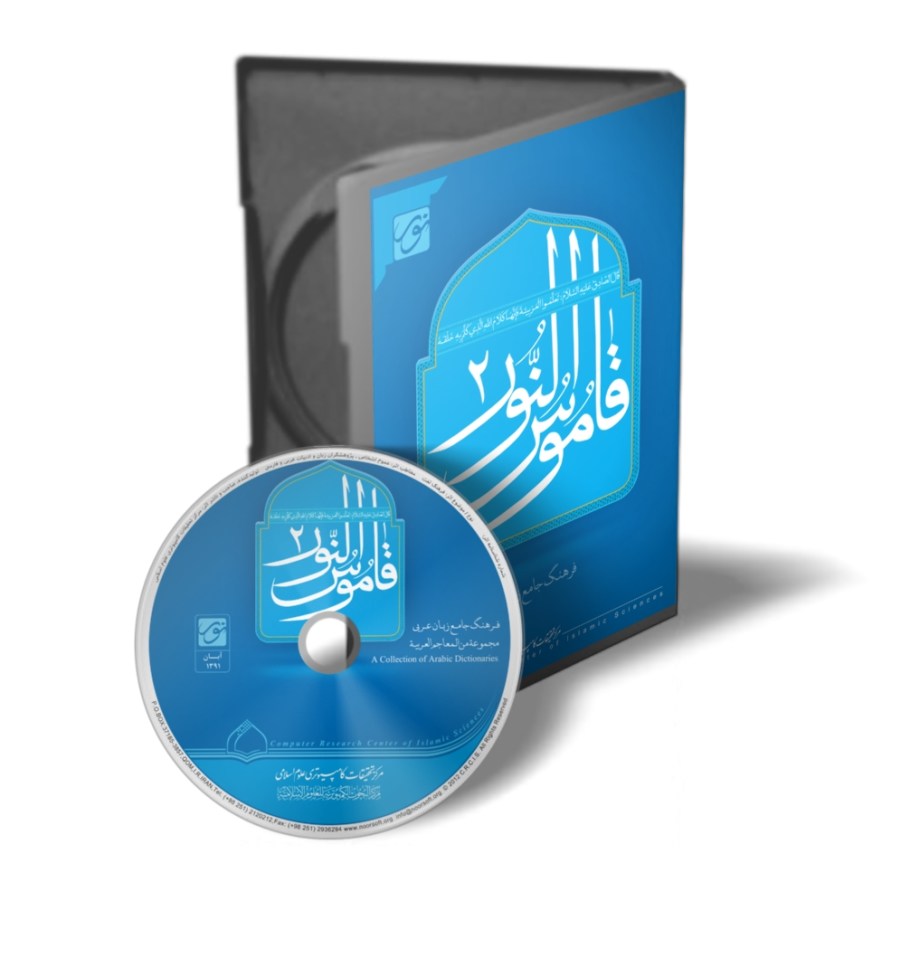
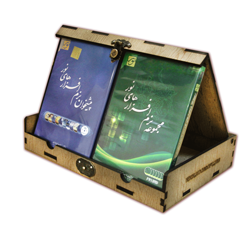
Qamus al-Noor (2) is a software specialized in Arabic lexicography. This software contains the most authentic linguistic and thematic dictionaries of the Arabic language; hence, it can be introduced as a comprehensive dictionary of the Arabic language.
The Science of Lexicography
The science of lexicography is the knowledge of word meanings, and its benefit lies in understanding the various meanings of each word and interpreting them correctly.
Since this science does not deal with the definitions and limits customary in other sciences nor does it interpret their terminology, but rather explains the various meanings of different words independently, it is not considered one of the instrumental arts that explain the prerequisites of conception for sciences, but is an independent science in itself.
The science of lexicography holds a special place in every language, as all sciences compiled in that language depend on it.
What has been said about the science of lexicography, its benefit, and its status, acquires double value in the Arabic language, because the Book of Allah (the Holy Quran), which is the miracle of the last divine religion, as well as the precious words of the Noble Prophet and his pure Household, are all in Arabic, and understanding them naturally requires knowledge of the Arabic language.
* Users of Qamus 2 Software
In the presented software, considering the restrictions on the electronic publication of dictionaries by authors, efforts have been made to ensure that all researchers and those working with the Arabic language can meet their needs by referring to the "Qamus" software.
Therefore, researchers in various sciences can, by utilizing this dictionary, meet their linguistic needs and add depth to their research. In fact, the "Qamus" software covers various segments of researchers, placing specialized linguistic books alongside general dictionaries.
Thus, a Quranic exegete and researcher in Quranic sciences finds their linguistic answers by referring to sources such as: "Mufradat" by Al-Raghib, "Translation of Mufradat", "Qamus al-Quran" by Al-Qurashi, and "Majma' al-Bahrain" by Al-Turayhi.
As for the scholar of Hadith and researcher in Hadith sciences, they find linguistic answers appropriate to their field by referring to sources such as: "Majma' al-Bahrain", "Al-Nihaya" by Ibn Athir, and "Al-Fa'iq" by Al-Zamakhshari.
Researchers in the art of rhetoric and distinguishing literal from metaphorical meanings enhance their knowledge by referring to "Asas al-Balagha" by Al-Zamakhshari.
Those who focus on words from a thematic rather than a literal perspective can meet their needs by referring to "Al-Mukhassas" by Ibn Sayyidah, "Muqaddimat al-Adab" by Al-Zamakhshari, and the book "Al-Ifsah".
Those seeking to distinguish specific meanings from general ones and delve into "Fiqh al-Lugha" (Jurisprudence of Language) can do so by referring to "Fiqh al-Lugha" by Al-Tha'alibi and "Al-Furuq fi al-Lugha".
Those interested in tracing the origins of meanings and words refer to the precious book "Maqayis al-Lugha" by Ibn Faris.
Those studying the usages of verbs refer to "Mu'jam al-Af'al".
Researchers seeking linguistic precision with a critical approach refer to the precious and rare dictionary "Al-Tiraz al-Awwal" by Sayyid Ali Khan bin Ma'sum al-Madani.
Those looking for specialized medical terminology find their meanings used in medical science by referring to the book "Al-Ma'" by Al-Azdi, a linguist contemporary with Sheikh Al-Rais Ibn Sina.
Those seeking Persian equivalents for common Arabic words refer to the "Abjadi" dictionary.
What has been briefly mentioned, alongside great dictionaries such as: "Taj al-Arus", "Lisan al-Arab", "Tahdhib al-Lugha" by Al-Azhari, "Al-Muhkam" by Ibn Sayyidah, "Al-Muhit" by Sahib bin Abbad, "Al-Jamhara" by Ibn Durayd, "Shams al-Ulum" by Al-Himyari, and "Sihah al-Lugha" by Al-Jawhari, makes "Qamus al-Lugha 2" a distinguished interface for students of knowledge and literature.
* Linguistic Schools and Dictionaries
A general overview of linguistic schools and dictionaries:
After the era of Khalil bin Ahmad Al-Farahidi, who is considered the innovator of compiling Arabic language dictionaries, many linguists authored linguistic dictionaries. Dictionaries were compiled until the early fourth century in various forms and methods, categorized into concise, medium, and extensive dictionaries. Each linguistic dictionary has characteristics and features that clarify its author's personality and linguistic school; for example, Al-Azhari, in his book "Tahdhib al-Lugha", followed the method of Khalil bin Ahmad, so he can be considered a follower of Khalil's school.
Thus, linguists and dictionaries can be divided into two general categories:
1. Linguists with a distinct style and school.
2. Follower and imitating linguists.
Based on this, the known linguistic schools (each of which adopted a specific method and system in compiling its dictionaries and was named after its founder) are:
1. The School of Khalil bin Ahmad.
2. The School of Abu Ubayd Al-Harawi.
3. The School of Al-Jawhari.
4. The School of Al-Barmaki.
The authors of the early dictionaries were pioneers in this field, and their dictionaries are considered the first step on this path. These dictionaries possess specific characteristics and methods. Other linguists, if they did not innovate a new method in arranging linguistic materials, are merely mentioned as followers. However, some linguists may innovate a method that facilitates the use of the dictionary for those unable to conjugate words or reach their roots, such as Muhammad Al-Najjari Al-Misri (d. 1332 AH), who combined "Lisan al-Arab" and "Qamus al-Muhit", arranging the book according to the first letter of words based on Al-Barmaki's method, with the feature of entering via the derivative rather than the root; for example, the word "Maktab" was not listed under the letter 'Kaf' and root "K-T-B", but under the letter 'Mim'.
The aforementioned linguistic schools formed over three centuries, i.e., from the late second century to the late fourth century (or from before the death of Khalil bin Ahmad in 170 AH until the end of 397 AH).
The studied linguistic schools share some points, but ultimately, distinctive features separate and differentiate them, and anyone viewing them with a comparative approach clearly observes the differences and distinctions.
Linguistic dictionaries are also divided from another perspective into two methods:
1. The School of Words (Alfaz).
2. The School of Meanings (Ma'ani).
The School of Meanings is a method that arranges words based on their meanings and topics; this type is called a "Thematic Dictionary". Abu Ubayd Al-Qasim bin Salam Al-Harawi is considered one of the innovators of this method and the founder of his school, which was expanded by Ibn Sayyidah Al-Andalusi through his massive book "Al-Mukhassas".
* Content Structure of Qamus 2
Briefly regarding the content structure of Qamus 2:
In the content structure of Qamus 2, primary attention was given to collecting primary linguistic sources and reference books in the science of lexicography; from this avenue, linguistic dictionaries from various eras were utilized.
In this context, two comprehensive word books were presented with a time gap of about five centuries: the first is "Lisan al-Arab" by Ibn Manzoor (d. 711 AH) containing about 80,000 linguistic entries, and the second is the extensive book "Taj al-Arus" by Al-Zubaidi (d. 1205 AH) containing over 120,000 words, considered the most comprehensive Arabic dictionary. Then, Ibn Manzoor's sources in writing "Lisan al-Arab" were considered; therefore, books such as "Al-Jamhara" by Ibn Durayd (d. 321 AH), "Tahdhib al-Lugha" by Al-Azhari (d. 370 AH), "Sihah al-Lugha" by Al-Jawhari (d. 393 AH), "Al-Muhkam" and "Al-Mukhassas" by Ibn Sayyidah (d. 458 AH), and "Al-Nihaya" by Ibn Athir (d. 606 AH) were displayed in the Qamus 2 program.
For greater authenticity and reliability, primary sources such as "Al-Ayn" by Khalil bin Ahmad and "Al-Jim" by Abu Amr Al-Shaybani were used. To complete and perfect the program, dictionaries such as "Al-Muhit" by Ismail bin Abbad (d. 385 AH) and "Shams al-Ulum" by Nashwan bin Sa'id Al-Himyari (d. 573 AH) were utilized.
Specialized linguistic books written in specific fields were also added to the Qamus 2 collection, such as: "Majma' al-Bahrain" by Al-Turayhi, "Mufradat" by Al-Raghib, "Maqayis al-Lugha" by Ibn Faris, "Asas al-Balagha" by Al-Zamakhshari, "Fiqh al-Lugha" by Al-Tha'alibi, "Al-Misbah" by Al-Fayyumi, "Al-Ma'" by Al-Azdi, and others.
* Research in Qamus al-Noor 2 Software
Qamus 2 software, in addition to possessing a rich library of linguistic dictionaries, has engaged in research in various forms and presented the results of this research to dear users.
The research areas in Qamus 2 software are:
1. Research on roots and their connection to derivatives.
2. Separating Quranic verses discussed in linguistic books.
3. Presenting derivatives and roots of the discussed verses.
4. Separating Quranic recitations in linguistic books.
5. Presenting derivatives and roots of verses according to different recitations.
6. Separating narrations discussed in linguistic books.
7. Presenting derivatives and roots of the discussed narrations.
8. Separating metaphorical usages in Al-Zamakhshari's book "Asas al-Balagha".
9. Presenting derivatives and roots of metaphors.
10. Separating poetic evidences discussed in linguistic books.
11. Presenting derivatives and roots of poems.
12. Separating proverbs discussed in linguistic books.
13. Presenting derivatives and roots of proverbs.
* Derivative and Root
Alongside displaying the language library and users' utilization of advanced searches in Noor libraries, searching for words via root and derivative has been incorporated into Qamus. Those familiar with the science of morphology (Sarf) and derivation can reach the desired word and its meanings through the root, and by aggregating roots (to be mentioned later), they can achieve their goal with high confidence. Users who do not have sufficient knowledge of morphology and derivation will receive answers to their linguistic queries through derivatives.
* Root and Derivative Tracing in Various Dictionaries
One of the features of Qamus 2 software is the aggregation of various dictionaries (literal and thematic) into a single dictionary. This feature is the result of research work conducted on linguistic books and essentially returns to the method used to unify words.
Words were aggregated through tracing derivatives and roots. This method was also applied to thematic books such as "Fiqh al-Lugha", "Al-Ifsah", "Al-Furuq fi al-Lugha", and "Muqaddimat al-Adab"; thus, thematic linguistic books, while maintaining their thematic nature, were also placed in a literal format allowing for literal search.
In addition to thematic dictionaries that underwent root and derivative tracing, linguistic books written according to the arrangement of derivatives (such as "Abjadi Dictionary") and books starting with derivatives (such as "Al-Misbah al-Munir") had their roots traced, and the possibility of searching via the root was provided.
* Aggregation of Roots
In Qamus 2, efforts were made to harmonize roots as much as possible. To achieve this goal, roots were first organized and standardized. To realize this purpose, as far as the sciences of lexicography, morphology, and derivation allow, roots were unified. Regarding disputed roots, considering derivation rules, deleting extra letters and appended letters, and considering whether the word is trilateral or quinqueliteral in Arabic, efforts were made to organize disputed roots. Therefore, our purpose from "aggregating roots" is to organize and unify different roots for which there is no valid morphological reason for their difference, or those not mentioned as a root in the dictionary at all but whose derivatives were listed under other roots. For example, the word "Yafa" in the book "Taj al-Arus" appeared in two volumes:
1. Yafa:
Yafa: A village on the coast of the Levant Sea between Caesarea and Acre (Taj al-Arus 12, p. 545).
2. Yafi:
Yafa, shortened with 'Fa': A city on the coast of the Levant Sea in Palestine between Caesarea and Acre (Taj al-Arus 20, p. 358).
Another example regarding non-Arabic words like "Bimaristan" and "Maristan":
M-R-S:
In "Taj al-Arus" (Vol. 8) and the book "Al-Misbah al-Munir", it was discussed under the root "M-R-S".
M-R-S-N:
In "Taj al-Arus" (Vol. 18), it was discussed under the root "M-R-S-N".
Maristan:
In the book "Al-Ma'", it was discussed under the entry "Maristan".
Bimaristan:
In the book "Al-Ifsah", it was discussed under the entry "Bimaristan".
We, while preserving the authors' opinions, aggregated such words in a special format and in compliance with morphological and derivational rules, striving as much as possible to harmonize and aggregate roots; in the mentioned example, we placed it under the root "M-R-S-N".
Regarding root aggregation, in some cases, the book's author did not mention a word's root in its proper place, and consequently did not list its derivative under that root naturally. Such cases were included in the Qamus 2 program, by applying a special format, in the root and derivative list. For example, the book "Lisan al-Arab" did not mention the root of the word "Al-Wazj", but mentioned it incidentally under the root "H-Z-J". We placed this root in the "Incidental Root" format and listed its derivative (Al-Wazj) under its own root in the "Incidental Derivative" format. With this action, "Al-Wazj" (as mentioned in "Taj al-Arus") was given a separate root and included in the root list.
The full application of this method has turned Qamus 2, with all its books, into a single dictionary that can be called the "Dictionary of Dictionaries".
* Aggregation of Derivatives
Derivatives scattered throughout linguistic books, which authors mentioned for some reason and which contained a meaning or a literary (morphological, etc.) point, were collected as incidental derivatives.
Therefore, in addition to unifying and standardizing roots, we also worked on aggregating scattered derivatives in linguistic books; by extracting words that were discussed implicitly and incidentally within other words from linguistic books using the "Incidental Derivatives" format, linking them to the root, and placing them in their proper location (under the root). This means that a word might be discussed incidentally under another linguistic entry; we applied the incidental derivatives format and added it to the program's root and derivative list. Thus, our purpose from "aggregating derivatives" is collecting scattered derivatives discussed in various parts of the book. The important point here is that in some cases, the desired discussion did not take place under the word's own root, which is a unique feature of Qamus 2 software. For example, in the book "Lisan al-Arab" under the root "W-Gh-N", in addition to its derivatives like "Al-Tawaghun", the word "Al-Taghun" was also discussed.
Al-Taghun (under root W-Gh-N)
Al-Tawaghun: Advancing in war. Al-Waghna: A wide pit. He said: Al-Taghawwun: Persistence in sins.
The root "Gh-W-N" was assigned to "Al-Taghun", thereby referring it to the root "Gh-W-N" and counting it among its derivatives, thus achieving derivative aggregation.
Another example: In the book "Taj al-Arus", the words "Awonat", "Awant", and "Awwant" were listed under the root "W-N-Y"; we aggregated them using the incidental derivative format and listed them under the root "A-W-N".
Awonat, Awant, and Awwant (under root W-N-Y)
"And 'Awanati al-naqa wa al-sha': their bellies became like two 'awns', which are the loads," transmitted by Ibn Qatta', who said: "The analogy would be 'Awant', and it is also said 'Awwant'."
To clarify the topic, let us refer to another case: In the linguistic dictionary "Al-Ma'", under the root "B-N-N", a discussion about the word "Qahwa" (coffee) was presented, which was not included under the root "Q-H-W". Therefore, anyone referring to the book "Al-Ma'" under the root "Q-H-W" would be deprived of this discussion, but if they refer to the "Qamus" program and study the root "Q-H-W", they will see the discussion about "Qahwa" that took place under the root "B-N-N".
Al-Qahwa (under root B-N-N)
"And Al-Bunn (with damma): a known seed, originally from Yemen, from which (Al-Qahwa) is made."
"I asked our revered teacher, the great scholar Ibn Sina, about the nature of coffee, its temperament, harms, and benefits, and he answered: Coffee, like other medicines, has benefits in some conditions. As for its temperament regarding the two active qualities, namely heat and cold, it appears to be moderate and slightly inclined towards cold, and it is not unlikely that it is compound in powers..."
Another example: In the book "Taj al-Arus", the usage of the word "Yaradh" was mentioned under the discussion of "Yusha".
Yaradh (under root W-Sh-')
"And Yusha', with the first letter damma and shin fatha: The companion of Moses (AS), his successor, and his youth to whom the sun was returned. He holds the same status among the Children of Israel from Moses (AS) as Amir al-Mu'minin Ali bin Abi Talib, may Allah be pleased with him, holds from the Messenger of Allah (PBUH) in Islam. He is Yusha' bin Nun bin 'Azar bin Shutalakh bin Rayadh bin Bahith bin Al-'Adh bin Yaradh bin Shutalakh bin Ephraim bin Joseph (AS)."
(Taj al-Arus, Vol. 11, p. 513)
* Tracing Roots and Derivatives of Quranic Verses
In Qamus 2 program, Quranic words discussed in linguistic books have had their roots traced, and these words were indexed via root and derivative. Consequently, discussions under the verses became easily accessible to program users, such as:
Rahm (Womb/Mercy):
Al-Rahman Al-Rahim
Two names derived from Al-Rahma (Mercy). And "The Mercy of Allah encompasses all things, and He is the Most Merciful of the merciful" (Al-Ayn).
His saying Almighty: "And closer in ties of kinship (Ruhman)"; meaning closer in affection and more deserving of kinship (Taj al-Arus).
"He is the One who shapes you in the wombs (Arham)": It is the place of growth for the child and its container in the belly (Asas al-Balagha).
His saying Almighty: "And those of kinship (Ulul Arham) are more entitled to one another"; meaning in inheritance (Shams al-Ulum).
"And fear Allah through whom you ask one another, and the ties of kinship (Al-Arham)"; Al-Arham: kinships, singular Rahm (Majma' al-Bahrain).
"And fear Allah through whom you ask one another, and the ties of kinship (Al-Arham)"; Al-Azhari said: Whoever put it in the accusative case intended "fear the ties of kinship that you sever them" (Taj al-Arus).
* Tracing Roots and Derivatives of Narrations
In Qamus 2 program, narrations discussed in linguistic books were separated via derivative and root; as a result, users can easily connect with narrations through root and derivative.
We present some examples below:
Turb (Soil/Shoulder joint):
Al-Tirab, with kasra like Kitab: The origin of the sheep's forearm, feminine. From this, Shimr interpreted the saying of Ali, may Allah honor his face: "If I were to govern the Umayyads, I would shake them as the butcher shakes the Tirab (shoulder joint) from the Wadhima (fat tail sheep)."
(Taj al-Arus, Vol. 1, p. 325).
Nakth (Breaking oath):
Al-Nakth: Breaking what you tie and mend of allegiance and others. Nakathahu yankuthuhu nakthan fantakatha. And the people tanakathu uhudahum: they broke them. It is metaphorical. In the hadith of Ali, may Allah honor his face: "I was commanded to fight the Naqithin (oath-breakers), the Qasitin (deviators), and the Mariqin (those who left the religion)."
(Lisan al-Arab, Vol. 2, p. 197)
Qamah (Raising head with lowered gaze):
In the hadith of Ali, may Allah honor his face, the Prophet (PBUH) said to him: "You and your Shia will come before Allah satisfied and pleasing, and your enemy will come before you angry and Muqmahin," then he joined his hand to his neck to show them how Iqmah is.
Al-Iqmah: Raising the head and lowering the gaze.
(Lisan al-Arab, Vol. 2, p. 567)
* Tracing Roots and Derivatives of Metaphors
Another topic that received attention and research in Qamus 2 is the scope of linguistic metaphors in the Arabic language. Based on Al-Zamakhshari's book "Asas al-Balagha" and taking it as a foundation, a list of phrases and sentences in which a word was used metaphorically was collected. Those words (which we refer to as derivatives) were linked to their roots; consequently, a list of metaphorical derivatives and their roots was presented.
For example, the phrase "Abarani Fulan" meaning "he backbited and harmed you"; the word "Abarani", whose literal meaning is pricking with a needle, was used here in the metaphorical meaning of backbiting, and was linked to its root (A-B-R).
* Tracing Roots and Derivatives of Poems
Among the scopes presented in Qamus 2 program are poems discussed by linguists as linguistic evidences. These poems were separated with a special format and indexed along with the word cited, and the roots of the cited words in the poems were traced; consequently, a list of derivatives and roots for them was presented.
* Tracing Roots and Derivatives of Proverbs
Among the scopes presented in Qamus 2 program are proverbs provided by authors of linguistic books as evidences for the linguistic entry under discussion. These proverbs were separated with a special format and indexed along with the cited word, and the roots of the cited words in them were traced; as a result, a list of derivatives and roots for Arabic proverbs was prepared, which can be used to understand Arabic vocabulary.
* Tracing Roots and Derivatives of Synonyms
Since knowledge of synonymous words in the Arabic language is important for researchers and their application in writing and authoring, Qamus 2 software is not devoid of this feature either. Inspired by the book "Al-Maknaz Al-Arabi Al-Mu'asir" authored by three Arabic language researchers, a list of synonymous and homogenous words was appended to the program. These synonyms were presented along with the root of the head (main) word; for example, the word "Islah" (reform), whose synonyms are: Tahdhib, Tashdhib, Tanqih, Taqlim, and Tarbiya, was treated as a head synonym, its root was traced, and consequently it was placed in the list of roots and derivatives.
* Tracing Roots and Derivatives of Non-Arabic Words
To better familiarize users with non-Arabic words that entered the Arabic language (known as loanwords), we added the scope of loanwords to the set of researched scopes. For this purpose, we chose the book "Shifa' al-Ghalil" by Al-Khafaji, which is one of the reliable books on this subject and is considered a source for the great encyclopedia "Taj al-Arus". Of course, Al-Khafaji also mentioned generated meanings (Muwallad) as loanwords, while we only considered non-Arabic words.
Naturally, the roots selected for loanwords and Arabized words were innovative; in cases where linguists expressed an opinion, we relied on it. In cases where no opinion reached us from them, we assumed a root based on derivation rules.
Finally, it is useful to state that in Qamus 2 program, efforts were made to meet the diverse linguistic needs of researchers in Islamic and human sciences; hence, in this regard, jurisprudential, geographical, philosophical, and traditional medical dictionaries were included in the program, and for this purpose, books that resembled linguistic dictionaries more closely were selected.



Share your thoughts with other customers