






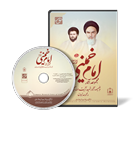

About Islamic Theology 1.2
About Ilm al-Kalam (Islamic Theology)
Information is considered a vital source for cultural and scientific progress in any society. Therefore, all knowledge and scientific and practical activities, including management, research and development, production, and other branches of human knowledge, are in need of it.
The science of Kalam is no exception to this principle; hence, theologians (Mutakallimun), in order to protect the sanctity and domain of religion, need new information in addition to being aware of the foundations and issues of Kalam and previous information. For this reason, to benefit more quickly from existing sources and to learn about various methods, information organization seems an important and necessary matter. Therefore, to solve the scientific problems of researchers and scholars and to advance their studies, we must resort to modern applications and new technologies in information science. Although, in the current situation, utilizing complex technologies such as satellite information networks is not easily feasible for us, we can derive the maximum benefit from hardware such as computers, of course, by using the correct method in information management.
Another noteworthy point is that with the ever-increasing population in the world, the number of specialized topics is also increasing rapidly; therefore, it is necessary to seek better ways to distribute the required information, especially in the field of Kalam, which is one of the main duties of the Hawzas (Islamic Seminaries). Otherwise, we will face phenomena such as "information explosion" and weak responsiveness to the belief-related problems of this era, one of the results of which is a widespread cultural invasion.
The Reason for the Name
Several reasons have been mentioned for naming this science "Kalam" (Speech/Dialogue), the most important of which are:
1. The most important or the first issue that theologians discussed was whether the Speech of God is created (hadith) or eternal (qadim). Hence, this science was named "Kalam".
2. The headings of the discussions in this science used to begin with "Al-Kalam fi Kadha" (Discussion on such-and-such); thus, the science itself became known as "Ilm al-Kalam".
3. The science of Kalam strengthens a person's ability in debate, disputation, and dialogue. Debate is nothing but speaking and dialogue; for this reason, this science became famous as "Kalam".
Many of the mentioned reasons (only three examples of which are cited here) are subject to reflection and dispute, and historical evidence does not support them (Subhani, 1382 AH Solar: Vol. 1, p. 10). However, the third reason is superior to others, because debate, in addition to playing a fundamental role in the science of Kalam, is also concomitant with it (Rabbani Golpaygani, 1381 AH Solar: p. 73).
Definition of Ilm al-Kalam
The purpose of defining any science is to recognize its distinguishing feature from other sciences so that their discussions are not mixed up. (Rabbani Golpaygani, Ibid.: p. 22; Khwansari, Ibid.: pp. 151-152). In conventional matters, a definition is either based on the subject, the purpose/benefit, or the method. Of course, definition by subject is more complete because it is more comprehensive and exclusive; for this reason, multiple definitions have been provided for the science of Kalam, some defined by subject and others by purpose.
Some consider Ilm al-Kalam as an instrumental science and define it by its purpose, while others count it among the fundamental sciences and define it by its subject. In the first case, Kalam has a defensive identity; but in the second case, its identity is knowledge-generating (See: Subhani, Ibid.: Vol. 1, p. 13; Faramarz Gharameleki, 1378 AH Solar: Chapters 5 & 6).
In the view of later scholars who expanded the subject of Ilm al-Kalam even to the most general subjects, i.e., "Existence qua Existence" (Subhani, Ibid.; Lahiji, 1383 AH Solar: p. 43), Kalam will also be among the fundamental sciences.
Considering the points raised, theologians and thinkers from ancient times until now have provided numerous definitions for Ilm al-Kalam, including definitions by Al-Farabi (d. 339 AH), Ibn Khaldun (d. 808 AH), Al-Iji (d. 756 AH), and Al-Lahiji (d. 1072 AH) (See: Rabbani Golpaygani, Ibid.: pp. 21-26; Faramarz Gharameleki, Ibid.: pp. 25-34).
In any case, regarding the definition of Ilm al-Kalam, it can be said:
Ilm al-Kalam is the science that discusses Islamic beliefs, i.e., what must be believed in and had faith in according to Islam, in such a way that it explains them, argues for them, and defends them (Mutahhari, 1375 AH Solar: Vol. 3, p. 57).
The superiority of this definition over others, while possessing all their merits, is that it considers the explanation and clarification of Islamic beliefs as one of the duties of Kalam and the theologian; for perhaps the source of doubts and objections by opponents is their incorrect interpretations of religious beliefs and concepts... and the way to defend the religion and respond to such doubts is the correct explanation and interpretation of religious concepts and beliefs (Rabbani Golpaygani, Ibid.: pp. 65-66).
The Subject Matter of Ilm al-Kalam
Some have considered Ilm al-Kalam as a science without a subject (See: Sorush, 1375 AH Solar: p. 84)(2).
However, the popular view is that it has a subject, although they differ on its unity or multiplicity. Khwaja Nasir al-Din al-Tusi and the late Martyr Mutahhari believe that Ilm al-Kalam has a subject, but it is not one thing; rather, multiple things are the subject of this science. In this case, a "unifying aspect" is necessary. According to Khwaja Nasir, the unifying aspect is the attribution of Kalam issues to the Essence of God Almighty (See: Al-Hilli, 1363 AH Solar: pp. 211-213), and according to Professor Mutahhari, sharing in the goal and purpose expresses their unity (Mutahhari, Ibid.: pp. 62-63).
In contrast, the majority of scholars believe in the unity of the subject in Ilm al-Kalam, although they do not agree on a single opinion and have various views, the most important of which are:
- Existence qua Existence. (Al-Taftazani, 1422 AH: Vol. 1, p. 76; Al-Hilli, 1419 AH: Vol. 1, p. 12; Al-Lahiji, 1425 AH: Vol. 1, p. 3).
- Specific knowledge "knowledges that are taken as a path to proving religious beliefs" (Al-Jurjani, 1419 AH: p. 7).
- The existence of God and the existence of contingents (See: Al-Taftazani, Ibid.: p. 42).
- The Essence of God Almighty and His attributes (Subhani, Ibid.: Vol. 1, p. 17; Rabbani Golpaygani, 1376 AH Solar: p. 30).
- Beliefs of faith (Ibn Khaldun, 1375 AH Solar: Vol. 2, pp. 932-933 & 947) or the states of the Sharia (Rabbani Golpaygani, Ibid.).
Since Ilm al-Kalam, like any other science, has an evolutionary and developmental course, perhaps something was the subject in a certain period and stage, which gave way to something else in later stages (See: Subhani, Ibid.: Vol. 1, p. 17).
On this basis, some have considered the subject of Ilm al-Kalam in the view of early scholars to be "the states of the Sharia," and in the view of later scholars to be "Existence qua Existence according to the Islamic law" (Lahiji, 1383 AH Solar: pp. 42-43).
Discussing the aforementioned opinions requires a broad scope; but it is better to consider the subject of Ilm al-Kalam as the Essence and Attributes of God; of course, beliefs of faith are also accepted, since their reference returns to the Essence and Attributes of God.
Goals and Objectives of Ilm al-Kalam
Al-Muhaqqiq Al-Lahiji, while considering stating the benefit and purpose in every science as necessary, regards the goals and objectives of Ilm al-Kalam as several things, namely:
1. Investigative knowledge of religion and practical education; 2. Guiding the seekers and compelling the opponents; 3. Defending the principles and religious beliefs; 4. Proving the subject and premises of other religious sciences (See: Lahiji, 1425 AH: Vol. 1, pp. 73-74; Jurjani, Ibid.: Vol. 1, pp. 57-58).
Unless the existence of God Almighty and His perfect attributes, the necessity of obligation (taklif), the mission and infallibility of the Prophets and heavenly leaders, and the revelation of divine books... are proven, the subject of sciences such as Tafsir (Exegesis), Hadith, Fiqh (Jurisprudence), Usul al-Fiqh, etc., will not be established (Qutb al-Din al-Shirazi, 1365 AH Solar: pp. 178-179); for starting them without knowledge of the issues related to the principles of religion is like a roof without a foundation (Nasir al-Din al-Tusi, 1405 AH: p. 2).
Duties and Responsibilities of Kalam and Theologians
Considering the definitions given for Ilm al-Kalam, and the benefits and objectives stated for it, its duties and responsibilities can be listed as follows:
1. Extracting and inferring belief propositions from religious sources (Quran and Sunnah);
2. Organizing, coordinating, and categorizing these propositions;
3. Clarifying and explaining these propositions;
4. Proving the claims of these propositions;
5. Defending and responding to doubts (See: Owji, 1375 AH Solar: pp. 42-43; Sorush, 1375 AH Solar: pp. 65-66).
Methods of Ilm al-Kalam
Unlike philosophy, which is a single-method science and only utilizes "demonstrative reasoning" (Rabbani, Ibid.: p. 94), Ilm al-Kalam benefits from all methods of reasoning. This feature stems from the multiplicity and diversity of the goals and objectives of Ilm al-Kalam; because the purpose and goal also determine the method.
To achieve the first and fourth goals, reasoning that yields certainty is necessary (Al-Taftazani, Ibid.: Vol. 1, p. 29), which in terms of form must be a syllogism or complete and explained induction, and in terms of matter must definitely be demonstrative; but to achieve the second and third goals, in addition to those, other methods such as analogy, rhetoric, dialectic (jadal), poetry, and various types of rational and transmitted methods can be used (Ibid.: pp. 55-56); of course, the primary principle is the use of reason. The theologian seeks to utilize reason; but since the purpose always determines the method, and since his purpose is defending the principles of religion, he sometimes benefits from experience, and even in some discussions, he has no choice but to benefit from history; such as the discussion of Imamate, where he cannot benefit from reason alone. Although the universality of Imamate is rational, its history and the event of Saqifah are derived from history.
The Relationship of Ilm al-Kalam with Other Sciences
Ilm al-Kalam has a two-way relationship with other religious and human sciences (See: Rabbani Golpaygani, Ibid.: pp. 78-79). It benefits from some sciences and benefits others. Logic, Epistemology, History, and Empirical Sciences are influencing sciences; just as Fiqh, Usul al-Fiqh, and Tafsir are among the influenced sciences; although sometimes Kalam uses the influencing sciences, and in fact, they are counted as its "premises," such as Logic, Philosophy, Epistemology, and sometimes they influence Ilm al-Kalam through confirmation or contradiction; such as History and Empirical Sciences.
Ilm al-Kalam is influential and role-playing compared to other religious sciences; because the realization of their subject depends on this science. If in Ilm al-Kalam the Essence of God Almighty is not proven, and His sacred existence is not established, then certainly "Fiqh," "Tafsir," and "Hadith" will have no subject; because there will be no obligated person (mukallaf) to speak of the act of the obligated. There will be no Revealer of a Book to interpret it. There will be no Sender of a Messenger for his word to be authoritative and for its collection, compilation, and division to become necessary (Lahiji, Ibid.: Vol. 1, p. 74).
Yes, the basis of all religious sciences is the science of the Principles of Religion (Usul al-Din), whose issues revolve around certainty, and without it, entering into the discussions of other religious sciences such as Usul al-Fiqh and its branches is impossible; for starting them without knowledge of the issues related to the principles of religion is like a roof without a foundation (See: Nasir al-Din al-Tusi, 1405 AH: p. 2; Qutb al-Din al-Ashkouri, 1365 AH Solar: p. 179; Al-Hilli, 1419 AH: Vol. 1, p. 7).
This point is not tantamount to denying or negating the receptivity of Ilm al-Kalam to other religious sciences.
Every science consists of three parts: Subject, Premises, and Issues (Husseini Yazdi, 1363 AH Solar: pp. 114-117).
Subject: It is like an axis that connects the issues of each science to one another.
Premises: The issues of every science depend on them, and they are of two types:
A: Conceptual Premises: Matters that indicate the limits and definition of subjects or the parts and accidents of the subject of each science. Such matters are raised within that same science as an introduction (Al-Hilli, 1363 AH Solar: p. 214).
B. Assertoric Premises: Which are either self-evident and indisputable principles whose contrary does not occur to the mind (Ibid.: p. 213); such as the whole being greater than the part, the impossibility of contradiction, equality, which are called "Common Principles," or principles that are not self-evident and doubt and imagining their contrary is permissible and possible. Although some scientific arguments rely on them, no argument for their validity has been presented in that science, even though their validity has been proven by evidence in another science; such as the "Principle of Causality," which is cited in all empirical sciences and scientific researches, and its discussion has taken place in the science of Philosophy (Ibid.).
Issues: Propositions that are discussed and talked about in that science, and arguments are presented for their validity and correctness, which are in fact the main destination and goal of every science (Al-Hilli, Ibid.: Vol. 1, p. 11).
What is mentioned in this section regarding the premises and introductions of sciences refers to "Thematic Principles."
Kalam and Logic
The science of Logic teaches the correct laws of thinking and the proper application of reasoning methods (Al-Muzaffar, 1400 AH: pp. 11-12). Ilm al-Kalam is also a theoretical and argumentative science, and for this reason, the science of Logic will be among its necessary premises. On this basis, some Muslim theologians discuss logical issues extensively or briefly at the beginning of their theological treatises.
Kalam and Epistemology
Epistemology is the science that discusses human knowledge, its evaluation, and the determination of the criteria for its truth and error (Misbah Yazdi, Ibid.: Vol. 1, p. 137).
Although this science does not have a long history as a codified discipline and an independent branch in religious studies, and its age is less than three centuries (Subhani, 1411 AH: p. 11), its origin is very ancient and has been raised in old theological and philosophical texts. As mentioned, this science discusses topics such as thought, knowledge, the realism of science, tools of knowledge, limits of knowledge, types of knowledge, etc. Ilm al-Kalam, many of whose issues are informative propositions, is also realistic and narrative of the external world. Its most important goal is also the knowledge of God Almighty and His attributes. Naturally, to understand those propositions and distinguish their truth and falsehood, one must be familiar with their tools and limits, which in turn depends on familiarity with the science of "Epistemology" (3).
For this reason, this science actually precedes all sciences, including Ilm al-Kalam; because unless the theory of knowledge is solved, and the extent of human attainment to self-knowledge is clarified, proposing philosophical-theological issues will never be beneficial; for one who thinks the world is unknowable, and one who is confused in the illusion that knowing anything non-empirical is not possible, presenting rational issues that are preceded by the acceptance of the principle of knowledge is of no benefit to him (Javadi Amoli, Vol. 13, p. 21).
Kalam and Philosophy
Philosophy is the science that discusses the states of the Absolute Being, or in other words, the states of universal existence, and constitutes the set of propositions and issues raised about "Existence qua Existence," and its subject is also "Existence qua Existence" (See: Allamah Tabatabai, Ibid.: pp. 7-8). On this basis, Kalam needs Philosophy from two aspects:
1. From the aspect of the subject: Since the subject of Philosophy (Absolute Existence) is more general compared to the subject of other sciences, all sciences, including Ilm al-Kalam, need Philosophy to prove their subject; meaning Ilm al-Kalam, in its affirmation and knowledge of its subject (God and the attributes of His Essence and Act), needs Philosophy (Lahiji, Ibid.: Vol. 1, p. 86).
Of course, sciences need Philosophy from this aspect only if their subject is not self-evident (Sadr al-Din, n.d.: Vol. 1, p. 25 "Commentary by Allamah Tabatabai"); some scholars believe that the principle of proving God is self-evident and does not need proof and evidence (See: Javadi Amoli, 1379 AH Solar: p. 169; Tabatabai, n.d.: Vol. 8, p. 341); therefore, Ilm al-Kalam, from the aspect that its subject is self-evident, will have no need for Philosophy; but as mentioned, the subject of Ilm al-Kalam is "God and the attributes of Essence and attributes of Act"; so if the principle of God's existence is self-evident, the existence of His attributes is theoretical and needs proof through evidence and reasoning.
2. From the aspect of premises and introductions: Many philosophical issues have been the premises of theological arguments and play a decisive role in theological discussions. This influence and role-playing has been evident and clear since earlier periods of Ilm al-Kalam. Perhaps this manifestation can be easily observed in the works of Sheikh Al-Mufid (d. 413 AH) onwards. Although it appeared more prominently in the era of Khwaja Nasir (d. 726 AH) and reached its peak in the Transcendent Philosophy of Mulla Sadra (d. 1050 AH).
In reality, if a theologian is not aware of issues such as the primacy of existence, the gradation of existence, unity and its divisions, cause and effect, the impossibility of circularity and infinite regress, etc., how will he explain this statement of Khwaja:
"If the existent is Necessary, it is the sought; otherwise, it necessitates it due to the impossibility of circularity and infinite regress" (Al-Hilli, 1375 AH Solar: p. 7).
Or how he proved with the Necessary Existence, twenty-four affirmative and negative attributes for the Essence of God Almighty; as has been said in its place: Theologians from the fifth century onwards addressed philosophical issues in their works; although the peak and perfection goes back to Khwaja Nasir al-Din al-Tusi; for example, Sheikh Al-Mufid in "Awa'il al-Maqalat" dedicated a section titled "Al-Latif min al-Kalam" to such issues, or Al-Nawbakhti (5th & 6th centuries) in "Al-Yaqut" raised some philosophical issues before presenting theological discussions, and similarly Ibn Maytham Al-Bahrani (d. 679 AH) in "Qawa'id al-Maram," etc.
The relationship of Ilm al-Kalam with Empirical Sciences, Usul al-Fiqh, Fiqh, Irfan (Mysticism), and Tafsir is also examinable, but we disregard it in this context.
The Scope of Ilm al-Kalam
Discussing the scope of Ilm al-Kalam and determining its extent may depend on its definition, subject, goals, and objectives, as well as the mission and duties of theologians; but certainly, the third and fourth items play a serious role and have an important impact on the scope and extent of Ilm al-Kalam; thus, Ilm al-Kalam, apart from the position of definition and determining the subject, in reality, had a broader scope from the very beginning; because the major duty and serious mission of theologians in the field of answering questions and defending religious beliefs against doubts and objections of others compelled them to offer an answer to every question, and an appropriate defense against every doubt, and perhaps the questions and doubts went beyond the principles of belief and even included the branches of religion and issues of rulings. Clear examples are found in narrative texts that were raised on the same basis and in the direction of fulfilling that duty and mission.
Although perhaps later, due to the separation of sciences or the separation of the duty of the owners of science and thought, Kalam contented itself with a smaller scope, considering the transformative and evolutionary course that this science has undergone, its discussions and issues have also evolved and transformed, and perhaps over time, its scope and extent have also increased; therefore, it seems that this matter is more a result of the evolution and transformation of Ilm al-Kalam; although it also proceeds based on the goals and purpose of Ilm al-Kalam and the mission and duties of theologians; so the issues of Ilm al-Kalam must be considered broader than what has been raised in theological books; of course, in the past and even now, it is customary for theological books to discuss more the issues related to the Principles of Religion; but the new look at the issues of Ilm al-Kalam has also expanded its domain and scope, and has raised discussions and issues that were less spoken of in the books of predecessors, examples of which can be found abundantly in the works of contemporary theologians.
Religious Propositions
A brief look at religious propositions and their divisions can be useful and guiding in clarifying the scope of Ilm al-Kalam "especially in the contemporary period."
Usually, religious propositions are divided into two main parts:
1. Informative (Khabari) propositions or those looking at reality; 2. Performative (Insha'i) propositions or those looking at value (4).
Informative propositions: They are cognitive knowledge; therefore, they admit truth and falsehood.
Performative propositions: Although they do not indicate and narrate reality and external fact by corresponding signification, and from this aspect do not admit truth and falsehood; but considering the source and origin of issuance, as well as the goal and purpose, they entail truth and falsehood.
As mentioned; the common and prevalent Ilm al-Kalam in Muslim culture did not address all the aforementioned religious propositions, and sufficed only with the propositions looking at reality "Informative," and not all of them, but only the most important ones related to the attributes and acts of God Almighty, Prophethood, Imamate, and Resurrection (See: Naqd va Nazar, No. 2, p. 35); but after raising questions about the benefit of religion, the cause, wisdom, and philosophy of rulings and their effects in various dimensions of life, Muslim theologians were compelled to seriously address performative propositions as well (Koenig, 1380 AH Solar: p. 13). Examples of this work can be found from ancient times as well. Fadl ibn Shadhan (d. 260 AH) in "Al-Ilal," Sheikh Saduq (d. 381 AH) in "Ilal al-Shara'i," Khwaja Nasir (d. 672 AH) in "Tajrid al-I'tiqad," Haji Sabzawari (d. 1289 AH) in "Asrar al-Hikam," and later in a better and more comprehensive codification, the late Martyr Mutahhari in his works including "Introduction to Worldview," "Man and Faith," Ayatollah Javadi Amoli in "The Wisdom of Worship," Allamah Ayatollah Subhani in "Introduction to New Issues" and some of his other works, addressed this issue.
Theologians, by performing their defensive mission in informative propositions, defend their truth and correspondence with reality, and regarding performative propositions, they are also responsible for defending their efficiency and problem-solving nature (Naqd va Nazar, Ibid.: p. 37).
In other words, Kalam previously undertook the clarification of the "theoretical" dimension and the defense of discussions related to "Theoretical Wisdom" in the arena of "beings and non-beings"; but later, it also included the discussion of "Practical Wisdom" and the benefit and effects of religion and religiosity and acting on obligations and prohibitions in its scope, which perhaps the late Haji Sabzawari can be considered the initiator of this approach, who covered this serious duty by compiling "Asrar al-Hikam" in two sections: "Theoretical Wisdom" and "Practical Wisdom".
In a third expression, the scope of Ilm al-Kalam is not only the discussions of "Principles of Religion" or "Worldview"; but in some cases, it will also include issues of "Branches of Religion" and "Obligations and Prohibitions." Just as the theologian has the duty to explain and prove the principles of beliefs and defend them, he is also obliged to strive in his mission to defend the branches of religion. Of course, although the discussion of "Branches of Religion" and "Practical Rulings" in terms of obtaining the document and evidence for each ruling is the responsibility of the "Jurist (Faqih)" and within the scope of "Ilm al-Fiqh," yet from the aspect of knowing the philosophy or wisdom of it, it is the responsibility of the theologian and within the scope of Ilm al-Kalam.
Theological Schools and Doctrines
Throughout the life of Islamic religious thought, various theological schools have emerged, the discussion of which is raised in books on the history of Ilm al-Kalam and books on Religions and Sects (Milal wa Nihal).
The most important of them are:
Ahl al-Hadith (People of Hadith)
Ahl al-Hadith or "Literalists" are followers of a specific approach to religious knowledge, whether branches (Fiqh) or principles (Beliefs), and even other various dimensions of Islamic knowledge, who in their method attached special importance to teaching hadiths and following them, and their special attention in dealing with religious knowledge was that the main source and ground of their discussions were transmitted sources and hadiths, and the dominant tendency among them was reliance on the literal meaning of belief texts from the Book and Sunnah, and they believe that reason has no place in knowing knowledge and principles of religion and even in inferring rulings and branches of religion, and is not authoritative.
Ahmad ibn Hanbal (d. 241 AH), Malik ibn Anas (d. 179 AH), Sufyan ibn Uyaynah (d. 197 AH), and other literalists strictly avoided any interpretation and opinionated deduction from Quranic and narrative texts.
Their approach to theological discussions was very faint and only to the extent of necessity; just as their method had a completely dialectical aspect and had no connection with rational and demonstrative Kalam, and was even opposed to it. Ahmad ibn Hanbal used to say explicitly: "I am not a man of Kalam; my doctrine is Hadith."
Their intellectual framework was based on three main discussions: Anthropomorphism and Corporealism (Tashbih and Tajsim), Predestination and Postponement (Jabr and Irja'), and belief in the createdness of the Holy Quran, and the vision of God on the Day of Resurrection were also among their prominent features (Lahiji, Ibid.: p. 47).
Mu'tazila
This school was founded in the early second century by Wasil ibn Ata (80-131 AH) and is based on five belief principles: 1. Tawhid (Monotheism); 2. Adl (Justice); 3. Wa'd wa Wa'id (Promise and Threat); 4. Al-Manzilah bayn al-Manzilatayn (The Position between the Two Positions); 5. Al-Amr bi-l-Ma'ruf wa-l-Nahi 'an al-Munkar (Enjoining Good and Forbidding Evil), which of course form the basic lines of that school; otherwise, their specific beliefs are not limited to these five principles... (See: Mutahhari, Ibid.: Vol. 3, p. 68).
Their theological method is a mixture of reason and transmission, with reason taking precedence over transmission (Subhani, 1414 AH: Vol. 2, p. 7).
Famous and prominent personalities such as: 1. Abu Sahl Bishr ibn al-Mu'tamir (d. 210 AH); 2. Abu al-Hudhayl al-Allaf (d. 235 AH); 3. Abu Ali al-Jubba'i (d. 302 AH); 4. Abu Hashim al-Jubba'i (d. 321 AH); 5. Abu al-Qasim al-Balkhi (d. 319 AH); 6. Qadi Abd al-Jabbar (d. 414 AH). Jarallah Mahmud al-Zamakhshari (d. 528 AH), Izz al-Din Ibn Abi al-Hadid (d. 655 AH) can be seen in this school.
The dominant and prevailing thought of this school crystallized in the two schools of Basra and Baghdad.
Wasil (131 AH) first established the Basra school in collaboration with Amr ibn Ubayd (d. 145 AH); then Bishr ibn al-Mu'tamir (210 AH) established the Baghdad school about a century later.
The followers of these two schools agree on general principles and intellectual method; but they have different opinions on some theological issues (Sabiri, 1383 AH Solar: Vol. 1, pp. 165-167). The opinions of the Baghdad Mu'tazila are often consistent with the beliefs of the Imamiyyah (Al-Amin, n.d.: Vol. 4, p. 27). Some of this school are called "Al-I'tizal al-Mutashayyi" (The Shi'a-leaning Mu'tazila) (Subhi, 1405 AH: Vol. 1, p. 259).
Ash'aris
The founder of this school is Abu al-Hasan Ali ibn Ismail al-Ash'ari (260 or 330-324 AH).
His theological method is a mixture of transmission and reason, with transmission taking precedence over reason (Tabatabai, Ibid.: Vol. 5, p. 278; Subhani, Ibid.: Vol. 2, pp. 32-33).
Al-Ash'ari undertook to present a new plan to remove the existing contradiction between rationalism and literalism; for this reason, he was both agreeable and opposed to each of those two groups. He agreed with the rationalists in that rational argumentation in proving religious beliefs is not an innovation (bid'ah) nor forbidden; rather, it is preferred and commendable, and he proceeded to write the treatise "Istihсан al-Khawd fi Ilm al-Kalam" (The Appreciation of Engaging in Theology), while Ahl al-Hadith considered Ilm al-Kalam and rational argumentation as innovation and forbidden (Rabbani Golpaygani, 1377 AH Solar: p. 187). By establishing this new school, he sought to present a middle position between Ahl al-Hadith and the Mu'tazila, and his most important effort was to compel Ahl al-Hadith to use reason to defend their beliefs, and thus he managed to distance them from their extreme position to some extent. And in reporting the objectives of Ahl al-Hadith, he set a principle and rule corresponding to every rule and principle of the Mu'tazila principles (Lahiji, Ibid.: p. 43).
On the other hand, in the conflict between reason and religious literals, he prioritized the literals, and as a result, he opposed the beliefs of the Mu'tazila in the discussion of Essential Attributes and Reported Attributes. Just as he also rejected the principle of rational goodness and badness (Husn and Qubh) and its derivatives, did not accept any rational obligation, and in this regard aligned with Ahl al-Hadith (See: Shahid Sadr, Ibid.: p. 41).
Personalities of this school include: Qadi Abu Bakr al-Baqillani (d. 403 AH), Imam al-Haramayn al-Juwayni (d. 478 AH), Al-Ghazali (d. 505 AH), Fakhr al-Din al-Razi (d. 606 AH), Adud al-Din al-Iji (d. 756 AH), Sa'd al-Din al-Taftazani (d. 791 AH), Ala' al-Din al-Qushji (d. 879 AH), Sheikh Muhammad Abduh (d. 1323 AH).
After the fall of the Buyids and the victory of the Seljuks in 447 AH, and due to their support, the Ash'ari school achieved complete victory and total domination over Sunni Islamic thought (Lahiji, Ibid.: p. 47).
Shi'a Imamiyyah
The Shi'a Imamiyyah (5), also called "Twelvers," constitute the majority of the Shi'a population (Allamah Tabatabai, 1379 AH Solar: pp. 65-66). They believe in the Imamate of Imam Ali (AS) and his eleven descendants, emphasizing that these twelve Imams possess the station of infallibility, and their appointment to this position was by divine text (Sheikh Al-Mufid, 1414 AH: Vol. 4, p. 38).
Factors and Backgrounds of Emergence
Islamic Ilm al-Kalam is a 100% Islamic science and has its roots in the Quran and Sunnah. Its original birthplace is Islam and Islamic culture. The Quran and the hadiths of the Prophet Muhammad (PBUH) and the Shi'a Imams (AS) are the main factors for the emergence of this science; of course, other factors have been influential in the appearance and emergence of theological discussions and issues and its expansion and evolution; although Orientalists have considered its origin outside Islamic culture, counting it as a product of Christian theology (Adam Metz, 1362 AH Solar: Vol. 1, pp. 79-80; Petrushevsky, 1354 AH Solar: p. 213), Jewish, or ancient Greek culture (Van Ess, 1362 AH Solar); especially since they consider the beginning of Islamic Kalam to be the Mu'tazila (Petrushevsky, Ibid.: p. 218). They consider Shi'a Kalam influenced by them (Ibid.: p. 285; Metz, Ibid.: p. 78), and them in turn influenced by Greek philosophy (Petrushevsky, Ibid.); they even believe that the Shi'a in the fourth century also did not have a specific theological school (Adam Metz, Ibid.) (6).
But by referring to theological texts and studying the course of the evolution of Islamic Kalam, the position of the Quran and Hadith in the emergence of this science becomes evident (Al-Amin, 1403 AH: Vol. 10, p. 308). Naturally, this science, like other sciences, must have had backgrounds for its emergence; because no issue in any science arises in a vacuum. Even the most abstract scientific and philosophical issues have an external origin. The sparks of scholars' minds; especially when they raise a new question, are often rooted in their observations and contemplations, and precisely for this reason; knowing the backgrounds and factors of the emergence of an issue in any science is necessary for its correct understanding and also for discovering the justifying causes for the presence of that issue in the science.
Types of Factors and Backgrounds
Thinkers have divided the factors and backgrounds of the emergence of Islamic Ilm al-Kalam into two categories: Internal and External (Subhani, 1382 AH Solar: Vol. 1, p. 72) or the Authentic Line and the Intrusive Line (Hakimi, 1375 AH Solar: p. 115).
Internal Factors: These are elements that exist within the religion, religious texts, and the characteristics of the religious society, which every Muslim faces in any time period or any spatial situation; whereas External Factors are elements that are raised in the religious society through the connection of the religious society or people of faith with the environment outside the society, and play a fundamental role in shaping the set of theological discussions.
Internal factors themselves are divided into three sections: Religious Phenomena, Rational Thought, and Unveiling and Intuition (Tabatabai, 1379 AH Solar: p. 78), and Religious Phenomena are also divided into two types: The Book (The Holy Quran), and the Sunnah or Hadith of the Prophet Muhammad (PBUH) and the Imams of Ahl al-Bayt (AS) (Ibid.: p. 84).
External factors are also divided into several sections including: Historical and Social Events, the mixing and contact of Muslims with other religions and cultures... and the Translation Movement and the familiarity of Muslims with Greek Philosophy (Subhani, Ibid.: Vol. 1, pp. 83 & 90); of course, these factors and backgrounds are not on an equal and same level. In reality, internal and inner factors are themselves the main factors for the emergence of Islamic Ilm al-Kalam, and external factors produced backgrounds for the emergence of specific and occasional views and beliefs, and perhaps also played a notable role in the perfection and transformation of this science (Rabbani Golpaygani, 1381 AH Solar: p. 124).
Historical Periods and Stages of Ilm al-Kalam
The system and rules of beliefs and discussions of Ilm al-Kalam are historical and take shape and emerge over the passage of time. Each generation adds a topic, a theological notion, or a systematic structure to the previous generation. This reality can be perceived by historical and chronological tracking in books of beliefs and Kalam, and by becoming aware of the appearance and emergence of theological discussions and topics and their historical course.
The historical periods of Shi'a Kalam can be depicted from various aspects. Here, two aspects of it are briefly raised.
A: From the Aspect of Structural Transformation
Several stages can be depicted for it:
1. Formation Stage: The Era of the Prophet Muhammad (PBUH).
2. Expansion Stage: The Era of the Caliphs until the early 2nd century AH.
3. Topical Codification Stage: 2nd and 3rd centuries AH; Ali ibn Ismail ibn Maytham al-Tammar (179 AH), Hisham ibn al-Hakam (179 or 199 AH), etc.;
4. Clarification and Topical Organization Stage: 3rd and 4th centuries; Al-Kulayni (329 AH), Sheikh Saduq (381 AH), Ibn Qubbah (before 319 AH), etc.;
5. Structuring Stage: 5th and 6th centuries; Sheikh Al-Mufid (413 AH), Sayyid Murtada (436 AH), and Sheikh Al-Tusi (460 AH), etc.;
6. Transformation and Perfection Stage: 7th and 8th centuries; Khwaja Nasir al-Din al-Tusi (672 AH);
7. Commentary and Abridgment Stage: 9th to 14th centuries; Allamah Al-Hilli (726 AH), Al-Fadil Al-Miqdad (826 AH), Al-Lahiji (1072 AH).
8. Reform and Dynamism Stage: Second half of the 14th century; Sayyid Jamal al-Din (1314 AH), Allamah Tabatabai (1362 AH Solar).
B. From the Aspect of Approach
The historical periods of Ilm al-Kalam, especially Shi'a Kalam, can be examined from the aspect of approach as follows:
1. Rational and Transmitted Kalam: The Era of the Presence of the Imams; Shi'a Kalam in the first stage has a rational and transmitted character; meaning it values rational analyses and contemplations and also puts reliance on revelation on its agenda.
The peak of this approach was realized during the time of the presence of Amir al-Mu'minin, Imam Sadiq, and Imam Reza (AS).
2. Transmitted Kalam: The second period of presence until shortly after the Minor Occultation (329 AH) up to Sheikh Saduq (381 AH).
The intended second period of presence is the era of the Imamate of Imam Reza (AS) (especially in Medina) and the Imams after him.
3. Rational Kalam: In the 5th to 6th centuries; Sheikh Al-Mufid, Sayyid Murtada, Sheikh Al-Tusi, etc.
4. Philosophical Kalam: 7th century; Khwaja Nasir al-Din al-Tusi (672 AH).
5. Kalam with the Dominance of Akhbariyyah (Traditionalism): The time of Allamah Majlisi (1111 AH), Muhammad Muhsin Fayd Kashani (1092 AH), etc.
6. Kalam with a Combined Approach of Reason, Transmission, and Philosophy: Contemporary period; 14th century to present.
The founder of this approach is Sadr al-Muta'allihin al-Shirazi (Mulla Sadra) (1050 AH). In addition to those three, he also utilized mystical foundations and concepts, making religion compatible with reason and illumination (Nasr, 1371 AH Solar: p. 42).
General Theological Approaches of the Imamiyyah
The macro and general methods common among Shi'a theologians are: 1. Textualism (Nass-garayi); 2. Interpretive Rationalism; 3. Philosophical Rationalism.
Textualism
Textualism is an intellectual system that rigidly adheres to religious texts and considers human thought incapable of reaching rational justification and explanation of many religious knowledges. This method considers texts and the apparent meanings of the Book and Sunnah as the sole reference and source for accessing religious knowledge (Shahid Sadr, 1395 AH Solar: p. 35).
From the viewpoint of this method, the guidance of reason is beneficial only as long as it places our hand in the hand of religious leaders, and thereafter it must consider itself a servant of the Sharia and a follower of the apparent meanings of verses and narrations. Although textualists use rational evidence in some cases to defend religious teachings, they believe that if reason seeks a deeper and further understanding than what is derived from the apparent words of the Book and Sunnah, it will not reach anywhere (Yousefian and Sharifi, 1383 AH Solar: p. 123).
Interpretive Rationalism
Rationalism is a general title applied to any philosophical intellectual system that gives a major and fundamental role to reason, and is raised against systems such as Intuitionism, Empiricism, Fideism, and Textualism.
Rationalism, opposite to Textualism, is a system or intellectual school that, alongside revealed knowledge, emphasizes the role of the faculty of reason in acquiring knowledge, values it, respects it, and considers it a tool for acquiring knowledge and cognition (Shahid Sadr, Ibid.: p. 35).
Philosophical Rationalism
This method addressed theological issues using reason, of course with a philosophical hue, which is the utilization of philosophical rules and principles (Foulque, 1362 AH Solar: p. 80), and by drawing on a series of self-evident or theoretical propositions that are the offspring of those self-evident ones, with innate logic, discussed the universals of the world of existence, and through this means reached the Creator of the world, the quality of the world's emergence, and its beginning and end.
This method is also committed to the Book and Sunnah; but the entry and exit of discussions and arguments have a philosophical color and refer to philosophical rules and principles and even ancient Greek philosophy; although it also benefits from verses and narrations as support.
The Nawbakhtis used this method in the early Major Occultation. "Al-Yaqut" is a manifestation of this theological method, which was later completed and perfected through stages by Khwaja Nasir (7).
About the Islamic Theology Library
The Computer Research Center for Islamic Sciences, which bears the responsibility of producing software for Islamic and Hawza sciences, in line with this, sought to create a bridge between past, contemporary, and future generations and to place a vast amount of works and great cultural treasures in a collection at the service of theologians and other segments of society; for this reason, it proceeded to produce the "Islamic Theology Library."
The books of this program can be divided into primary and secondary sources of Ilm al-Kalam to answer the audiences at various levels. The time of compilation of these texts covers from the 2nd century to the present. Of course, a number of specialized books have not been presented in this version, which, God willing, will be added to the program in the next version. The language of the texts includes Arabic, Persian, and English. Arabic texts form the majority of the program's books, and a considerable number of Persian books, which are either translations of Arabic books or are independent, have been included in the program. Also, dozens of English books that have addressed belief discussions complete the program. In terms of subject, the library also includes general theological books that have addressed all theological discussions, and specific theological books that have written on a part of the topics of this science. For this reason, in the subject list, general titles such as Shi'a Imami Kalam, or Ash'ari Kalam, or Mu'tazili Kalam, and specific titles such as Theology, Prophethood, Resurrection, Imamate, etc., are also seen.
In addition to this, the Belief-Narrative title includes a set of books that contain the transmitted sources of theological discussions or their explanation and interpretation, and its scope includes all belief discussions; hence, the researcher can easily, according to his research topic, refer to the sources of theological and belief discussions and benefit from the precious words of the Infallibles, which are the mine of true sciences.
Responding to doubts forms another part of the library's books, which includes refutations of Wahhabism, refutation of the distortion of the Quran, and refutation of doubts against the Qayyim school of Shi'a Imamiyyah.
The section of Verses in books is one of the important capabilities of the program that acquaints users with theological-exegetical discussions. The Dictionary section also contains important theological and general dictionaries that guide the user in explaining terms.
The number of books used in the program amounts to more than six hundred and sixty titles in more than one thousand volumes.***
______________________
1. Other names for this science are: Ilm al-Tawhid, Ilm al-Dhat wa-l-Sifat, Ilm Usul al-Din, Ilm al-Aqa'id, Al-Fiqh al-Akbar, (See: Hanafi, 1988 AD: Vol. 1: pp. 52-65).
2. The late Imam Khomeini (RA) held this opinion about all sciences. See: Manahij al-Wusul 1/39-42, and "What is famous that every science must have a single unifying subject among the subjects of its issues, which has no basis..."
3. For this reason, previous theologians addressed issues such as the nature of thought and consideration, the definition of knowledge and its divisions, etc., in the introduction of their theological books. See: Al-Dhakhira, Sayyid Murtada (436 AH), Al-Yaqut, Al-Nawbakhti (5th Century), Qawa'id al-Maram, Ibn Maytham Al-Bahrani (679 AH).
4. Some have added a third part titled "Descriptive Propositions" (Javadi Amoli, 1381 AH Solar: pp. 94-96), and some do not accept the basis of this division at all (Legenhausen, Naqd va Nazar, No. 2: p. 34).
5. Since discussions related to Shi'a Imami Kalam, including antiquity, stages and periods, method and approaches, etc., will be raised in the continuation of this writing, here we suffice with a brief definition of "Shi'a Imamiyyah."
6. For a critique of this view, see: (Jabraeili, 1384 AH Solar: pp. 89-112).
7. Adapted from the article "The Philosophy of Kalam" by Mr. Mohammad Safar Jabraeili, Qabasat Quarterly, Issue 39.
Sources and References
(Note: The list of sources contains many specific book titles, authors, and publication details in Persian/Arabic. In academic translation, these are often kept in original script for accurate referencing. Below is the structural translation indicating the content):
- Ibn Khaldun, The Muqaddimah...
- Ibn Zayn al-Din Hasan, Ma'alim al-Din...
- Adam Metz, Islamic Civilization in the Fourth Century AH...
- Hashemi Shahroudi Mahmoud, Farhang Fiqa...








Share your thoughts with other customers