
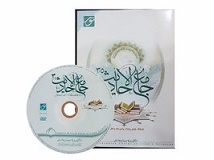
The full text of "Tafsir al-Tabari" (Dar al-Hijrah edition), with the book's content categorized encyclopedically under four main headings: Topics, Biographies (A'lam), Keywords, and Verses.
Type of software: Encyclopedia
Subjects: the Qur'an and Sciences of the Qur'an
Number of books: 1
OS: Windows 7 or later
Volume: 1.37 GB
Download price: 150,000 Toman
It has always been discussed: What are the sources used by exegetes in their works? The best answer is that Sunni narrative exegeses (Tafsir Athari) were compiled based on Prophetic hadiths and the narrations left by the Companions and the Successors (Tabi'un). The Athari method holds a special status among Sunni scholars of exegesis. This interpretive method took shape in the first century through the efforts of the Companions and grew significantly in the second century thanks to the Successors. Narrative exegesis (Tafsir Ma'thur) reached its peak in the third century through the efforts of renowned exegetes like Abu Ja'far Muhammad ibn Jarir al-Tabari. By authoring "Jami' al-Bayan 'an Ta'wil Ay al-Quran," he revolutionized Athari exegesis and earned the title "Father of the Exegetes" (Abu al-Mufassirin). Although this method continued after him until Jalal al-Din al-Suyuti in the tenth century—who opened a new chapter with his work "Al-Durr al-Manthur fi al-Tafsir bi al-Ma'thur"—the name of al-Tabari and his "Jami' al-Bayan" has always shone at the pinnacle of Athari exegesis. As expressed by great Sunni scholars, he is considered the founder of this method in a written and comprehensive form, and his exegesis was titled "The Mother of Exegeses" (Umm al-Tafasir).
Abu Hamid al-Isfarayini said: "If someone travels to China to obtain Tafsir al-Tabari, they have not done a great deed" (implying the journey would be worth it).
Al-Suyuti, in his book "Al-Itqan," stated: "The book of Tafsir al-Tabari is the best and greatest exegesis, because al-Tabari examined various narrations within it, selected what he deemed authentic, and followed the best opinions regarding grammar (I'rab) and recitations (Qira'at). In this regard, his book is superior to those of his predecessors."
Al-Nawawi, quoting Al-Khatib al-Baghdadi, said: "All Islamic scholars agree that no book on exegesis has been authored like the book of Tafsir al-Tabari."
Al-Dhahabi introduces him as the father of the sciences of exegesis and history.
Some have described his exegesis as the most famous and complete, considering it the primary reference for exegetes, whether in narrative or rational exegeses, because in addition to transmitting narrations, he also justified opinions and preferred certain views.
After al-Tabari, most Sunni exegetes followed his lead in Athari exegesis.
Consequently, to gain mastery over the Athari exegetical method, it is necessary to research this exegesis.
Program Introduction
The Tabari Exegesis Encyclopedia is software that categorizes the content of this work thematically. Its most important content is classified into exegetical, literary, occasions of revelation (Asbab al-Nuzul), jurisprudential (Fiqh), recitations (Qira'at), and chains of narration.
By selecting any of the above topics, biographies (A'lam) and keywords related to them are displayed. For example, if the "Exegetical" topic is selected, a list of biographies, a list of exegetes, a list of keywords, and exegetical morphemes appear beneath it. The same applies to other topics. Consequently, the program includes biographies of: exegetes, reciters, jurists, linguists, narrators, and persons mentioned in the occasions of revelation; as well as keywords related to: exegesis, differences in recitations, jurisprudence, literature, and occasions of revelation.
Necessity
Given the special status of al-Tabari and his exegesis—as mentioned above—presenting the content of this work is of paramount importance.
By offering this encyclopedia, both the oldest narrative source and one of the most comprehensive Athari exegeses are presented to Quranic researchers. Therefore, by researching this exegesis, one becomes independent of other general Sunni narrative exegeses such as: Tafsir Ibn Abi Hatim al-Razi, Al-Kashf wa al-Bayan by al-Tha'labi, Jawahir al-Hisan by al-Tha'alibi, Tafsir Ibn Kathir, Zad al-Masir by Ibn al-Jawzi, Lubab al-Ta'wil by al-Baghawi, Ma'alim al-Tanzil by al-Baghawi, etc., and there is no longer a need to examine them individually; of course, the comprehensiveness of "Al-Durr al-Manthur" remains unique and requires its own research.
This program was approved in the year 1378 SH (1999 CE) in the Quran section of the Research Deputy at the Noor Center, and its first phase was researched. Its preparation and production took years until, by divine grace, we witnessed its completion in the year 1399 SH (2020 CE).
Given the importance of Tafsir al-Tabari among Sunni academic circles, and since its research method is encyclopedic—meaning the researcher's personal taste or sect plays no role—this program is suitable for presentation at universities such as Al-Azhar, Medina, Tunis, and Algiers.
Target Audience
The target audience for this program includes all Quranic researchers, particularly professors and researchers specializing in Sunni narrative exegesis.
Research Methodology
The research method in this program is based on an encyclopedic approach. This method involves identifying all the content of the book and logically categorizing it. In this approach, "Jami' al-Bayan" was first studied briefly to identify its general discussions and topics. Then, the content of the book was analyzed in detail, and all its content was extracted and categorized based on subjects.
Program Statistics
Due to its antiquity and comprehensiveness, Tafsir al-Tabari encompasses all exegeses of the Companions and the first and second generations of Successors. A review of the statistics of its content and the opinions of its exegetes further highlights its importance.
• The full text of "Tafsir al-Tabari" (Dar al-Hijrah edition), authored by the renowned historian and exegete of the Islamic world, Muhammad ibn Jarir al-Tabari.
• The content of "Tafsir al-Tabari" is categorized encyclopedically under four main headings: Topics, Biographies (A'lam), Keywords, and Verses, as follows:
| Number of books | |
| Number of disks | 1 DVD |
| Disk type | CD |
| Date of manufacture | |
| Has a network version | No |
| Id | |
| Required storage space | |
| OS | Windows 7 or later |
| Producer | Computer Research Center of Islamic Sciences |
| Type of software | Encyclopedia |
| UI Language | |
| App version | |
| Software Size | 1.37 GB |
| Version description | |
| features | – Ability to categorize and access books under headings such as: All Books, Favorite Books, and Recent Books. • Text Display – Access to the full text and indices of all works available in the program. • Search – Simple and detailed search within the texts of the program's books. • Other Features – Full text of the Holy Quran with translation, along with the ability to search within verses. |
| Tags |
پس از پرداخت آنلاین مبلغ و بازگشت به سایت، لینک دانلود نرمافزار برای شما فعال می گردد و شما می توانید نرمافزار را دانلود نمایید. لینک دانلود نرمافزار برای همیشه در پروفایل شما وجود دارد و شما می توانید در هر زمانی با مراجعه به سایت اقدام به دانلود نمایید.
علاوه بر لینک دانلود، کد فعال سازی نیز در اختیار شما قرار می گیرد. این کد فعال سازی، در پروفایل شما همیشه قابل دریافت می باشد. استفاده از سریال فعالسازی بسیار ساده می باشد. اطلاعات بیشتر
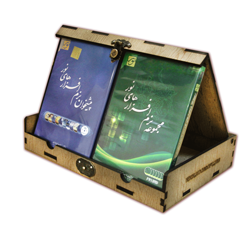
بسته ویژه شامل عدد از برترین نرم افزارهای تولید شده در مرکز تحقیقات کامپیوتری علوم اسلامی نور
More details
 Buy Now with
Share your thoughts with other customers