
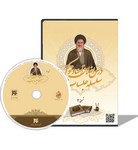
The full text of the 5-volume book "Tafsir al-Safi," authored by the sage, traditionist, and exegete Muhammad ibn Shah Murtada, known as Mulla Muhsin Fayd Kashani. The content of the book is categorized in a tree-view structure under three main branches: Biographies (A'lam), Quranic Sciences, and Indices.
Type of software: Encyclopedia
Subjects: the Qur'an and Sciences of the Qur'an
Number of books: 1
OS: Windows 7 or later
Volume: 1.27 GB
Discount
30 %
Product price:
276,000
193,200
Toman
Download price: 150,000 Toman
Research in the field of Islamic Sciences relies, more than anything else, on the texts and sources left behind by religious scholars and thinkers. The written works of Islamic scholars are the primary resource for researchers to continue scientific efforts, open new horizons in the realm of religious practice, and expand religious culture. With the advent of new information and communication technologies such as computers and the internet, the idea of utilizing these technologies to provide easier access to scientific sources in Islamic Sciences emerged. The Islamic Sciences Computer Research Center was founded in 1989 (1368 SH) under the guidance and supervision of the Supreme Leader of the Islamic Revolution with this very motivation. To date, it has presented a significant portion of Islamic texts and sources to the country's research community in the form of Islamic Sciences software, websites, and digital libraries.
The extensive and diverse research tools and features of Islamic Sciences software remove many difficulties facing religious researchers and significantly accelerate the research process. Thirty-one years have passed since the Center began its work, and so far, by utilizing important sources on various topics in Islamic Sciences, it has designed, produced, and published hundreds of research software programs in various formats, and continues to execute plans for producing more Islamic Sciences software. The design and production of the "Safi Exegesis Encyclopedia" is one of the Center's projects. The "Safi Exegesis Encyclopedia" software is one of the latest Quranic software programs currently under development by the Center.
Introduction to Tafsir al-Safi
"Al-Safi fi Tafsir al-Quran," known as Tafsir al-Safi, is one of the most important ijtihadi-narrative (ijtihad-based and hadith-based) Shia exegeses from the 11th century AH. Due to its brevity and comprehensiveness, this exegesis has been well-received by religious researchers throughout different periods. Given its value and credibility among seminary scholars, it has been translated, explained, and annotated numerous times. The author of the noble Tafsir al-Safi is Mulla Muhsin ibn Murtada, known as Fayd Kashani or Mulla Muhsin Fayd Kashani (1598–1680 CE / 1007–1091 AH), one of the great Shia scholars of the 11th century and a teacher of Allameh Majlisi (d. 1110 AH).
Like his father, who was a top-tier scholar of his time, Mulla Muhsin Fayd Kashani belonged to a family of knowledge and virtue. After migrating from Qom to Shiraz, Fayd attended the lectures of Majid Bahrani (d. 1028 AH). Upon returning to Qom, he became a student of Mulla Sadra Shirazi (1579–1640 CE / 979–1045 AH) and eventually became his son-in-law. He was a jurist, philosopher, theologian, exegete, traditionist, poet, and littérateur, authoring numerous books on Quranic exegesis, hadith, ethics, jurisprudence, and more.
Fayd's Exegetical Method
Fayd Kashani, by examining dozens of hadith books and selecting narrations related to the verses of the Holy Quran, strove to compile the interpretive statements of the Ahl al-Bayt (Peace Be Upon Them) and respond to the demand for knowledge from the Household of the Prophet. His work is not limited to merely collecting hadiths; in addition to explaining and clarifying them where necessary, resolving ambiguities, or reconciling seemingly contradictory narrations, he interpreted numerous verses through his own ijtihad (independent reasoning). Thus, his exegetical method is characterized as ijtihadi-narrative.
Structure of Tafsir al-Safi
In addition to the standard introduction found at the beginning of books, "Tafsir al-Safi" contains twelve introductions regarding various hadiths related to the Quran and the author's exegetical methodology. The goal of writing the book is to present the interpretive hadiths of the Ahl al-Bayt (Peace Be Upon Them) under the relevant Quranic verses. However, before doing so, he always briefly explains the apparent meaning of the verse, largely selecting these explanations from the exegesis of Al-Baydawi, known as "Anwar al-Tanzil wa Asrar al-Ta'wil."
The late Fayd mostly derived his non-narrative content regarding the occasions of revelation (Shan al-Nuzul), linguistics, recitations (Qira'at), and grammatical parsing (I'rab) from Al-Baydawi's exegesis. This is a method he himself alluded to in his twelfth introduction (without naming a specific source). A rough comparison of the non-narrative content in Tafsir al-Safi with Al-Baydawi's exegesis—conducted by comparing three sections from the beginning, middle, and end of each volume (about 10 verses per section) along with scattered verses from each volume—suggests that over 90% of the non-narrative sentences in Tafsir al-Safi are from Al-Baydawi. The author did not cite the source for these transmissions; in some cases, he used the phrase "It was said" (Qila), but in most cases, he transmitted the content without this phrase. A small portion of the statements, expressed with "I say" (Aqulu), are from the author himself, some of which bear the color of mystical expressions.
Of course, in transmitting Al-Baydawi's content, he sometimes altered the sentence structure—changing nominal sentences to verbal ones or vice versa, and present tense verbs to past tense or vice versa—while in many cases, he preserved the exact wording. However, this does not mean he transmitted all of Al-Baydawi's content; rather, his transmission was selective. For instance, from a specific passage, he only included the single sentence he deemed necessary.
As the author stated in his twelfth introduction, he did not resort to the opinions of exegetes as long as a narration was available. Consequently, his transmission from Al-Baydawi becomes more frequent and prominent after the completion of the exegesis attributed to Imam Hasan al-Askari (Peace Be Upon Him). Therefore, the content transmitted from Al-Baydawi is diverse, covering the interpretation of verse segments, meanings of words and vocabulary, explanation of recitations, occasions of revelation, literary points, and a small number of hadiths from the Prophet (Peace Be Upon Him).
Tafsir al-Safi Encyclopedia in Statistics
Tafsir al-Safi is a collection comprising various topics; thus, numerous indices can be prepared from it, such as: an index of God's attributes and actions, sources, heavenly books, places, events and incidents, sects and religions, tribes and nations, persons (Prophets, righteous people, etc.), reciters (Qurra'), Makki and Madani Surahs, and other indices.
Regarding this exegesis, using software methodologies, statistics such as the following can also be provided:
1. In narrative exegesis: Segments and words of verses amount to approximately 7,300 cases.
2. In explanatory (non-narrative) exegesis: Segments and words amount to approximately 7,000 cases.
3. In explaining word meanings via lexical dictionary style: Approximately 4,000 cases.
4. Discussion of jurisprudential (Fiqh) issues: Regarding 370 verses.
5. Discussion of literary issues (parsing, grammar, rhetoric): Regarding 734 verses.
6. Discussion of differences in recitations (Qira'at): In 1,160 cases.
7. Transmission of hadiths on occasions of revelation: 320 cases.
8. Transmission of explanatory statements on occasions of revelation: 245 cases.
9. Transmission of hadiths on the virtues of Surahs and verses: 211 cases (seven of which are non-narrative).
10. Argumentation and citation using or regarding verses: 2,200 cases.
11. Definition of concepts: Approximately 110 cases.
12. Discussion of the reason for naming (Wajh al-Tasmiyah): 147 cases.
13. Expressing opinions on narrations: Approximately 315 cases.
14. Discussion of examples of abrogating and abrogated (Nasikh and Mansukh): 136 cases.
Narrative Sources of Tafsir al-Safi
The late Fayd utilized numerous narrative and non-narrative sources for transmitting hadiths. He mentioned the reference for narrations without providing the chain of transmission (Isnad), which reflects his specific approach to hadith chains. As he explicitly stated in his twelfth introduction (Vol. 1, p. 77), "We verify narrations in a different way." Although he did not explain his method there, it involves verifying hadiths based on their text; meaning the content is so rich that it cannot be attributed to anyone other than the Infallibles.
In some cases, he limited himself to transmitting only the relevant segment of a narration, omitting the rest, and at times engaged in analyzing, reconciling, or justifying narrations.
Regarding transmissions from the exegesis attributed to Imam Hasan al-Askari (Peace Be Upon Him), due to the frequency of citation, he often does not explicitly mention the source. However, in his twelfth introduction, he states: "In Surah Al-Baqarah, most of our exegesis is from the exegesis attributed to Imam Hasan al-Askari (Peace Be Upon Him)." Therefore, he transmits the narrations without citing it.
In this process, sometimes he quotes the exact wording of the exegesis, sometimes he omits a small part and quotes the rest, and at other times he paraphrases.
Regarding the transmission of narrations in his twelfth introduction, the late Fayd says: "Where there are many narrations with similar meanings, we have transmitted the most comprehensive one and omitted others for the sake of brevity, sometimes noting their abundance. Where there are differing narrations, we have selected and transmitted the most authentic, best, and most general ones, and in some cases, we have pointed out the differences."
The sources from which the late Fayd transmitted narrations, along with the number of citations, are as follows (sorted by the extent of transmission):
1. Exegesis of Imam Hasan al-Askari (Peace Be Upon Him): Approximately the majority of the exegesis.
2. Tafsir al-Qummi: 2,400 cases.
3. Tafsir Majma' al-Bayan: 1,450 cases.
4. Al-Kafi: 1,350 cases.
5. Tafsir al-Ayyashi: 1,300 cases.
6. Thawab al-A'mal: 220 cases.
7. Al-Faqih by Saduq: 200 cases.
8. Ilal al-Shara'i: 180 cases.
9. Al-Ihtijaj: 160 cases.
10. Uyun Akhbar al-Rida (Peace Be Upon Him): 160 cases.
11. Al-Tawhid by Saduq: 150 cases.
12. Jawami' al-Jami': 145 cases.
13. Al-Khisal: 145 cases.
14. Ma'ani al-Akhbar: 135 cases.
15. Kamal al-Din: 110 cases.
16. Tahdhib al-Ahkam by Tusi: 110 cases.
17. Al-Majalis: 90 cases.
18. Nahj al-Balagha: 55 cases.
19. Al-Amali by Tusi: 45 cases.
20. Basa'ir al-Darajat: 45 cases.
21. Manaqib by Ibn Shahr Ashub: 45 cases.
22. Misbah al-Shari'ah: 40 cases.
23. Qurb al-Isnad: 30 cases.
24. Rawdat al-Wa'izin: 23 cases.
25. Al-Khara'ij wa al-Jara'ih: 15 cases.
26. Awali al-La'ali: 15 cases.
27. Al-Irshad by Al-Mufid: 8 cases.
28. I'tiqadat al-Saduq: 8 cases.
And Some Other Sources
Therefore, the most frequent use in narrations was made from Tafsir al-Qummi, Tafsir al-Ayyashi, Al-Kafi, and Tafsir Majma' al-Bayan.
Program Definition
The Safi Exegesis Encyclopedia is a digital encyclopedia presented with a tree-view structure, providing access to the text of Tafsir al-Safi through various thematic categorizations and offering simple and advanced search capabilities.
Goals and Necessity
Tafsir al-Safi, as one of the important exegetical sources of the Shia, holds a special place in Islamic research. The use of digital technology to provide easy and practical access to its contents and discussions appears essential. The Safi Exegesis Encyclopedia software, with its various categorizations and simple and advanced search options, provides researchers with simple and easy access to this exegetical source.
Target Audience
Researchers in the field of Islamic Sciences, including professors and students of seminaries (Hawza) and university students specializing in exegesis and Quranic sciences, are the target audience for this program.
• The full text of the 5-volume book "Tafsir al-Safi," authored by the sage, traditionist, and exegete Muhammad ibn Shah Murtada, known as Mulla Muhsin Fayd Kashani.
• The content of "Tafsir al-Safi" is categorized in a tree-view structure under three main branches: Biographies (A'lam), Quranic Sciences, and Indices, as follows:
| Number of books | |
| Number of disks | 1 DVD |
| Disk type | CD |
| Date of manufacture | |
| Has a network version | No |
| Id | |
| Required storage space | |
| OS | Windows 7 or later |
| Producer | Computer Research Center of Islamic Sciences |
| Type of software | Encyclopedia |
| UI Language | |
| App version | |
| Software Size | 1.27 GB |
| Version description | |
| features | • Library – Ability to categorize and access books under headings such as: All Books, Favorite Books, and Recent Books. • Text Display – Access to the full text and indices of all works available in the program. • Search – Simple and detailed search within the texts of the program's books. • Other Features – Full text of the Holy Quran with translation, along with the ability to search within verses. |
| Tags |
پس از پرداخت آنلاین مبلغ و بازگشت به سایت، لینک دانلود نرمافزار برای شما فعال می گردد و شما می توانید نرمافزار را دانلود نمایید. لینک دانلود نرمافزار برای همیشه در پروفایل شما وجود دارد و شما می توانید در هر زمانی با مراجعه به سایت اقدام به دانلود نمایید.
علاوه بر لینک دانلود، کد فعال سازی نیز در اختیار شما قرار می گیرد. این کد فعال سازی، در پروفایل شما همیشه قابل دریافت می باشد. استفاده از سریال فعالسازی بسیار ساده می باشد. اطلاعات بیشتر
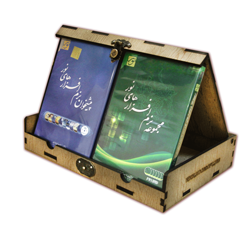
بسته ویژه شامل عدد از برترین نرم افزارهای تولید شده در مرکز تحقیقات کامپیوتری علوم اسلامی نور
More details
 Buy Now with

Share your thoughts with other customers