
 Buy Now with




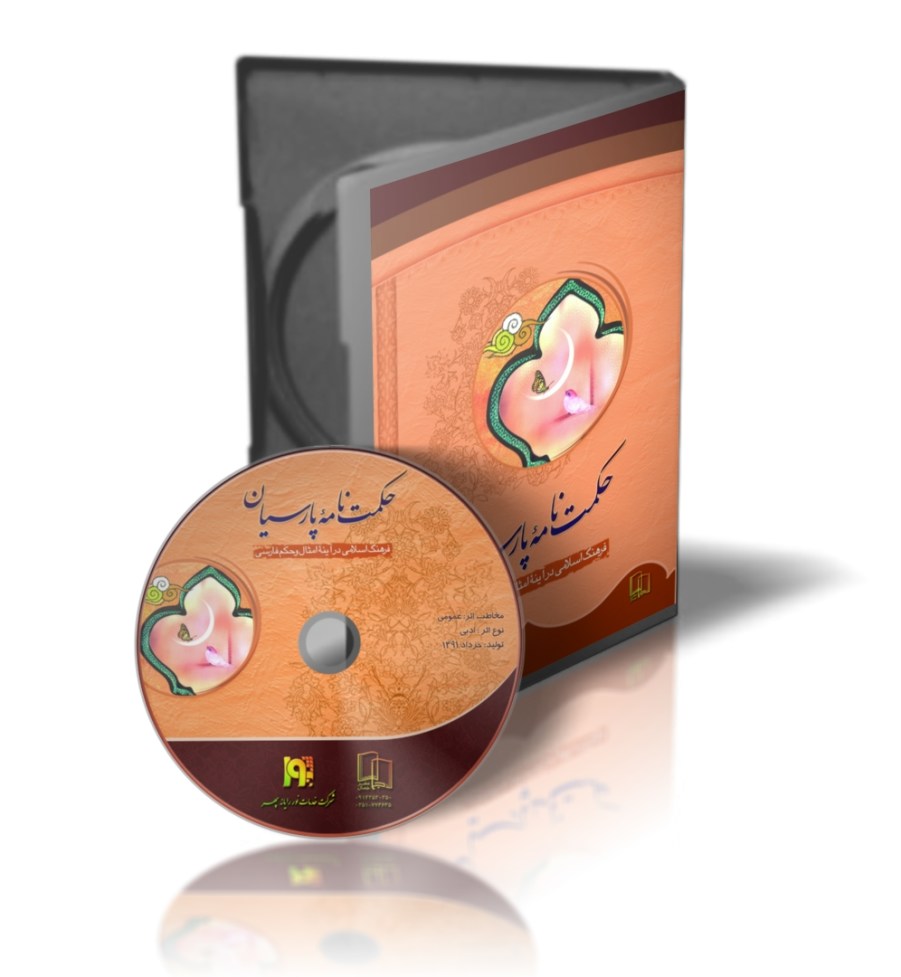
About Wisdom Book of Persians
"Persian Proverbs and Wisdom" is one of the most important sections of our country's literature, representing the essence of Persian poetry and prose. On the other hand, scholars and knowledge-seekers pay special attention to these wisdoms. This growing interest in Persian proverbs and wisdom, more than anything, highlights the hidden values within this precious treasure. In this regard, "Jamal Publications" has printed the valuable book "The Book of Wisdom of the Persians." This book, by intertwining "Persian Proverbs and Wisdom" with "Quranic Verses and Hadiths," unveils a great secret: that every piece of wisdom and every proverb is rooted in the text of religion and the words of the Prophets and divine luminaries.
It can be said with certainty that Ferdowsi, Saadi, and other giants of Persian literature, before creating their literary masterpieces, filled themselves with wisdom by relying on the eloquent words of religion. Then, using the capital of Persian literature, they gifted this wealth to their own generation and to future generations.
Furthermore, while many commendable efforts have been made to collect, preserve, and organize Persian proverbs and wisdom, this invaluable literary asset had rarely been utilized as a comprehensive collection for wisdom, ethics, education, training, and propagation.
The present work effectively reveals that Persian literature in Iran has always been a promoter of ethics, spirituality, purity, and piety. By publishing this work, Jamal Publications has paved the way for benefiting from this ocean of literature and wisdom.
In the author's introduction, as well as in the foreword by Hojjat al-Islam wal-Muslimin Dr. Movahedi, the society's need for this precious work is thoroughly discussed. It was this very need that compelled us to present this valuable collection as "software." This makes it easier for writers, educators, preachers, teachers, thinkers, and orators—who wish to enrich their intellectual and cultural works with rich Persian proverbs and wisdom, adorning and deepening their speech and writing with these wise, literary, sweet, and pleasant expressions—to reach their goal effortlessly and benefit from this great blessing.
It is worth noting that the features and advantages of this software for researchers are as follows:
1. Access to the full text of the book and a reliable dictionary to facilitate research;
2. Access to the location of each proverb and wisdom within the book "The Book of Wisdom of the Persians";
3. Ease of examining the repetition of a specific proverb throughout the book;
4. The ability to link the verses used in this book to the Holy Quran;
5. The capability for note-taking and recording research.
Author's Biography
Gholamreza Heydari Abhari was born in 1969 (1348 SH) in Tehran. He completed his elementary and guidance school education in the same city. Due to his interest in religious sciences, he left high school unfinished and moved to the holy city of Qom. There, he began his religious studies in the seminaries, benefiting from great scholars of the Hawza. Alongside his studies, he experienced writing, publishing his first work in 1995 (1374 SH). Since then, he has written various works, including several literary, historical, and hadith-based books for adults. Some of his works have been selected by book-related festivals. The "Season Book Festival," the "Reza Annual Book Festival," and the "Religion Book Festival" are among those from which Heydari has received awards.
This talented cleric author has a brilliant record of collaboration with the Center for Quranic Culture and Knowledge (answering students' written questions for three years) and Dar al-Hadith (for several years).
He has further enhanced his distinguished record by being present at the Quran Exhibition for six years, answering religious questions from children and adolescents. The book "God-Knowledge for Children through the Quran" is the result of these conversations with children and teenagers.
His latest work, titled "Bread and Salt" (A Thematic Culture of Persian Proverbs and Wisdom), has been published in a royal size format with 850 pages. His most successful works are those created in the field of Monotheism and God-Knowledge for child and adolescent audiences.
Some of the Author's Cultural Perspectives:
1. Great deeds are performed by great individuals, not by large organizations;
2. We must seek the right work, not merely large-scale work;
3. Unless we value human resources, we will never taste the flavor of progress;
4. Printing Hadith is different from propagating Hadith; many current works in the book field are more about printing Hadith than truly propagating it and delivering it correctly to the audience;
5. If suffering individuals turn into mere employees, we should bid farewell to culture;
6. In expressing religious knowledge to children and adolescents, we have reached a point of repetition in both form and content, due to authors' lack of familiarity with the thoughts of the greats;
7. An "unsacred defense" of the Sacred Defense will lead us nowhere; limiting the great defense of the Iranian nation to only Hajjis and Sayyids, if not treason, is certainly not a service;
8. In writing for children and adolescents, motivational discussions must take precedence over educational ones. For example, a book related to the Sacred Defense, while providing information, must also raise the enthusiasm and motivation for defense in the audience;
9. Cultural servants must focus on their work; the era of mixed cultural-economic activities is over. One cannot harvest two watermelons with one hand, let alone ten;
10. "The nightingale learned speech from the grace of the flower; otherwise, this talk and ghazal would not be embedded in its beak." Until we reach the witnessing of Truth, our tongue and pen will not mature;
11. The people of Iran are not angry with religious books, but rather they oppose low-quality religious works;
12. Haste is the work of Satan; however, wasting opportunities and negligence in producing excellent works should not be mistaken for precision and patience;
13. The era of beautiful words is over; now is the time for beautiful experiences. The impact of writing one good book is greater than talking about a thousand books that have not yet been written;
14. Religious behavior has more effect than religious speech. Cultural institutions that oppress their employees, unilaterally cancel contracts with writers and artists, ignore the material and moral rights of others, and seek to serve Islam at any cost! Their service, rather than promoting religion, will lead to its disrepute.






Share your thoughts with other customers