

 Buy Now with

About Hafez
The richness of the Persian language and literature is owed to heartfelt artists and wise connoisseurs of speech who, throughout Iran's history, girded their loins with determination and, despite enduring numerous hardships, poured the fruits of their wise contemplation, mystical insights, and poetic sentiments into verbal forms, sometimes verse and sometimes prose, presenting them to connoisseurs and seekers in the Dari language.
Undoubtedly, "Khwaja Shams al-Din Muhammad Hafez Shirazi" is a unique or unparalleled hero in this arena. Although seven centuries have passed since the creation of his magical ghazals, the dust of antiquity has not settled upon them; rather, wise connoisseurs and speech experts across the globe read them daily with renewed and more passionate love, memorize them, and adorn their own wise, mystical, and poetic sayings with them.
"Hafez's poetry is entirely the essence of ghazal in gnosis; praise be to his charming soul and the grace of his speech." Rarely can one find a Persian speaker who does not have a few verses of Hafez memorized. Few are those who do not recognize the status and station of this sweet-tongued poet in the flourishing of human culture and thought, and who do not bow their heads in reverence before his greatness. Although his hidden secrets and lofty thoughts cannot be fully discerned from within his ghazals, each of his verses and compositions is replete with artistic subtleties, satirical yet enigmatic themes, mystical terminology, and aesthetics, all while employing rhetorical devices. The use of mystical expressions at the peak of emotional arousal, adorning speech with rhetorical figures, conciseness and brevity, blending subtle wisdom with Quranic points... all these are his characteristics that have made him a global figure.
"No guardian (Hafez) in the world like the servant has gathered * Subtleties of wisdom with Quranic points."
Khwaja of Shiraz, among all mystical poets, has not only attracted the greatest number of commentaries and interpretations to his speech, but has also bewildered and confused many critics, poets, and writers in understanding his serious and true intent behind those ambiguous poems seasoned with satire.
In our era, where the domain of the Persian language has expanded beyond Iran's geographical borders, it can be said with confidence that translations and commentaries of Hafez's Divan into other languages are several times greater than those in Persian, and still, in corners of the world, many commentators are engaged in critiquing, studying, and explaining this magical masterpiece, competing with one another in this field.
It must be noted that regarding the manuscripts of Hafez's Divan, out of thirty-five printed editions and more than forty-four handwritten copies, unfortunately, no fundamental or foundational work has been done. Most commentators, instead of exercising utmost care and diligence in selecting a manuscript, have adopted a version without scrutiny or precision as the basis for interpretation, justifying or overlooking whatever they could not understand. In this chaotic market where numerous and erroneous versions of Hafez's Divan are constantly offered with various right and wrong motives, it is expected from the cultural custodians of society to put an end to this turmoil by seeking help from committed and scholarly connoisseurs of speech.
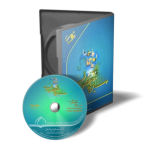
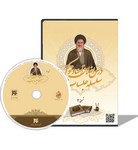
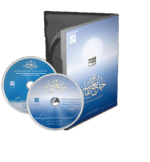
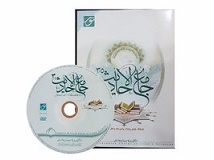
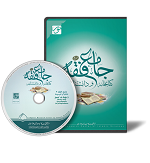
The necessity of collecting information and organizing Hafez Shirazi's valuable work, along with conducted research, in a software program using modern computer knowledge in a multimedia format within a collection of reliable books (editions, commentaries, dictionaries, linking verses and narrations, bibliographies, lectures, articles, etc.) was felt more than ever; additionally, the reception and repeated production of software for "Masnavi-ye Ma'navi" and Ferdowsi's "Shahnameh" compelled and encouraged us toward this important task as well.
To ensure we derive the best and maximum benefit from all viewpoints of great experts in the field of Persian literature, especially Hafez scholars, in this multimedia software, we have striven, by the grace and power of God, to present a comprehensive plan for all various scientific levels, including Hafez researchers, professors of various university and seminary disciplines, seminary students, university students, and even school pupils and enthusiasts of Persian poetry and literature.
By the grace of Almighty God, the compilation and preparation of such a large project to recognize and introduce the personality of Hafez Shirazi and his precious work will create a tremendous transformation in the field of research and investigation.
Undoubtedly, undertaking such a task and embarking on such a path seemed difficult and perilous, but with reliance on the Friend (God), who has always been our helper, and due to the presence of learned professors and literary scholars, such as the virtuous professor and noble scholar, Mr. Hossein Ahi (who was our consultant, encourager, and direct supervisor from beginning to end), and conscientious officials in this field, this work was successfully accomplished.
In this software program, we have endeavored to use the best and most comprehensive editions of Hafez's Divan; for this purpose, all old and new editions were reviewed; consequently, a comparison was made between existing editions, including printed ones numbering over thirty-five, and handwritten ones numbering approximately forty-four; finally, for the recitation of ghazals in this software, the edition of Allameh Qazvini and Qasem Ghani, corrected by Khanlari with an introduction by Dhu al-Nur, was selected.
Familiarization with the Program
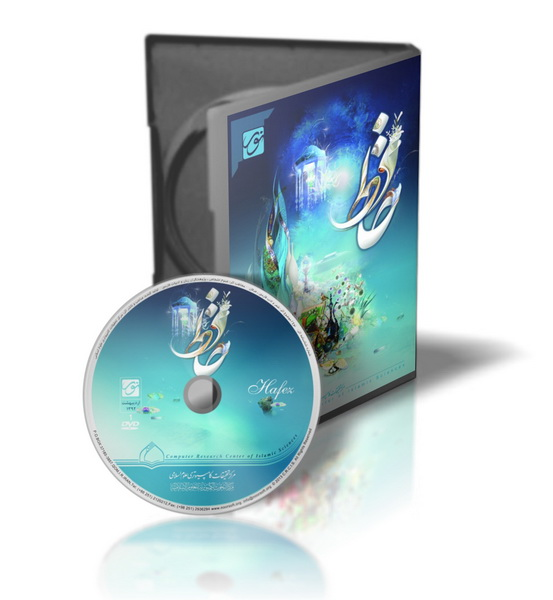
The multimedia software program for Hafez is presented with a new and comprehensive approach through graphical pages and beautiful animations in a multimedia structure (database and multimedia), similar to the programs for "Masnavi-ye Ma'navi" and Ferdowsi's "Shahnameh," featuring the following capabilities, sections, and characteristics:
1. The full text of Hafez's Divan and recitation of ghazals in two styles (correct recitation and beautiful recitation);
2. Display of fourteen commentaries on Hafez's Divan, providing explanations and interpretation of verses;
3. Ability to compare and match old handwritten and new printed editions in the manuscript study section;
4. Highlighting poetic information, expressing artistic subtleties and grammatical points, explaining difficult words, and interpreting ghazals with a new dialect in the "Spoken Commentary" (Sharh-e Goya) by Professor Ahi;
5. Review of over one hundred books written about Hafez's personality and his Divan in a comprehensive library;
6. Review of various translations into common world languages and viewing commentaries alongside the original text in the folder of related books;
7. Linking ghazals with the Holy Quran and narrations of the Infallibles (peace be upon them) (ability to access verses and narrations related to the verses of Hafez's Divan);
8. Mentioning proper nouns, explaining words and terms in the vocabulary dictionary with elucidation of mystical expressions;
9. Examination of meters and topics of Prosody (Ilm al-Aruz);
10. Comprehensive Bibliography;
11. Mentioning and explaining rhetorical devices in Hafez's ghazals;
12. Displaying ghazals in the "Fal-nameh Hafez" (Book of Divination by Hafez);
13. Displaying the thematic index of Hafez's Divan in over 137,000 index cards;
14. Prefaces by prominent professors on the Hafez software in the Introduction section;
15. Display of videos and photos in the Gallery;
16. Numerous capabilities such as various text displays in Nastaliq script and searches (such as search by word and verse, along with simplification of the search environment; i.e., offering simultaneous combined, pattern-based, and root-based searches), etc.;
17. Ability to use four main options: "Print, Export, Help, Note-taking," and options like zoom-out, etc., along with research keys and shortcuts on all pages (some of the aforementioned matters will be explained in subsequent issues);
18. Active Program Guide: Since users encounter questions while using the software regarding the function of operational buttons, a "Spoken Help" option has been designed to receive explanations in these cases;
19. Printing: The ability to print text with various types of printers and different sizes in standard environments as "selected texts" and "current pages," and writing in the Iranian script (Nastaliq calligraphy) is provided in the program;
20. Notes: The ability to take notes by selecting the note option, saving text, creating new files, and making editorial changes in any format and font is possible;
21. Ability for the user to utilize the Word environment and all Windows versions on CD, DVD, and regular discs, and the ability to use other programs simultaneously with this program while listening to the poetry recited by speakers;
22. Employing vivid and clear colors and designs in pages, commensurate with the mystical-literary themes of Hafez's poetry, as well as using animations, patterns, and Iranian arabesques with harmonious colors;
23. Numbering of verses.




Share your thoughts with other customers