
 Buy Now with

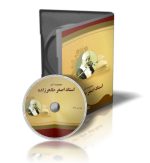
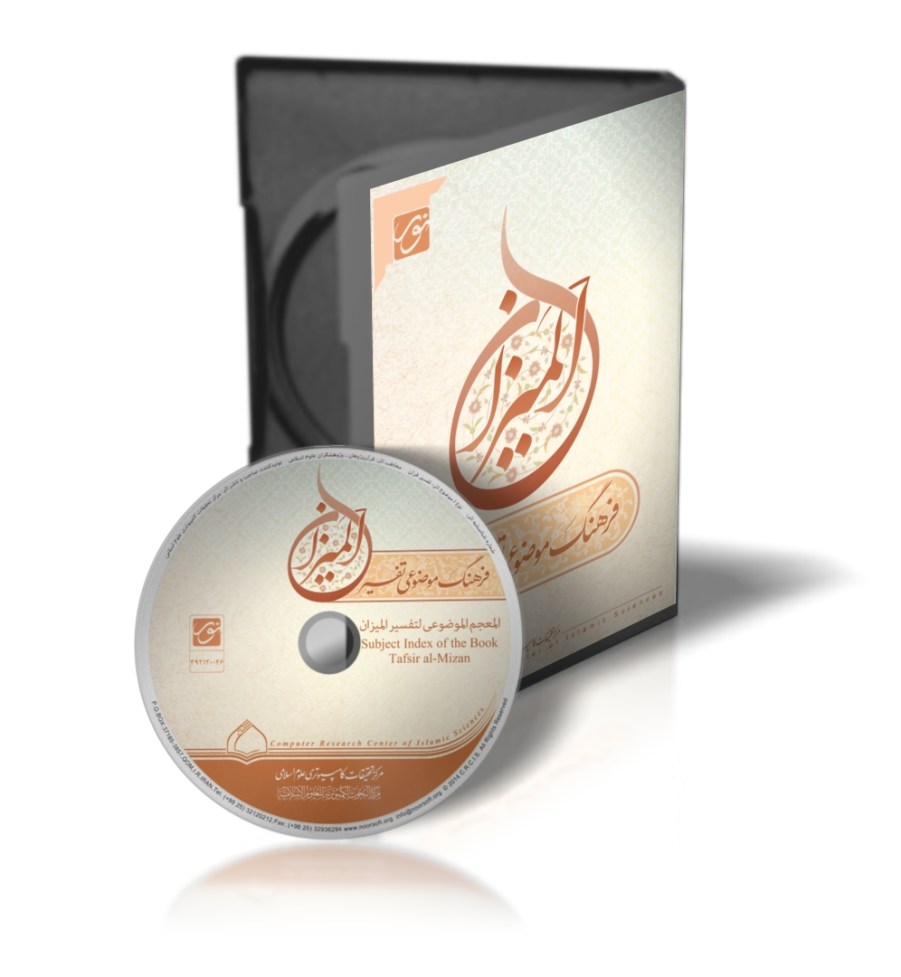
About Subject-Index of Tafsir al-Mizan
The present software contains diverse and extensive materials from *Tafsir al-Mizan*, categorized by topic (text summary), indexing, and single words, aiming to provide precise and comprehensive information on its various contents, thereby meeting the needs of Quranic researchers and scholars of Islamic sciences and knowledge.
The Importance of Tafsir al-Mizan
The value and significance of the precious and important *Tafsir al-Mizan* are hidden from no one. Briefly, its most prominent features can be sought in the following points:
1. Employing the method of "interpreting the Quran by the Quran."
2. The predominance of a spirit of moderation and balance accompanied by demonstrative reasoning.
3. The contemporaneity of the interpretation through responding to doubts and objections.
4. Presenting a social face of Islam by raising Islamic social issues.
5. Attention to the opinions of others along with critiquing them.
6. A thematic approach to the discussions of the Holy Quran.
These features, combined with the expansion and proliferation of discussions, have led to an abundance of content and their intertwinement. Consequently, a researcher's access to desired materials through Surahs and verses becomes very difficult, necessitating the use of various informational methods to achieve this. The Computer Research Center for Islamic Sciences, drawing on its past experiences, placed the program "Thematic Dictionary of al-Mizan" on its agenda.
Program Objective:
The goal of this program is the simple and easy extraction of the profound contents of *Tafsir al-Mizan* in all fields, especially doctrinal and knowledge-based matters, and their presentation in specific classifications.
Stages of Forming the Thematic Dictionary of al-Mizan
Given the comprehensiveness and breadth of the discussions in *Tafsir al-Mizan*, numerous sessions were held with experienced researchers familiar with the exegesis. In these sessions, the "method of topic extraction and indexing of all concepts in *Tafsir al-Mizan*" was selected, and five general stages were defined to commence the work:
1. Topic Extraction (Summarizing the text);
2. Indexing of Topics (Summaries);
3. Breaking down indices into single words and harmonizing topics and indices;
4. Root derivation of single words;
5. Side systems including: Commonalities, Synonyms, and Related terms in single words.
Stage One: Topic Extraction
In the first stage, *Tafsir al-Mizan* was summarized. The number of these summaries, termed "topics," is 40,080 titles. The general principle in topic extraction was "reading the text accurately, summarizing it, presenting the general topic at the beginning of each segment, and then the sub-topics in such a way that no important point remains without a topic." However, due to the diversity and specialized nature of *al-Mizan's* discussions, it was decided to apply this principle fully to interpretative statements and everything related to the interpretation of verses and exegetical discussions. In non-exegetical discussions, efforts were made to present the topic generally, while details were communicated via indexing. Therefore:
a) Linguistic, literary, rhetorical, and recitation discussions: Only those relevant to the interpretation and understanding of the verse and emphasized by the author were topic-extracted; details were communicated via indexing.
b) Philosophical, social, historical, and scientific discussions: Those related to the interpretation of verses were detailed in the topics, while independent discussions were presented generally, with details communicated via indexing.
c) Narrative discussions (including exegetical narrations, reasons for revelation, and non-exegetical narrations): The primary principle is to communicate each narration under a general topic, unless it includes matters related to verse interpretation or is too long to summarize its key concepts in a single topic. Additionally, details of narrations that could not be expressed in the topic appear in the index, and key concepts present in the narration text but not included in the topic are indexed.
d) Terminology found in the verses and the exegesis text (as much as possible) was included in the topics in its original form.
It is worth noting that this stage was carried out on pre-designed cards (including: topic, index, page number, and the start of the line from which the topic was extracted), with topics aimed to be between 60 and 160 characters. Subsequently, the topics were controlled and evaluated regarding content comprehension and literary form.
Stage Two: Indexing
In this stage, the main axes of each topic were presented as compound, two-part entries called "Index."
The general principle in indexing is "presenting all key concepts of the topic or the text from which the topic was extracted as a compound index."
Mentioning the following points in indexing seems necessary:
a) Efforts were made to ensure the index does not exceed two words, unless a combination of two or more words constitutes a single word (such as proper nouns, compound names, and possessive constructions indicating a specific term or meaning), or if a single word was not considered for the term (such as "absence" or "negation").
b) Verses cited in the text but where the topic falls under the main verse were recorded in the index section of the cards by Surah and verse number.
c) Efforts were made to express the terminology of the text and verses in the index in their original form; for example, in linguistic interpretation, "Meaning of such-and-such" is used; in non-linguistic interpretation or the opinion of exegetes, "Interpretation of such-and-such"; and in defining a specific term, "Definition of such-and-such."
d) Items present in the exegesis text but not stated in the topic were included in the index, such as names of places and days, proponents of opinions, book titles, etc.
e) Since topic extraction in non-exegetical discussions focuses on the generality of the subject, efforts were made to present text details in the index so that all text content is available to the user in some manner.
Stage Three: Single-Word Breakdown of Indices and Harmonization
The stage of breaking down indices into single words begins after constructing the indices, with the general principle being the conversion of each index entry into single words.
The following points seem necessary in this stage:
a) Words deemed unnecessary to preserve, such as "absence" and "negation" (meaning privation), were not converted into single words.
b) Compound words, such as proper nouns, specific names, and compound terms considered single words in the index, were also presented as compounds in the single-word stage.
c) Words whose meanings differ based on vowel marks (diacritics) while having the same written form had their diacritics expressed in the single-word stage, e.g., «al-mithl», «al-mathal», «al-muthul». Uniform orthography must be observed in single words.
After this stage, harmonization begins, which is carried out in two steps:
a) Harmonization of Topics: Since topics were extracted based on the extractor's discretion and taste, after multiple controls regarding content and appearance, efforts were made to reflect the text's concept easily (although some deficiencies still exist in this area).
b) Harmonization of Indices: Harmonization is performed in several stages:
- Controlling and reviewing each index individually regarding content and form, with left-and-right alignment, leading to consistency among indices with the same content and their literary and methodological editing.
- Conducting specific tests, such as: testing common indices under one topic, testing the most repeated single word under one topic, and testing indices formed from two different words sharing the same root (this test is performed after rooting the single words).
Stage Four: Root Derivation
After reviewing the single words and finalizing their orthography, we enter this stage.
Explanation: Single words can be divided into four groups based on their root:
- Single-root:
A single word having a specific meaning or multiple meanings, for which linguists have mentioned only one root. For example, the word «'ayn» meaning "eye," "spring," "spy," etc.
- Multi-root:
A single word with different meanings where each meaning has a different root, or linguists have mentioned multiple roots for it. For example, «al-mala'ikah» (angels) has roots: «malaka», «la'aka», «ala'aka».
- Rootless:
A single word that is a proper noun; the single word itself is listed in the root section. Of course, if the single word has two usages (i.e., it is a proper noun and also used as a derived term with a specific meaning), then the root of the derived term is also considered.
- Compound Root:
If a single word is a compound term or compound noun, then the root of both parts is mentioned together. If it is a proper noun, the single word itself is also considered simultaneously.
Examples:
«Ashab al-Milal» = «Sahaba and Milal»
«Al-Masjid al-Haram» = «Sajada and Haram and Al-Masjid al-Haram»
- For words where linguists disagree on the root, the root with greater consensus is mentioned. If they hold equal standing, all are mentioned, e.g., «Ism» (name) with two roots: «Samaw» and «Wasam».
- For some compound names classified under specific categories like exegetical books, tribes, or those attributed to a person, in addition to the compound name, the root of the first part is recorded with the marker "and" (waw). For example: «Banu Hashim» = «Banu and Banu Hashim». «Tafsir al-Mizan» = «Fassara and Tafsir al-Mizan». «Ashab Ali (AS)» = «Sahaba and Ashab Ali (AS)». «Surah Yusuf» = «Sur and Surah Yusuf».
Stage Five: Side Systems (Commonalities, Synonyms, and Related Terms)
Preparing side systems for the entire program by providing systems of synonyms, commonalities, and related terms, so that all program titles function like links in a chain for conceptual and research development.
a) Synonym System:
The general principle for synonyms is to provide the famous synonyms of each single word, whether used in the exegesis text and topic extraction or part of its well-known synonyms, so that searching for them connects to the same topic and text.
b) Related Terms System:
In the "Related Terms" column, all single words existing in the single-word list that are connected to the target word in one of the following ways are included:
1. Divisions and Co-divisions: If a single word has divisions or is a co-division of another single word, all divisions and co-divisions are included in related terms. E.g., «Al-'Ilm» (Knowledge): «Huduri» (Presential), «Al-Husuli» (Acquired).
2. Synonyms and Antonyms: All synonyms, antonyms, and opposites of the single word present in the single-word list are included. E.g., «Al-Ihsan» (Benevolence): «Al-Isa'ah» (Malevolence), «Al-Birr» (Righteousness).
3. Whole and Parts: Parts are listed under the whole single word, and the whole is listed under the part single words as related terms. E.g., «Al-Salah» (Prayer): «Al-Ruku'», «Al-Sujud», «Al-Qira'ah»...
4. Universal and Individuals: Individuals are listed under the universal single word, and the universal is listed under the individual single words. For example, in the related terms column for «Al-Anbiya» (The Prophets), the names of prophets present in the single-word list are mentioned.
5. Interpreter and Interpreted: The interpretations of the single word are included in the related terms column, which requires referring to the single-word indices.
6. Specific and Conventional Connection: If there is a specific and conventional connection between two single words that does not fit into the above categories, it is considered a related term. E.g., «Al-Anbiya»: «Al-'Ismah» (Infallibility), «Al-Wahy» (Revelation).
7. Reasons for Revelation: The single word "Asbab al-Nuzul" (Reasons for Revelation) is considered a related term for proper nouns regarding which a verse was revealed. Also, the single word «Al-Qira'at» (Recitations) is included as a related term for words with variant recitations.
c) Commonalities System:
In the "Commonalities" column, all single words in the list that share a verbal form with the target word are distinguished from apparent homonyms through diacritical marks or meaning explanations in parentheses. By stating their meanings, the semantic circle of that word is separated from others.
Reminder:
Finally, attention to certain matters is necessary:
a) Due to the importance of context (Siyaq) in the interpretative method of the late Allamah Tabatabai (RA), all cases are displayed with the index «Al-Tafsir bi-al-Siyaq».
b) Due to the importance of separating the interpretation of verses from the statement of exemplification (Misdaq), inner meaning (Batin), application (Jari), analogy (Tatbiq), allegorical interpretation (Ta'wil), and reasons for revelation in the late Allamah Tabatabai's (RA) method, these cases are accessible via the indices «Tafsir Kadha», «Al-Tafsir bi-al-Misdaq», «Al-Tafsir bi-al-Batin», «Al-Tafsir bi-al-Jari», «Al-Tafsir bi-al-Tatbiq», «Al-Tafsir bi-al-Ta'wil», «Al-Tafsir Hasab Asbab al-Nuzul», and the single words «Al-Tafasir», «Al-Misdaq», «Al-Batin», «Al-Jari», «Al-Tatbiq», «Al-Ta'wil», and «Asbab al-Nuzul».
c) Cases of occasion of revelation (Shan al-Nuzul), reasons for revelation, cause of revelation, etc., are accessible via the single word «Asbab al-Nuzul».
d) The interpretation of verses, concepts, and words within the verses is presented with the index «Tafsir Kadha» and the single word «Al-Tafasir».
e) The thematic discussions of the late Allamah (RA) presented after the interpretation of verses are communicated in the topic (text summary) at the start of the discussion with the expression «Bahth: Kadha» (Discussion: Such-and-such) in blue color, e.g., «Bahth: I'jaz al-Quran», «Bahth: Al-Nifaq fi Sadr al-Islam», «Bahth: Hawiyat al-Insan», «Bahth: Qissat Ayyub (AS)», «Bahth: Al-Mala'ikah», «Bahth: Hurriyat al-Insan fi 'Amalihi», «Bahth: Al-Funun al-Bahithah 'an Ghara'ib al-Athar», etc.
By searching for the word «Bahth:» in the topic file, one can access all these topic words.
f) Since reviewing and critiquing Rashid Rida's opinions in *Tafsir al-Manar* was intended by the late Allamah (RA), relevant materials are accessible via the single word «Tafsir al-Manar» (the same approach was applied to other used exegeses such as *Tafsir Fakhr al-Razi* and *Tafsir al-Kashshaf*).
g) The late Allamah's (RA) critiques of the opinions of other exegetes and personalities are communicated via the single word «Al-Rudud» (Refutations).
h) In this program, the Persian translation of *Tafsir al-Mizan* is also linked to the Arabic text.
In the Keyword File:
1. The sections "Hadiths" and "Rules" are inactive because they were not specified in the conducted research.
2. In the "Persons" section, in addition to "Proper Nouns of Persons," specific names of "Things" such as «Al-Hajar al-Aswad» (The Black Stone) and «Al-Mizab» (The Gutter) are also included.
3. In the "Times" section, words indicating a specific time are shown, whether they occurred once, like «Laylat al-Mabit», «Ghazwat Khaybar», «Sariyyat Dhat al-Salasil», or recur, like: «Ramadan», «Al-Duha», «Al-Jumu'ah», «Laylat al-Qadr», «Al-Shita'», and also without considering temporal duration; e.g., «Yawm al-Din».
4. In the "Groups" section, words indicating social groups in any form are included, such as:
a) Names of peoples; e.g., «Al-Barbar», «Al-Amaliqah», and tribes; e.g., «Kindah», «Quraysh», and anything indicating the lineage of a famous person like «Banu Hashim», «Banu Isra'il».
b) Names of peoples attributed to a land; e.g., «Ahl al-Jibal», «Al-Kufiyyun», «Ahl Babil».
c) Names of ideological groups such as: «Al-Shi'ah», «Al-Khawarij», «Al-Kitabiyyah», «Al-Budhiyyah», and also ideological groups attributed to an object, belief, land, historical event, or a famous person. E.g., «Ashab al-Kahf», «Ashab al-Suffah», «Ashab al-Tanasukh», «Ashab Madyan», «Ashab al-Ukhdud», «Ahl al-Hudaybiyyah», «Ashab al-Sabt», and «Ashab Ali (AS)».
d) Names of religions, sects, and schools of thought; e.g., «Al-Kathulik», «Materialism», «Al-Dahriyyah», «Al-Hissiyyun».
Deficiencies in This Version of the Thematic Dictionary of Tafsir al-Mizan:
Due to the program stagnating for a period and the necessity of producing it for researchers' use, unfortunately, this version will have some deficiencies, including:
1. Lack of fluency and smoothness in some topics (text summaries), causing difficulty in quick comprehension;
2. Incompleteness of the synonym, related terms, and commonalities systems;
3. Lack of complete and final harmonization between indices;
4. Lack of consistency between some index terms and single words (in these cases, the single-word expression is the criterion);
5. Presence of some orthographic errors such as «Ittisal al-Ayat» and «Ittisal al-Ayat».
6. Presence of some low-content indices resulting from splitting long indices;
By the grace of Allah the Beneficent and with the help of researchers, God willing, some deficiencies in this version will be rectified in future editions.
Statistics of the Thematic Dictionary of al-Mizan:
1. Topics: 40,080
2. Non-repetitive Indices: 131,992
3. Non-repetitive Single Words (including synonyms): 11,165
4. Roots of Single Words (including synonyms): 6,620


Share your thoughts with other customers