

 Buy Now with

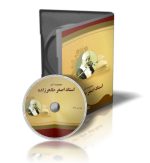
About Garden of Culture and Knowledge
Introduction:
The development of Islamic culture and thought in society has always been a primary concern for scientific and cultural institutions and centers in the country. In line with this, the Office of the Representative of the Supreme Leader (may God protect him) in Universities, in cooperation with the Computer Research Center of Islamic Sciences, has developed the software "Garden of Culture and Knowledge" (Golshan-e Farhang va Ma'refat), making valuable cultural and scientific content available to researchers, students, and those interested in Islamic culture and knowledge.
Below, you will become acquainted with the scientific content and research features of this program.
A. Content of the Program:
This software includes the full text of over 140 issues of the monthly cultural, social, and student magazine "Porseshman" along with its special issues, and 46 issues of the quarterly creedal, political, and cultural magazine "Mokatebeh va Andisheh." These contain answers provided to questions from university members on various topics, as well as diverse gnoseological and cultural articles needed by intellectuals.
Access to the full text of the Holy Quran with translation, as well as several series of dictionaries to understand the meanings of words, are among the other content features of "Garden of Culture and Knowledge."
B. Features of the Program:
* Text Display:
- Access to the text and index of texts available in the program.
- Ability to select tree and selective indexes and link them to the text, with bidirectional synchronization between text and index.
- Capability to select magazine title, issue number, and page, along with the ability to expand the text and index pages.
- Simultaneous comparison of two texts from one or two different magazines.
- Restricting the scope of text and magazine indexes to desired items.
* Search:
- Simple and advanced search within the text and indexes of the program's texts.
- Ability to save each performed search independently for easy access.
- Limiting the search scope to specific text(s) with special capabilities.
- Index generation using wildcards to create dynamic and diverse word lists.
* Dictionary:
- Full text of several historical dictionaries with access to word roots and derivatives.
- Linking text vocabulary to the program's dictionaries for easy comprehension of meanings.
* Active Research:
- Linking text and magazine indexes to other sections of the program, such as: Display, Search, Quran, or Dictionary.
- Ability to transfer selected text to external memory or to the Ms-Word environment.
* Note-taking:
- Ability to transfer desired text or index to the program's note section.
- Capability to save and edit transferred text in the note page.
- Transfer of text from the note section to the Ms-Word environment.
* Print:
- Printing the desired text or index with multiple options.
* Help Guide:
- Access to useful explanations for better familiarity with various parts of the program.
* Research Tools:
- Indexing, annotating, highlighting, and marking text for faster information retrieval and recording additional data related to the program's texts.
- User management of the program's research capabilities.
* Additional Features:
- Access to several common keyboard layouts and display fonts for easy use of the software.
- Ability to specify a path for saving research projects with diverse options.
- Option to show or hide diacritics (vowel marks) and headers in the program's texts.
About the Office of the Representative of the Supreme Leader in Universities:
The Office of the Representative of the Supreme Leader in Universities was established based on the final resolution of the Supreme Council of the Cultural Revolution in March 1994 (Esfand 1372 SH), according to specific goals and duties, and carries out the tasks stipulated in its charter in all universities and higher education centers.
Structure of the Office:
1. Council of Representatives of the Supreme Leader: The highest policy-making authority of the Office, whose members are appointed by the Leader of the Islamic Revolution.
2. Head of the Office: The highest executive official, appointed by the Supreme Leader for a 3-year term upon the recommendation of the Council of Representatives.
3. The Office consists of four deputy departments:
- Deputy for Education and Research of Professors and Islamic Knowledge Courses.
- Deputy for Offices and Preachers Affairs.
- Deputy for Planning and Support.
- Deputy for Political and Cultural Affairs.
4. Head of the Representative Office at the University: Responsible for managing the office and executing its duties within the university scope, acting under the supervision of the Head of the Office and within the framework of programs and regulations issued by him.
Strategic and Executive Goals of the Office:
1. Expanding and deepening the creedal beliefs of university members.
2. Commitment to holding intellectual, cultural, and political sessions with university groups and organizations.
3. Qualitative improvement of Islamic Knowledge courses and enhancing the competence of their professors.
4. Creating opportunities to expand spiritual and emotional connections with students.
5. Special attention to professors and increasing influence in the educational and research domains of universities.
6. Non-partisan performance and interaction with all university groups.
7. Mosque-centric approach and performing the specific duties of the clergy within the university environment.
8. Responding to questions and doubts raised by university members.
9. Moving towards the unity of the Seminary (Hawza) and the University.
10. Islamization of universities and Islamization of human sciences.
11. Innovation in activities and religious rethinking.
12. Pursuing the demands of the Supreme Leader from the Office and the country's higher education system.
Key Activities of the Office:
1. Recruitment and Development of Islamic Knowledge Professors:
The University of Islamic Knowledge, affiliated with the Office, was founded in 2006 (1385 SH). It currently admits students at Master's and PhD levels in five fields: Theoretical Foundations of Islam, Islamic Ethics, History and Civilization of Islam, Islamic Revolution, and Introduction to Islamic Sources.
2. Providing Content for Islamic Knowledge Courses:
In accordance with the latest resolution of the Supreme Council of the Cultural Revolution, Islamic Knowledge courses were increased from 12 to 32 units, allowing students with diverse interests to freely choose 12 units. Over 70 textbooks and supplementary books have been prepared and compiled for all these courses.
3. Dispatching Scientific, Cultural, and Political Figures to Universities:
Students organize cultural programs as part of certain political, social, and religious activities. In this regard, students can connect with professors and thinkers through the Office's bureaus located in universities, and the Office facilitates these introductions. (Coordination: 021-84222381)
4. Answering Students' Questions:
The Counseling and Response Department, under the Deputy for Education and Research, has, since its inception in 1994 (1373 SH), answered over 200,000 student questions in a specialized manner via written correspondence, internet, and SMS, utilizing the expertise of scholars from both the Seminary and the University. This department comprises ten specialized scientific groups:
1. Group of Exegesis, Quranic Sciences, and Hadith Studies.
2. Group of Jurisprudential Rulings and Religious Issues.
3. Group of Philosophy, Theology, and Religious Studies.
4. Group of Philosophy of Rulings.
5. Group of Ethics and Mysticism (Irfan).
6. Group of Education and Psychology.
7. Group of Political Thought.
8. Group of Cultural-Social Affairs.
9. Group of History and Biography (Sirah).
10. Group of General Information.
SMS System: 30001619 | Email: info@porseman.org | Website: www.porseman.org
5. Books of Student Questions and Answers:
More than 50 book titles containing student questions and answers on topics such as Theology, Quranic Studies, History and Biography, Jurisprudence, Counseling, and Education have been compiled. (For information and purchase: www.Ketabroom.ir)
6. Office Publications:
* "Islamic University" Quarterly (Journal of the Office's Research Institute): www.Islamic.uni_mag.ir
* "Islamic Revolution" Quarterly (Journal of the Islamic Revolution Group at the University of Knowledge): www.maaref.ac.ir
* "New Religious Thought" Quarterly (Scholarly-Research Journal of the Theoretical Foundations of Islam Group): www.maaref.ac.ir
* "Ava" Weekly (Internal News Bulletin of the Office).
* "Porseshman" Monthly (The first publication in the field of student questions, answers, and counseling): www.porseman.net
* "Mokatebeh va Andisheh" Quarterly (Covering gnoseological and ethical topics for active and intellectual students): www.mokatebe.com
* "Roidad" (Daily Newsletter reflecting university news in the media).
* Booklets critiquing sects and reviewing books of dissenting thinkers under the titles "Sareer" and "Rahhal": 120 titles.
7. Production of 12 Educational Sets on CD (University of Knowledge):
1. Comparative Anthropology (Dr. Kiyashemshaki).
2. Religious Pluralism (Dr. Haji Ebrahim).
3. Secrets of Prayer (Hojjat al-Islam Mohandesi).
4. Women's Rights in Islam (Hojjat al-Islam Zibaeinejad).
5. Introduction to Islamic Mysticism (Hojjat al-Islam Mohandesi).
6. Practical Mysticism in Islam (Hojjat al-Islam Mohandesi).
7. Introduction to Mystical Schools (Dr. Fa'ali).
8. Introduction to the Constitution (Dr. Arasta).
9. A Comparative Look at the Constitution (Dr. Marandi).
10. Methodology of Religious Studies (Dr. Gharamaleki).
11. Teaching Methods (Dr. Firouzi).
12. Academic Evaluation Methods (Dr. Firouzi).
8. Software Production:
1. Al-Rahman.
2. Al-Mi'raj.
3. Baqiyatullah.
4. Porseshman 1, 2, and 3.
5. Hadith-e Ma'refat.
6. Qadr 3.
7. Sareer-e Amin.
8. Shamim-e Sahar.
9. Ashk-e Mahtab.
10. Hijab.
(Purchase Coordination: 025-32110412)
9. Organizing Special Tours:
This includes the "Kawthar" educational tour for culturally active students, the political education tour for active students, and the "Hikmat" student tour for political groups. The Office provides necessary cooperation for executing programs and visits in coordination with the university's cultural department and through intellectual and creedal collaboration. (Coordination: 025-32110317)
10. Student Marriage:
The Office held the 12th Student Marriage Festival in universities across the country with the participation of thousands of couples. The Office's approach involves registration via www.Ezdebajnahad.ir and organizing workshops to promote "Easy Marriage."
11. Establishing Prayer:
Mosque-centricity and establishing prayer in universities is a key strategy of the Office and an inherent duty of the clergy. Providing suitable Imams for university environments and organizing them is one of the Office's most significant tasks.
180 mosques and 2,500 prayer rooms in university spaces (including faculties, dormitories, and medical centers) serve as venues for 1,800 Imams who conduct 2,500 spiritual gatherings daily. (Coordination: 021-88955705)
12. Student and Professor Umrah:
Annually, about 14,000 students and 2,000 professors perform Umrah through the Office's Student Umrah Headquarters. This figure rose in 2008 (1387 SH) to 14,000 students, 2,000 professors, and 4,000 married students. (The number of applicants for Umrah in 2008 was 250,000 students).
Students register according to university quotas at www.Labbayk.com, and the travel date is announced after a lottery.
13. Hospitality Plan for Professors and Students:
The Student Hospitality Plan takes place during the holy month of Ramadan with the participation of tens of thousands of students from across the country.
The Professor Hospitality Plan is also held with the participation of thousands of professors from universities nationwide at the Offices of the Representative of the Supreme Leader. www.Ziafat.nahad.ir
14. Hawza of Islamic Sciences for University Members:
Currently, these student Hawzas operate in provincial centers such as Tehran, Isfahan, Tabriz, Shiraz, Mashhad, Yazd, Karaj, Kermanshah, Bandar Abbas, and Zahedan. Their goal is to elucidate religious knowledge and foster ethical virtues among students interested in religious sciences, enabling them to acquire Islamic knowledge alongside their university studies.
To date, thousands of students have studied in these centers, many of whom are now active in various sectors of the system. (Coordination: 021-66575637)
15. Office Information Portals:
There are currently 45 information portals at the headquarters and office bureaus, the most important of which are:
- Central Office Website: www.Nahad.ir
- Office Portal (Support system for office and university mosque websites): www.nahadportal.com
- "Porseshman" Electronic Journal Website: WWW.PORSEMAN.ORG
This site is sent to over 40,000 online members every two weeks. Its Q&A bank contains over 20,000 questions and answers, and visitors can submit new questions. To date, over 800 articles on topics needed by students have been published on the site.
Thematic "Porseshman" Websites for Students (WWW.PORSEMANI.IR):
This network includes 13 websites:
* Specialized Site for Quranic Sciences and Knowledge: http://quran.porsemani.ir
* Specialized Site for the Prophet and Ahlulbayt (AS): http://ahlebayt.porsemani.ir
* Specialized Site for Mahdaviat (Doctrine of the Mahdi): http://mahdaviat.porsemani.ir
* Specialized Site for Political Thought: http://siasi.porsemani.ir
* Specialized Site for Knowledge (Ma'arif): http://maaref.porsemani.ir
* Specialized Site for Ethics and Mysticism: http://akhlagh.porsemani.ir
* Specialized Site for Emerging Mysticism: http://nozohor.porsemani.ir
* Specialized Site for Rulings and Philosophy of Rulings: http://ahkam.porsemani.ir
* Specialized Site for Psychology and Counseling: http://moshavereh.porsemani.ir
* Specialized Site for Women's Rights: http://hoghogh.porsemani.ir
* Specialized Site for "Smile and Frown" (Satire): http://labkhand.porsemani.ir
* Specialized Site for Wahhabism: http://labkhand.porsemani.ir (Note: URL repeated in source)
* Specialized Site for Religions and Sects: http://adyan.porsemani.ir
- "Porseshman" Monthly Website: www.Porseman.net
The first publication in the field of student Q&A and counseling, it has released 117 monthly issues and dozens of special issues since 2001 (1380 SH).
- "Mokatebeh va Andisheh" Quarterly Website: www.Mokatebe.com
Featuring gnoseological and ethical topics for active and intellectual students.
- "Nokateqoran" (Quranic Points) Website: www.Nokateqoran.ir
- University of Islamic Knowledge Website: www.maaref.ac.ir
- "Ma'arif" Journal Website: www.Maarefmags.com
- "Hamandishi" (Professors' Consultation) Website: www.Hamandishi.net
- Student Researchers Club Website: www.Bpdanesh.ir
- Student Umrah Website: www.Labbayk.com
- Hawza of Islamic Sciences for University Members Website: www.hodat.ir
- Student Marriage Website: www.Ezdevaj.nahad.ir
- Prophet Muhammad (PBUH) Website: www.Payambarazam.ir
- "Hekmat Motahar" Website: www.Hekmatmotahar.net
16. Organizing National Festivals:
To date, five editions of the "Nahj al-Balagha" Festival and two editions of the "Hekmat Motahar" Festival (focusing on the works of Martyr Professor Motahhari) have been held. Refer to the following websites:
www.Hekmatmotahar.net | www.Serateali.com | www.Kalameali.com
17. Participation in Drafting the Comprehensive Scientific Map of the Country:
The Office is an active member of the Council for Drafting the Comprehensive Scientific Map of the Country and has been assigned responsibility for the Committee on Human Sciences, Islamic Knowledge, and Arts.
Activities and Missions of the Office:
1. Exegesis Movement (Nahzat-e Tafsir):
As a practical step to remove the Quran from obscurity and foster familiarity and contemplation of its knowledge, the "Exegesis Movement" plan was presented to universities. It encourages serious engagement with applied Quranic discussions that meet the needs of students and professors, creating a foundation for deepening religious knowledge and expanding spirituality in the university environment. 39 universities participated, launching 54 exegesis sessions.
2. Circles of Knowledge (Halqeh-haye Ma'refat):
Addressing the intellectual and spiritual needs of students, a plan to offer free classes each semester was proposed and warmly received. 30 universities adopted this plan, holding 52 free classes on diverse gnoseological topics.
3. Establishment of Religious Counseling Rooms:
To date, 23 Office bureaus in universities have established counseling rooms where specialized professors answer student inquiries.
4. Student Researchers Club:
2,000 students have applied for membership, with 300 accepted. The Ministry of Science grants all benefits afforded to scientific associations to club members and prioritizes them for student welfare services. The Ministry of Culture and Islamic Guidance has also provided significant resources.
5. "Mokatebeh va Andisheh" Plan:
This is a specific study path for active and intellectual students identified and recruited from across the country. Members receive four quarterly issues annually featuring deep gnoseological and ethical topics. www.Mokatebe.com
- For coordination and more information:
Website: www.porseman.org
Email: info@porseman.org
SMS: 30001619
Fax: 025-32939898
Mobile: 09109646174
Share your thoughts with other customers