
 Buy Now with

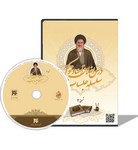
About Index of the Book Riyad al-Masa’il Subject
Allah the Exalted says: "And the believers should not all go out to fight. Of every troop of them, a party only should go forth, that they (who are left behind) may gain sound knowledge in religion, and that they may warn their folk when they return to them, so that they may beware" (Quran, 9:122).
Imam Al-Sadiq (AS) said: "Acquire deep understanding (Faqaaha) in the religion of Allah, for indeed, Fiqh is the key to insight, the completion of worship, and the means to lofty stations and noble ranks in both religion and the world" (Bihar al-Anwar, Vol. 10, p. 247).
The heavenly verses of the Holy Quran and the illuminating words of the Infallible Imams (AS) are light upon light. By benefiting from the glow of their guidance, one can distinguish truth from falsehood, tread the straight path of Allah, navigate the winding alleys of life, and reach the destination of salvation. Therefore, seeking help from the verses of the Holy Quran and the hadiths and narrations of the Prophet's Household (Ahl al-Bayt) is the best method for initiating any action, speech, or writing.
Among Islamic sciences, the science of Fiqh (Jurisprudence) and Ijtihad holds a supreme status. Religious scholars and researchers of Islamic sciences have long striven, through contemplation and utilization of this grand knowledge, to innovate in the practical field, enabling seekers of happiness to traverse the path of servitude to the Almighty with pure intention and clear certainty. In truth, Fiqh is a vast and precious treasure, through which one can witness the Majesty and Power of the One God. This heavenly science owes its continuity and virtuous life to the thought and intellect of wise scholars who fostered its growth and dynamism through valuable compilations and the collection of significant works in the field of Fiqh.
Today, on one hand, the vastness of Islamic science sources and the huge volume of legacy works, and on the other hand, the tremendous transformation in science and technology, have created a need for Islamic knowledge to advance in tandem with modern science, particularly computer science, as this facilitates access to this endless treasure. With the spread of computers and the production of software, researchers and specialists have entered ancient texts and Islamic sources into optical discs, providing diverse capabilities for information retrieval. This has created a suitable environment for conducting new research and studies in the field of religious studies, enabling researchers to achieve their research goals in the shortest possible time. One such software is "Thematic Dictionaries" (Concordances), which possess diverse features.
Those who have worked with lexical dictionary software, aware of both their useful features and their shortcomings, well understand the advantages of thematic dictionaries. With the production of thematic dictionaries, these shortcomings have been addressed, paving the way for researchers and religious scholars. Summarizing texts, indexing them, and creating numerous and varied entries and keywords for these indices and summaries constitute one of the best and most appropriate methods for retrieving a concept or topic in research.
Stages of Producing Thematic Dictionaries
The stages of producing thematic dictionaries can be summarized in the following axes:
1. Text Summarization: Researchers perform this operation according to specific regulations. They write summaries of the applicable content of the target texts on designed cards. These summaries are terminologically called "Topics" (Mawdu'at).
2. Indexing the Summaries: This task is performed manually by researchers. It should be noted that indices are smaller compounds than summaries and are sub-headings that act as intermediaries between entries (keywords) and summaries (topics).
3. Creating Keywords and Entries for Indices: By separating indices and removing unnecessary words automatically and manually, a list of single-word titles and keywords is obtained. After editing, this list is made available to the researcher with search capabilities. In this stage, synonyms are added to the list, homonyms (words with multiple meanings) are differentiated, and related titles are identified to minimize user problems using these features.
The method of using the program is the reverse of its production method. It is best to start via keywords, then the indices of that word, and finally move to the book text through the topics and summaries that are subsets of these indices. In each of these stages, one can select the desired subject by viewing and choosing indices and topics.
One of the most prominent and major challenges in producing thematic dictionaries is that carding, indexing, and harmonizing them consume a great deal of time. For this reason, sources produced in this manner are limited.
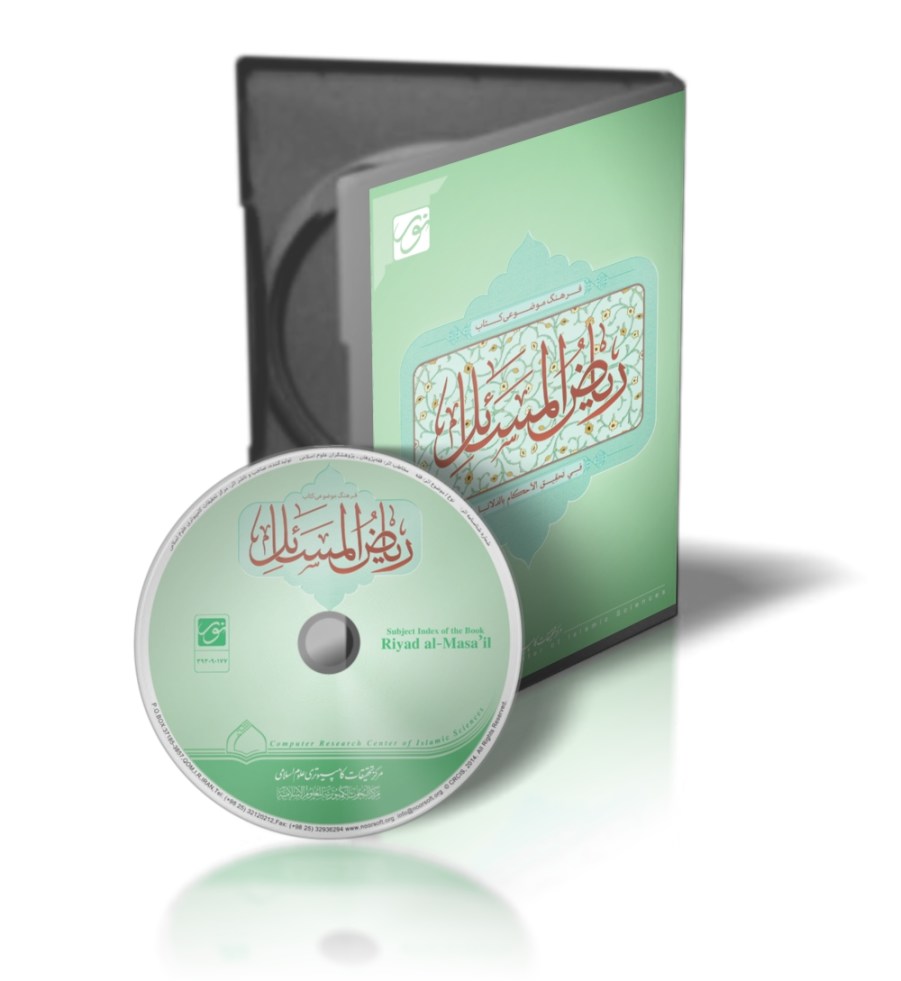
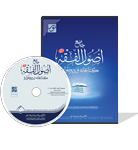
Thematic Dictionary of Riyad al-Masa'il
The software "Riyad al-Masa'il" is one of the thematic jurisprudential research projects pertaining to the book "Riyad al-Masa'il fi Bayan al-Ahkam bi-al-Adilla" authored by Sayyid Ali bin Muhammad Ali bin Abi al-Ma'ali al-Tabataba'i al-Ha'iri (1161–1231 AH).
Status of the Book
The book "Riyad al-Masa'il" is one of the authoritative commentaries on the book "Al-Nafi' fi Mukhtasar al-Shara'i'", known as "Al-Mukhtasar al-Nafi' fi Fiqh al-Imamiyya," authored by Al-Muhaqqiq al-Hilli (d. 676 AH). "Al-Mukhtasar al-Nafi'" is a reliable jurisprudential text trusted by all great jurists since its composition. Since then, valuable and authoritative commentaries such as "Kashf al-Rumuz," "Riyad al-Masa'il," "Nihayat al-Maram," and others have been written on it; indeed, Al-Muhaqqiq al-Hilli himself wrote his famous book "Al-Mu'tabar" as a commentary on it.
"Riyad al-Masa'il" was a textbook in religious seminaries (Hawzas) and was thus reprinted repeatedly, with its use being common among scholars. It is a precise and solid commentary, considered one of the best commentaries on "Al-Mukhtasar al-Nafi'".
In addition to this commentary, known as "Al-Sharh al-Kabir" (The Large Commentary), the author also wrote another commentary called "Al-Sharh al-Saghir" (The Small Commentary) or "Hadiqat al-Mu'minin" (The Garden of the Believers), in which he explained "Al-Mukhtasar al-Nafi'" more concisely (Al-Dhari'a, Vol. 11, p. 336).
Although the author frequently stated: "I did not intend it for publication, but rather for practice and exercise..." (Rawdat al-Jannat, Vol. 4, pp. 401-402), the book was written in a very organized and solid manner and is among the most unique commentaries on "Al-Mukhtasar al-Nafi'". The book's fame is such that the author became known everywhere as "Sahib al-Riyad" (The Owner of Riyad).
According to "Al-Dhari'a," the author completed the second volume (from the Book of Lease/Ijara to the end of Blood Money/Diyat) in 1192 AH, and the first volume (from the Book of Purification/Tahara to the Book of Loan/Ariya and Deposit/Wadi'a) in 1196 AH. In that year, considering his birth year (1161 AH), the author was 35 years old (Al-Dhari'a, Vol. 11, p. 336).
From the very beginning of its composition, "Riyad al-Masa'il" attracted the attention of great jurists and eminent scholars, and numerous commentaries were written on it. "Al-Dhari'a" (Vol. 6, pp. 98-102) lists about twenty commentaries and marginal notes (numbers 528-549).
Thematic Dictionary of Riyad al-Masa'il at a Glance
1. Thematic Dictionary
- Ability to access the precious book "Riyad al-Masa'il fi Sharh al-Mukhtasar al-Nafi'" via Keyword, Index, and Summary (Topic), based on the following statistics:
- Roots: 6,991; Non-repetitive Roots: 2,863.
- Single Words: 334,730; Non-repetitive Single Words: 5,179.
- Indices: 119,771; Non-repetitive Indices: 42,278.
- Related Terms: 5,547; Commonalities: 458; Pure Relations: 368.
- Topics: 28,603; Non-repetitive Topics: 28,552.
- Capability to combine Keyword and Index with the option to select the type of combination (Disjunctive, Conjunctive, and Exclusive Disjunctive).
- Arrangement of the index list based on Topic and Index.
- Access to options: Keyword, Index, Topic, Address, and Text in various sections of the program.
- Ability to select types of Proper Nouns from Keywords.
- Display of the list of book topics in Arabic alphabetical order and the number of cards for each topic.
- Ability to view the full address of the content of each card.
- Linking the text of "Riyad al-Masa'il" with some marginal notes (Hashiyah), and linking the text of "Al-Mukhtasar al-Nafi'" with its commentaries and marginal notes.
- Presentation and linking of the old and new versions of "Riyad al-Masa'il".
- Ability to transfer to the "Research" section in various parts of the program to organize the research process.
- Capability to select next and previous answers and view the full text of the book.
2. Lexical Dictionary
- Full display of the text of 15 book titles comprising 52 volumes (with research capabilities), including:
- "Riyad al-Masa'il fi Sharh al-Mukhtasar al-Nafi'", 16 volumes (New Edition) and 2 volumes (Old Edition), authored by the erudite researcher and great scholar Al-Tabataba'i al-Ha'iri (Ali bin Muhammad Ali).
- "Al-Ta'liqa ala Riyad al-Masa'il" (Proceedings of the Grand Conference honoring Ayatollah Al-Mujahid, the late Sayyid Abd al-Husayn al-Lari).
- "Al-Sharh al-Saghir fi Sharh al-Mukhtasar al-Nafi'", authored by the other great scholar Al-Tabataba'i al-Ha'iri (Ali bin Muhammad Ali).
- "Al-Mukhtasar al-Nafi' fi Fiqh al-Imamiyya", authored by the late researcher Najm al-Din Ja'far bin Hasan (Al-Muhaqqiq al-Hilli).
- Commentaries and notes on "Al-Mukhtasar al-Nafi'" such as: Hashiyat al-Mukhtasar al-Nafi' (Al-Shahid al-Thani), Kashf al-Rumuz fi Sharh al-Mukhtasar al-Nafi' (Al-Abbi, Hasan bin Abi Talib), Al-Mu'tabar fi Sharh al-Mukhtasar (Al-Muhaqqiq al-Hilli, Ja'far bin Hasan), Al-Muhadhdhab al-Bari' fi Sharh al-Mukhtasar al-Nafi' (Ibn Fahd al-Hilli, Ahmad bin Muhammad), Nihayat al-Maram fi Sharh Mukhtasar Shara'i' al-Islam (Al-Musawi al-Amili, Muhammad bin Ali).
- Full text of 6 book titles on Fiqh and Usul terminology, including: "Al-Hudud wa al-Haqa'iq," "Mustalahat al-Fiqh," "Al-Qamus al-Fiqhi Lughatan wa Istilahan," "Al-Istilalahat al-Fiqhiyya fi al-Rasa'il al-Amaliyya," "Mu'jam al-Mustalahat wa al-Alfaz al-Fiqhiyya," and "Istilalahat al-Usul," with the ability to access terms via stripped entries.
- Full text of three linguistic dictionaries in 29 volumes, including: "Lisan al-Arab" (15 vols), "Majma' al-Bahrayn" (6 vols), and "Kitab al-Ayn" (8 vols).
Capabilities
- Independent option for Quranic research.
- Display of a tree-view list of the aforementioned books with active links to their full text.
- Ability to select the desired volume and page through various methods.
- Ability to access word meanings based on the dictionaries: "Lisan al-Arab," "Kitab al-Ayn," and "Majma' al-Bahrayn"; and 7 other dictionaries via the list of word roots and derivatives.
- Provision of information regarding authors and books available in the program.
Other Features
- Limiting the scope of research based on volume and topic.
- Simple and advanced search within the text and index.
- Ability to compare different texts from one or two volumes with each other.
- Use of the "Active Research" feature to transfer to desired sections within the program.
- Diverse research features, note-taking, and printing capabilities.
- Direct transfer of selected text or index from the program to MS-Word environment.
Share your thoughts with other customers